M A E D A Mini-Crawler Crane Section 4 – STARTING ENGINE
3/2019 MC305C-3 4-17
Correction When Working at High
Altitude
In general, when the altitude increases, engine
output decreases and exhaust smoke
concentration increases.
The high altitude correction control is applied to
secure engine performance and durability at
high altitude.
While an increase in exhaust smoke
concentration is suppressed by the high altitude
correction control, output decreases due to a
decrease in air density.
Reduced engine performance at higher altitude
does not mean there is overall reduced
performance with regards to the cranes lifting
capacities. There is a number of variables that
effect lifting performance, not just the engine.
1. OUTPUT CORRECTION
The relationship between an increase in altitude
and a decrease in output is shown as below.
Decrease in
rated output
(%)
2. TORQUE CORRECTION
A decrease in output due to an increase in
altitude affects the maximum torque.
A decrease in the maximum torque is shown as
below.
Decrease in
maximum
torque (%)
3. MISFIRE AT HIGH ALTITUDE
When operation is performed at high engine
speed immediately after engine start at high
altitude, misfires are likely to occur because of
delayed ignition timing resulting from a decrease
in air density and outside temperature.
The following measures are necessary to reduce
misfires.
• Use fuel with a high cetane number (52 or
more).
• Fully warm up the engine at mid to low engine
speed (5 minutes or longer).
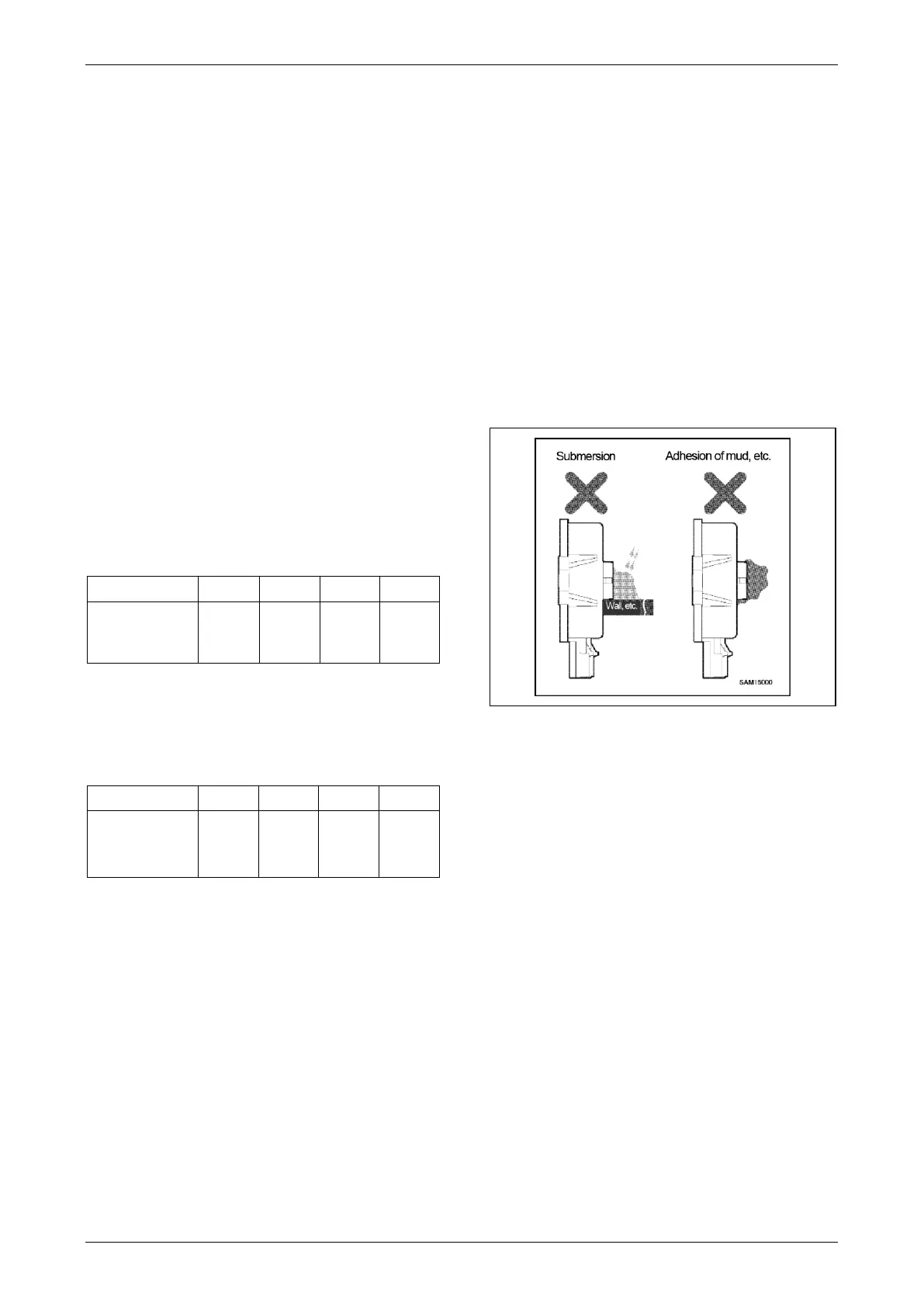
4. SOLENOID DRIVER HANDLING
A driver that detects atmospheric pressure is
installed on the side of the reserve tank in the
engine compartment. Please pay attention to the
following when handling.
• Do not touch by hand or disassemble the
terminal.
• Be careful of an electric shock because there
is a circuit inside that
generates high voltage.
• Although it is a waterproof structure, avoid
submersion in water and
high-pressure cleaning.
• Do not block the vent hole for the atmospheric
pressure sensor.
Fig. 4-41


 To Next Page