Section 5 – GENERAL MACHINE MAINTENANSE
Mini-Crawler Crane M A E D A
5-66 3/2019 MC305C-3
• Tight Tension (Decrease Tension)
WARNING! Inside the rubber track tension
adjustment device has the grease sealed. The
grease is under high pressure due to the
tension of the rubber track.
Making adjustments without observing the
followings may cause the grease valve to fly
away, resulting in serious accidents.
• Do not loosen the grease valve for tension
adjustment for more than 1 turn. The grease
valve may pop out.
• Do not place yourself right in front of the
grease valve when adjusting the tension to
avoid any danger.
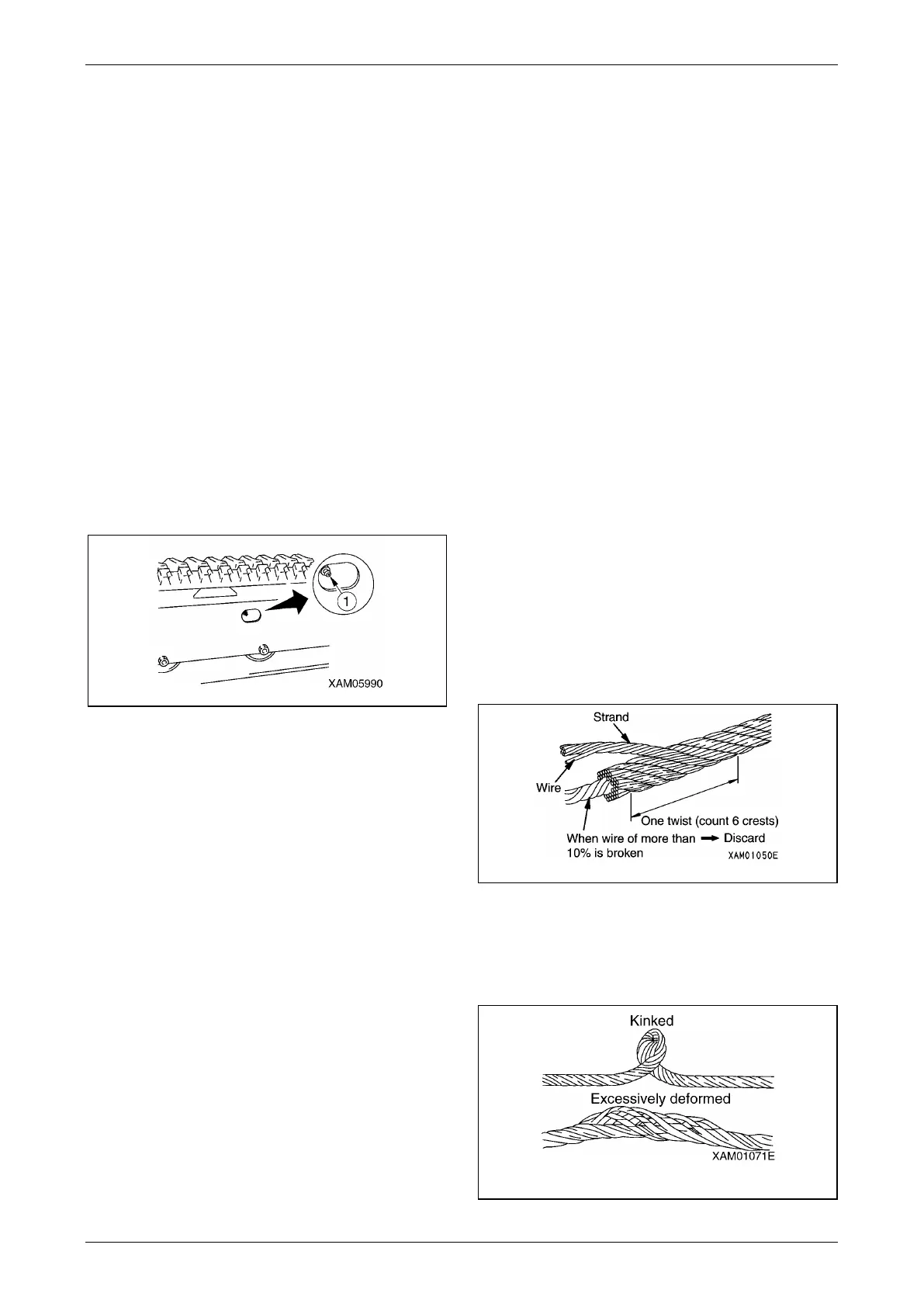
1. Slowly loosen the grease valve (1) to drain
the grease.
NOTICE: When loosening the grease valve (1), do
not loosen more than for one turn.
Fig. 5-134
2. If the grease is not drained easily, perform the
following to drain the grease.
(1) See "OUTRIGGER STOWING" on page
4-45 to stow the outriggers and lower the
machine on the ground.
(2) Move the machine forward/backward.
(3) See "OUTRIGGER SETTING" on page
4-36 to set the outriggers and raise the
crawlers again for about 50 mm from the
ground.
3. Tighten the grease valve (1).
4. Perform the "tension check" of the rubber
track.
If the tension is not appropriate, make
another adjustment.
5. See "OUTRIGGER STOWING" on page 4-45
to stow the outriggers and lower the machine
on the ground.
Wire Rope
General Information and Precautions
Contact us or our sales service agency for
additional information on replacing and repairing
wire rope.
WARNING! Always wear work leather gloves
when replacing the wire rope.
CAUTION:
• A diameter of the wire rope is to be
measured at points where the wire
repeatedly runs through the sheave. A mean
value needs to be determined through
three-way measurement. (A measurement
should be performed at several points,
spacing between the points.)
• DO NOT use the old wire rope regardless of
the frequency of use.
Inspecting Wire Rope
A wire rope undergoes wear and tear over time.
Prompt replacement is required if any of the
following events appears in the wire rope.
• Broken wire
In running rope, six randomly distributed broken
wires in one lay or three broken wires in one
strand in one lay.
Fig. 5-135
• Kinking, crushing, bird-caging, or any other
damage resulting in distortion of the rope
structure.
• Evidence of any heat damage from any cause.
Fig. 5-136


 To Next Page