Manual Version e1-4.3.0.ae-R3. Page
6.7 Adjusting Nitrogen Flow Rates
6.7.1 Main Chamber
The fill rate of the Main Chamber is determined by the nitrogen regulator setpoint (see Figure 20). It is
normally set to 10 psi, but may be set to higher or lower pressures. Higher pressures will increase the
vent rate of the chamber and lower pressures will decrease the rate. The actual rate of nitrogen flow is
actually controlled by an orifice with a small hole which by varying the inlet pressure (via the regulator),
meters the nitrogen flow rate.
Note that the regulator does not bleed off pressure and therefore reducing pressure will require the
flowing of nitrogen through the system to see a drop in pressure. It should also be noted that changing
this pressure will also affect the nitrogen fill rate of the expansion chamber and therefore some
adjustment to the needle valve may be necessary.
6.7.2 Expansion Chamber
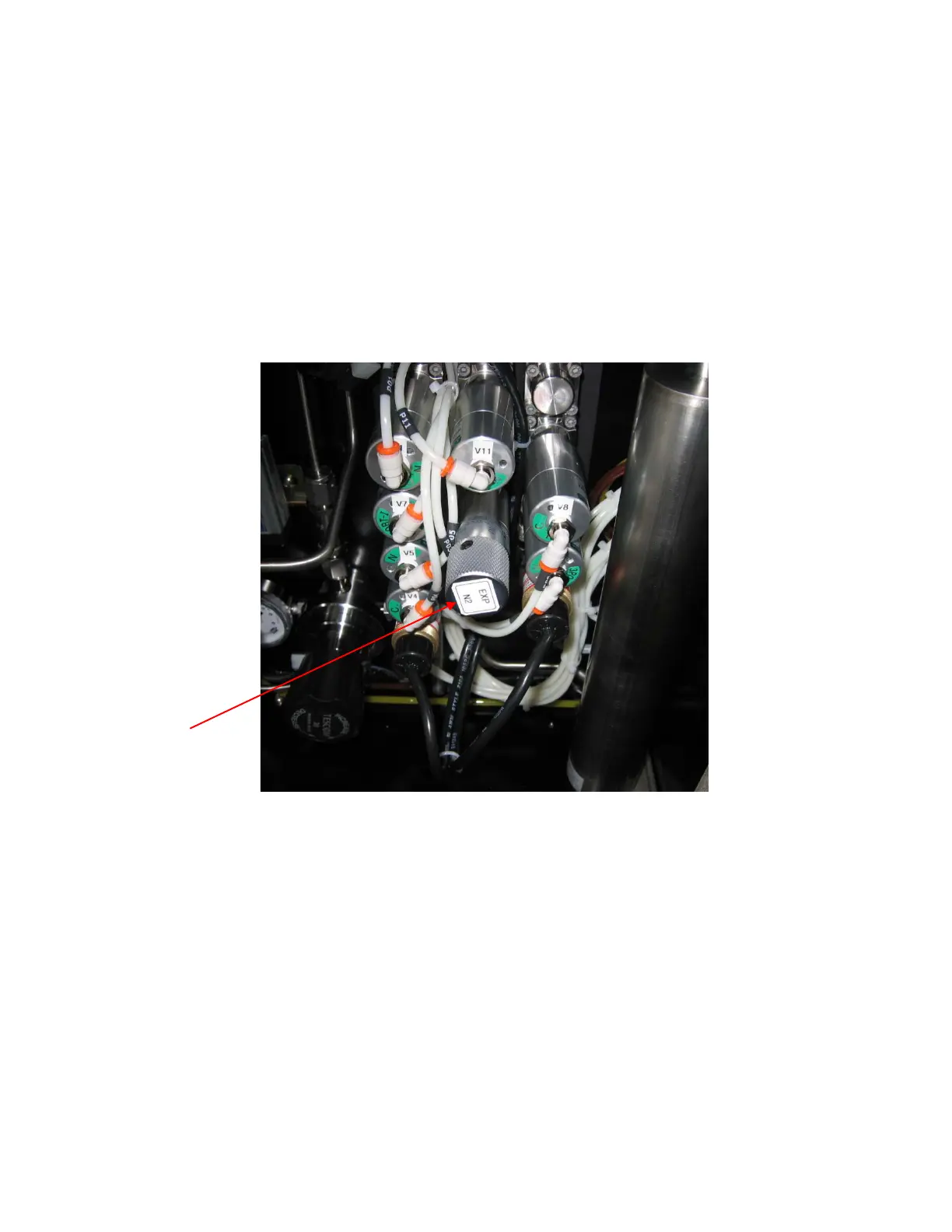
The fill rate of the expansion chamber is normally controlled by adjusting the needle valve shown in
Figure 41. Be careful not to overtighten the valve since it can lead to serious damage.
Figure 41. Needle valve located in the gas box.
If it is not possible to fully control the flow through this adjustment, it may be necessary to also adjust
the nitrogen regulator setpoint (see Figure 20).
6.8 Roughing Pump
The e1 Series ships with an Edwards nXDS6i dry scroll pump. This pump does not use oil and
therefore the maintenance is considerably less than a rotary vane pump. The primary maintenance is
the replacement of the tip seal, which Edwards typically recommends performing this less than 30
minute operation on an approximately annual basis. Before replacing the tip seal, stop processing so
that no more XeF2 goes into the pump, allow the pump to pump overnight with the ballast open to flush
out the pump, turn off the pump and allow it to cool down, and then while wearing the PPE described in
Section 2.2, replace the tip seal by following the nXDS6i manual/instructions in the replacement tip seal
kit.
6.9 Chamber/Lid Cleaning
Since xenon difluoride etching generally does not create residues, chamber/lid cleaning is rarely
needed. See section 2.11 for details. Note that the lid is rarely able to be cleaned and is rather typically
replaced.
Valve



 To Next Page