Date Code 20080110 Protection Functions 3-17
SEL-387E Instruction Manual
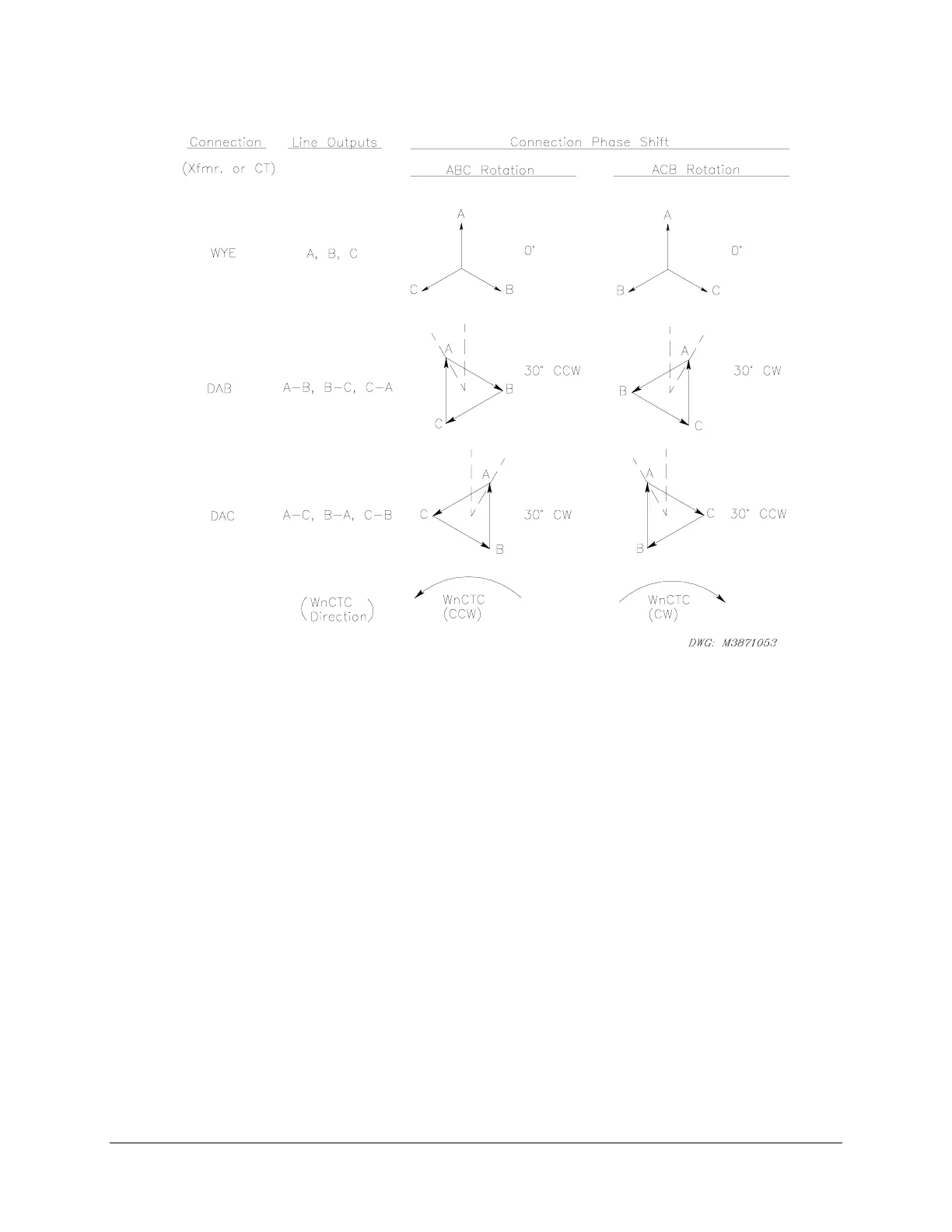
Figure 3.8: Winding Connections, Phase Shifts, and Compensation Direction
The wye connection consists of connecting one end of each winding to a common or neutral
point, leaving the other ends of each winding for the line terminals. Because the windings do not
interconnect at the line ends, the line current equals the respective winding current, A, B, or C,
and no phase shift occurs in the line currents with respect to the winding currents. The neutral
point, if it is grounded, permits flow of zero-sequence current components in the windings and
line outputs.
There are two possible delta connections. In determining W
n
CTC, it is essential to know not
only that the CTs or transformer windings are connected in delta but in
which
delta. In this
manual we call these delta connections DAB and DAC. In the DAB connection the polarity end
of the A winding connects to the nonpolarity end of the B winding, and so on, to produce the
delta. In the DAC connection the polarity end of the A winding connects to the nonpolarity end
of the C winding, and so on, to produce the delta. In
Figure 3.8 an arrowhead indicates the
polarity end of each winding.
These arrangements involve a connection point between two windings at each line terminal; the
line currents are not the same as the winding currents, but are in fact the phasor difference
between the associated winding currents. Therefore, the line currents will shift in phase by some
amount with respect to the winding currents. In the DAB connection the line currents from the A,
B, and C line terminals are, respectively, A-B, B-C, and C-A in terms of the winding currents. In
the DAC connection the line currents from the A, B, and C line terminals are, respectively, A-C,


 To Next Page