72 Avaya 374x DECT Telephones - User Guide 02/2016
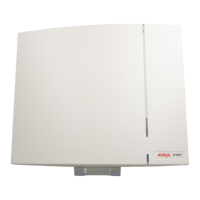
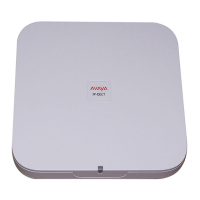
Name the IPBS/IPBL
Each IPBS/IPBL can be assigned a name. It is recommended to assign a descriptive name for
example IPBS/IPBL location.
1. Select General > Admin.
2. Enter a name in the Device Name text field.
3. Click "OK".
Change User Name and Password
The user name and password are used to access the IPBS/IPBL through the web GUI.
1. Select General > Admin.
2. Write a user name in the User Name text field.
3. Enter a new password in the Password text field. Repeat the password in the second text
field.
4. Click "OK".
Centralized Management of Admin/Auditor Accounts Using Kerberos
In software version 3.x.x, each IPBS/IPBL had their own set of administrator/auditor accounts.
Kerberos is a network authentication protocol that is used when you want to have the same set
of user accounts for several IPBSs/IPBLs and then want to administrate these user accounts at
one central location (Kerberos server). When an IPBS/IPBL is setup as a Kerberos server the
IPBS/IPBL act as an authentication server for the rest of the IPBSs/IPBLs that are setup as
client devices in the installation. The Kerberos server and the group of client devices constitute
a domain called a realm. During Kerberos communication no password is actually sent over the
network. Kerberos uses encrypted data packets (tickets) which are time-stamped and expire
after a certain period of time. Therefore it is crucial to get the correct time across the system for
which a NTP server should be used.
Set up the Kerberos server
It is recommended to set up the Kerberos server on the Master. To configure an IPBS/IPBL to
act as a Kerberos server, do the following:



 To Next Page