262 1.5 Explanations of Power Proportional Distribution
Power Proportional Distribution (P.P.D.)
1.5 Explanations of Power Proportional Distribution
1.5.1 What is the Power Proportional Distribution (P.P.D.)
(System Ex. : Normal VRV)
Previously the general way for requesting the electricity charge at rental buildings was that a management staff read a
watthour meter and billed the tenants by manual-account based on the operation time which were counted through
time-counters.
However, this method takes a lot of time for the management staff. In addition, as airconditioning consumes much
different electricity for either the operation of airconditioning (thermostat-on) or the operation of fan only (thermostat-
off), it might cause to give unfair sense to the tenants inhabited in the spaces with different heat load, though
“operation-time” itself is the same.
For instance, even if a certain higher preset temperature is applied in summer for energy saving, fee for
airconditioning may equal to the fee without preset temperature so far as it is counted based on the operation time.
Electric energy distributing function of intelligent Manager carries out the proportional division computation in
consideration of those thermostat-on and thermostat-off operations and saves time for building management staffs to
read watthour meters, and also supplies tenants printed data useful for making the bills.
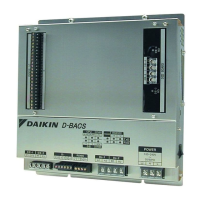
Namely, intelligent Processing Unit (iPU) is the product created by the concept to help the assignment of bill-issuing
and offers users the reasonable price of the products.
Yet, since the iPU is constantly assuming each indoor unit’s power consumption based on the data which is
transferred from indoor units, it should be noticed that the iPU is not which complies with the Weight and Measure Act
as shown in the catalogue.
The details of the cause to count error is described at chapter 2.
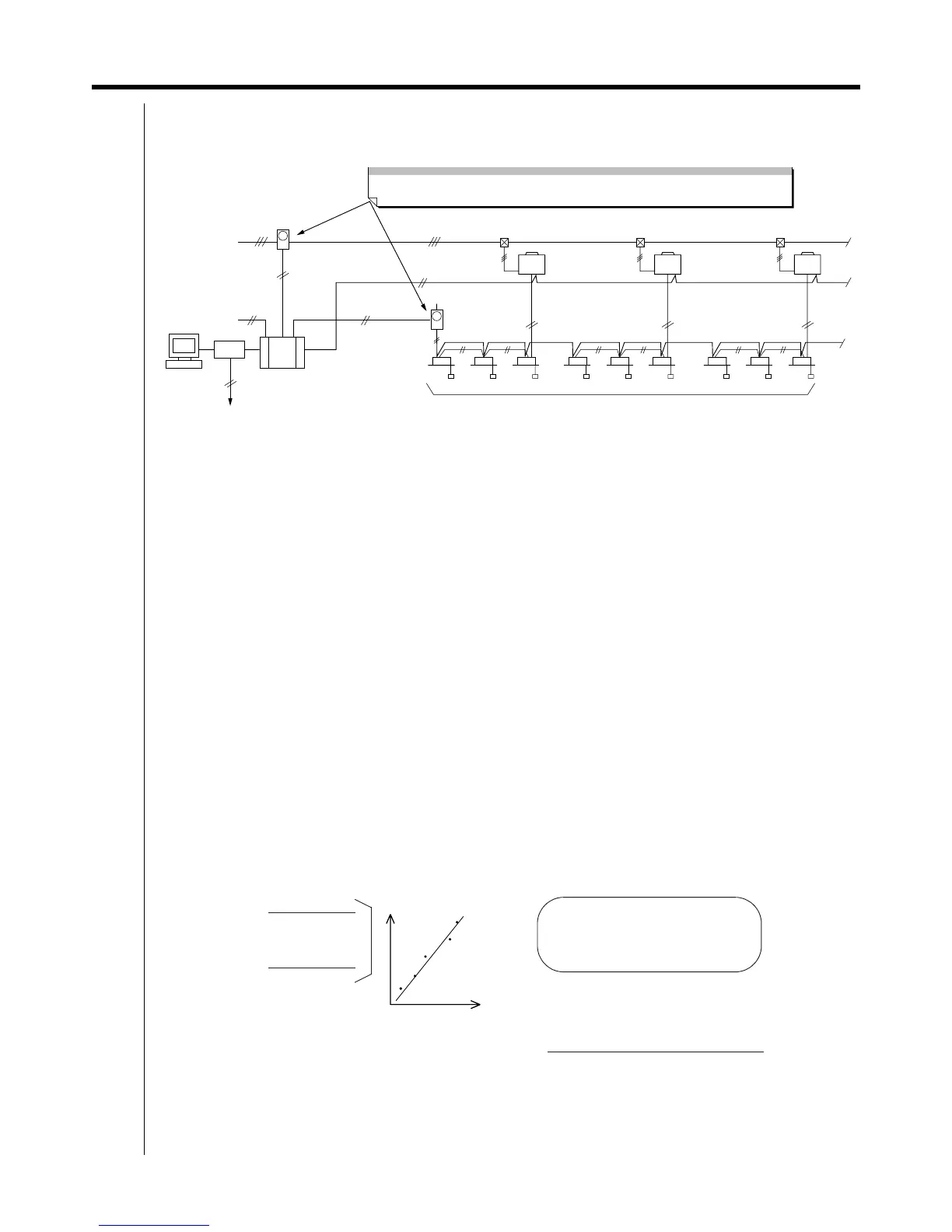
(1) Count method (for a conventional VRV system)
1) The following proportional division calculation is carried out every one hour and assigns the power consumption of
airconditioning system to each indoor unit.
Heat load depending on the operation conditions of airconditioner = power consumption of indoor unit’s fan
+ power consumption of optional heater
+ the rated power consumption in cooling (*1) ×a
+ the rated power consumption in heating (*1) ×b
Outdoor unit
Power supply
single phase
Watthour meter
with output
Power supply
3 phase
Power supply
single phase
iPU
To other iPU
Indoor units: a maximum of 64 units
PC
Since this system detects power consumption as the base of the count,
specified watthour meters should be used by all means.
HUB
Power consumption (kWh)
Thermo-step
(Ttconstant)
*2:“Thermo-step” signifies that an airconditioning
capacity is expressed in a range of the values
0-5 mainly based on the opening grade of an
electronic expansion valve in an indoor unit.
10
Thermo-step (*2)
Thermo-step (*2)
10
a = (a1+a2×T) ×
b = (b1-b2×T) ×
*1:The value which is registered at the test run,
adapting the indoor unit’s capacity
As shown in the left, heat load is calcuated
from an equation of the first degree which
approximates the correlation, among thermo-
step, indoor unit’s suction air temperature and
power consumption, into the linear line under
a1, a2:correction factor for cooling
b1, b2:correction factor for heating
T:indoor unit’s suction air temperature
Indoor units N’s power consumption (kWh) = total pulse input from wattmeters
×
Heat load by one hour calculated through the
operating of airconditioner N
total heat load by one hour caiculated through
the operating conditions of all the airconditioners
the standard conditions of the unit.


 To Next Page