M A E D A Crawler Crane 5.4 CRANE OPERATION
5/2020 CC1908S-1 5-21
PRECAUTIONS WHEN SELECTING AN
INSTALLATION LOCATION
Always position the machine on level, stable, and
solid ground.
It is dangerous to install the machine on any of
the following surfaces:
• Simple asphalt surfaces
• Thin concrete surfaces
• Paved surfaces
• Areas where the ground under the surface is
hollow due to water erosion and the top soil
appears to be hard but is soft underground
• Soft ground that is likely to collapse or ground
that is near road shoulders or excavated holes.
• Slopes
FOLLOW INSTRUCTIONS AND SIGNS WHEN
WORKING.
• When operating the crane, appoint a work
supervisor and signs beforehand, and follow
the work supervisor and signs during
operation.
• Operate with caution when working in blind
spots, and be especially sure to follow the
instructions and signs of the work supervisor.
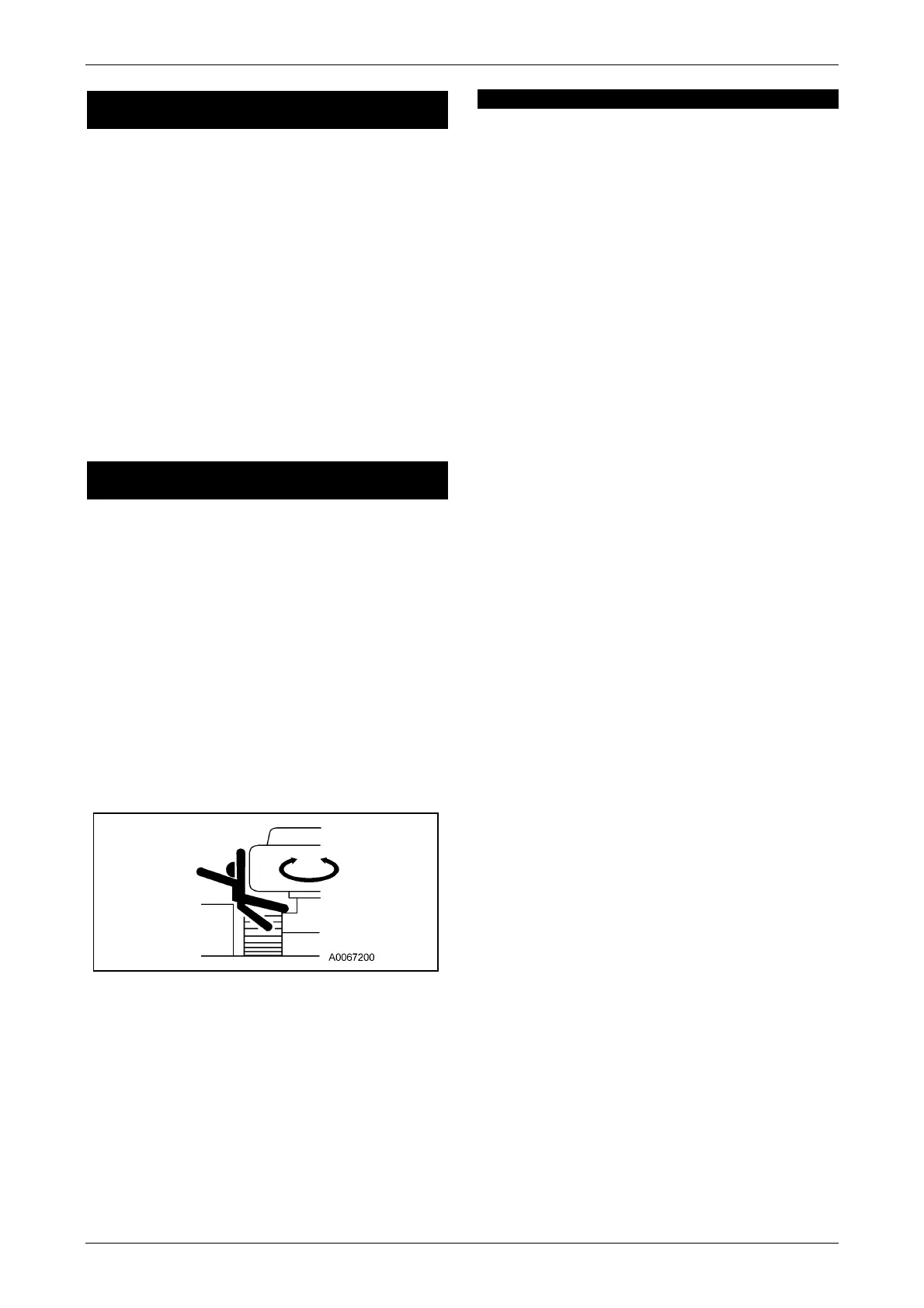
• When operating the crane, there is a danger of
colliding with the slewing boom and upper
slewing body and of trapping arms or fingers in
the gaps between movable parts of the
derricking cylinder.
The operator must make sure no one is within
the working radius of the crane before
operating.
COLD WEATHER PRECAUTIONS
• Remove snow and defrost the surfaces of the
slewing gear, boom, and around the winch,
and check that they operate correctly before
starting work.
• Check the winch brake to ensure that it works
properly.
• Operating the machine without sufficiently
warming up the engine may cause the
machine to respond slowly to control lever and
pedal operations, possibly resulting in
unexpected movement. Be sure to warm up
the engine. The engine needs adequate warm-
up time, especially in cold conditions.
For details on warming up, refer to "5.2.4
OPERATIONS AND CHECKS AFTER
STARTING ENGINE" on P. 5-8.
• Avoid revving up the engine immediately after
starting it.
• Deposited snow within the crane operation
range may cause toppling of unloaded objects
or cause operators to slip near the machine.
Clear away snow thoroughly before operating
the crane.
• In cold conditions, check that the load to be
hoisted is not frozen to the ground or other
objects. Attempting to hoist without knowing
the load is frozen and stuck to the ground or
other objects is dangerous.
• After work is complete, wipe off any
condensation, snow, or mud from wire
harnesses, connectors, switches, sensors, or
other similar parts, and cover them. If
condensation seeps inside and freezes, the
machine may not operate properly when it is
next used, resulting in unexpected accidents.



 To Next Page