131
Polyend Tracker Manual
130
Polyend Tracker Manual
NOTESNOTES
Instruments
6
Instruments
6
6.12 Sharing Instruments
Instruments can be shared either with other projects on the same device or
by transferring to another Tracker. This is useful when developing new
instruments or ones which will be reused for example to a develop a
signature sound across multiple tracks of an album.
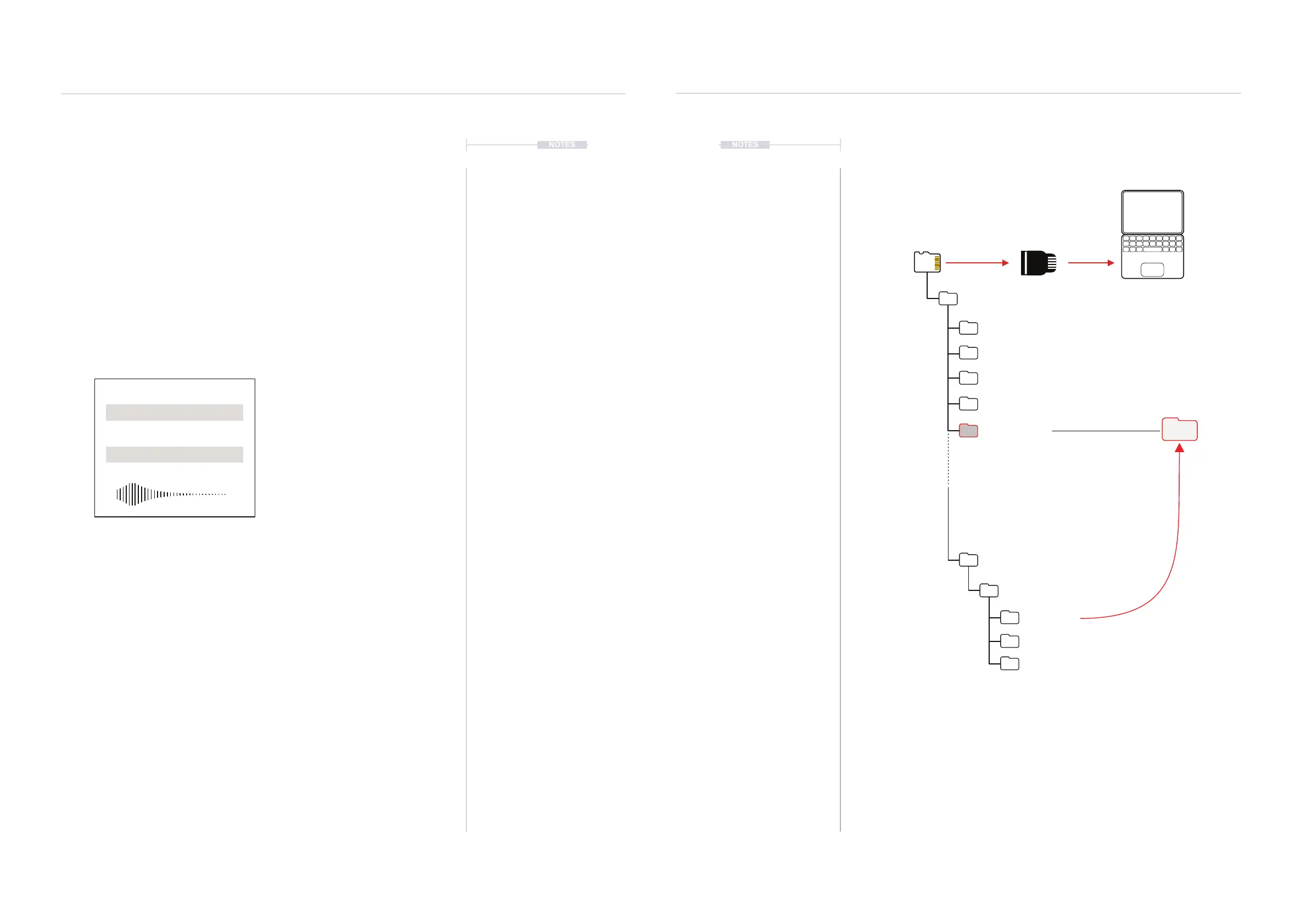
Instruments are saved with a project using a ‘.pti’ le format and are stored
in the project subfolder, ‘instruments’. The project and instrument folders
are accessible from all projects. This is ok if you know where to look and
what to look for. Remembering all projects and their instruments is not an
easy task. A few tips will help manage a library of instruments. Tracker does
not have in depth le management functions on board so using a PC or
Mac to access the SD card is required.
• Create instruments as normal. Save a project which will also save
the instruments into the current project folder. Instruments created
or loaded from other projects will be saved with the current project.
• Consider creating a ‘user’ subfolder within the instruments folder.
This can be used to build a library of user instruments.
• A different folder cannot be selected in Tracker when saving
Instruments. Periodically instruments can be manually copied using
a PC / Mac into the ‘user’ instrument folder on the SD card. This
would be a housekeeping task, maybe combined with backing up
the SD Card fully.
• Do not cut or delete the the original instrument from the project as
this is where the project recognises the original le to be stored.
• The user folder can easily be shared with collaborators or between
devices simply by copying between SD Cards with the PC / Mac.
Instrument.pti
Sample
Instrument Parameters and Settings.
PCM Sample 44.1kHz, 16 Bit
Header
Micro SD Can be connected to a
PC / Mac with the USB adapter.
Files can be copied (Do not Cut /
Paste or Delete) between SD Cards.
Periodically copy from the SD Card Project Instrument
Folder to a user created folder. This makes it easy to
use in other projects and share with other collaborators.
Consider a naming convention for user instruments. This is less important
when using project contained instruments, but this technique can be helpful
when managing a user library. Instruments can be renamed in the ‘sample
loader’ page. It is advised to always keep a discipline of naming
instruments in Tracker rather than on the PC/Mac to protect the .pti le
integrity and to make future access easier.
Root
Synthdawg
Kits
A .pti le contains a header ~400 bytes
which handles the parameter settings.
In addition a sample is included which
can vary in size and which is packed
into the instrument le.
/Drum Kits
/ProjectName
/Instruments
/Samples
/Patterns
/Progressions
/Instrument Kits
/Synths
/Synthdawg Kits
/Instruments
/Projects


 To Next Page