17
3.3.4. Gases and vapours
• All metal vapours are harmful to health!
• Be careful with alloys which contain lead, cadmium, copper, zinc, nickel,
chrome and beryllium.
• Chloric cleaning and degreasing agents can lead to the formation of the
toxic gas phosgene due to the decomposition in the arc (risk of suffoca-
tion!).
• Risk of poisoning in narrow places!
• If shielding gas hoses are not tight or the shielding gas valve gets caught
unintentionally, shielding gas may escape to such an extent that the oxy-
gen content of the inhaled air decreases, symptoms of poisoning appear
which may lead to unconsciousness and suffocation. (Argon and CO
2
are
heavier than air).
• Sufficient fresh air must be provided! Please check the gas supplying parts
in regular intervals.
• Use fume extraction systems. Pay attention to the national and regional
safety regulations.
3.3.5. Fire prevention (explosion)
• Remove all flammable materials around the welding place or cover these
with a non-flammable or at least hardly combustible material.
• Hot slag or spatter might cause fires if in contact with flammable materi-
als.
• Only use shielding gas mixtures suitable for welding consisting of e. g.
Argon, Helium, CO
2
and O
2
.
Never use flammable gases such as acetylene, propane or pure hydrogen.
Never weld on drums, tanks, pipes or similar containers unless they have
been thoroughly cleaned and prepared according to the relevant national
and international standards.
Make sure that no toxic, flammable or explosive vapours can develop.
Ensure that suitable fire-fighting equipment such as water, sand or fire
extinguishers are within easy reach.
Confined spaces must have a free passage allowing escape in case of danger.
Please observe the weld area and its surroundings when welding has
finished. Fire may break out later due to smouldering.
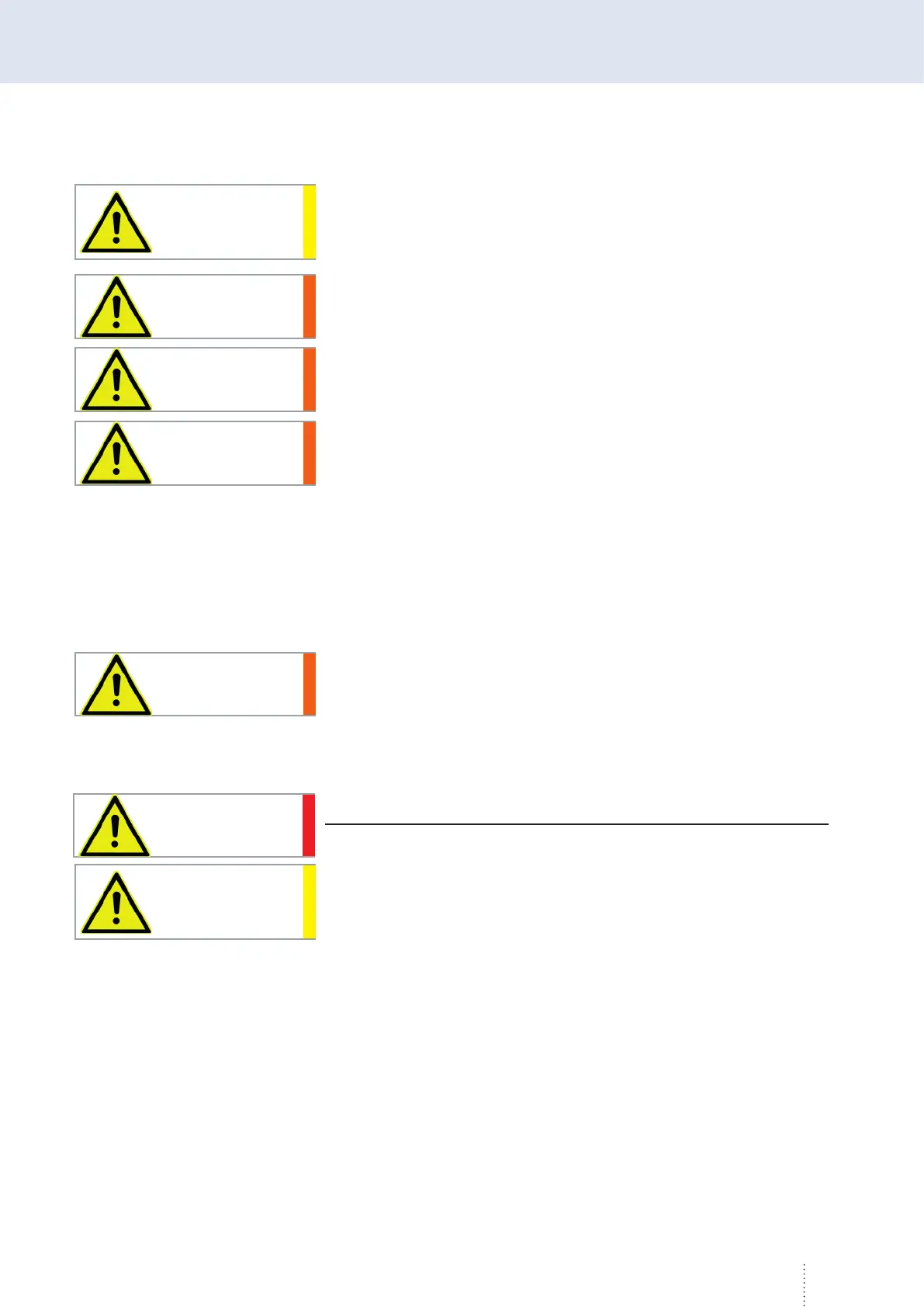
CAUTION!
WARNING!
WARNING!
WARNING!
WARNING!
DANGER!
CAUTION!


 To Next Page
 Loading...