42
MAIN - process
4.7 Cold Weld
The processes named Cold Weld are welding processes in connection with
AC technology.
The use of positive and negative half-waves allows to modify the pow-
er input into the workpiece during the welding process. Due to a time
extension of the negative half-wave it is possible to input less power into
the material. The higher the negative share, the less power is input into the
basis material. Since the half-wave shifting and the selection of the pulse
shape require very complex control settings, these settings are only al-
lowed in synergy mode. The operator selects the power with rotary knob 1
and with rotary knob 2 the arc length and the negative share of the alter-
nating current. All other parameter settings required are done by means
of the control processor. This enables exceptionally low spatter welding of
thin sheets in the range of approx. 0.5 mm - 3.0 mm.
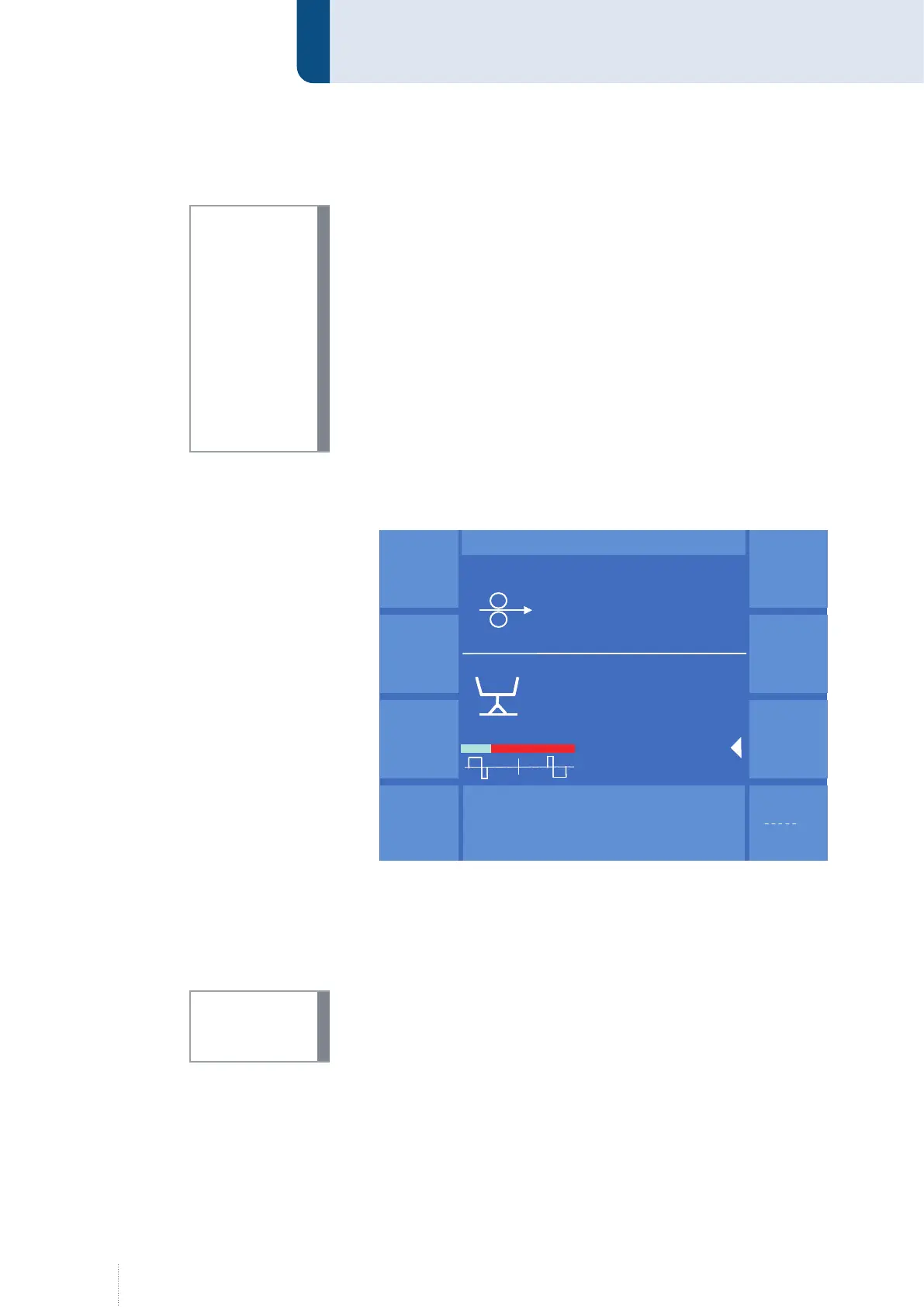
The AC part is set by means of the rotary knob 2, see Figure 9. This pulsed
arc process is suitable for sheet thicknesses between 0.5 mm…3.0 mm.
4.8 Rapid Weld
This is a modified "Control Weld" welding process. A very concentrated arc,
ensuring a very deep penetration, is generated.
In the Rapid Weld process, the penetration shape and depth can be influ-
enced with the dynamic setting. In the Control Weld process, the shape of
the arc is influenced in the dynamic range. (Arc small and concentrated or
wide and soft).
INFO!
Synergie
Betr.
Verfahren
Funktion
M A I N
Progr.
Messwerte
Anzeige
SPuls-CW Extern
AC-Dyn.
8.5 m / min
-22
4
V
0
A
1.2 mm Fe
92% Argon 8% Co
2
0.0
C - Start
Synergie
Betr.
Verfahren
Funktion
M A I N
Progr.
Messwerte
Anzeige
SPuls-CW Extern
AC-Dyn.
8.5 m / min
-22
4
V
0
A
1.2 mm Fe
92% Argon 8% Co
2
0.0
C - Start
Figure 9. AC voltage with half-wave shift
INFO!


 To Next Page