9. Earth resistance measurement
WARNING : For the two-wire method, you will need to disconnect the earth electrode from the installation
it is protecting. Before disconnecting the earth electrode, you must isolate the circuit you are working on
and follow approved procedures to confirm that it is de-energized and that it cannot be accidentally
re-energized. Removing the protective earth connection from a live installation is extremely hazardous!
You must also ensure that you correctly reconnect the earth electrode after completing the test.
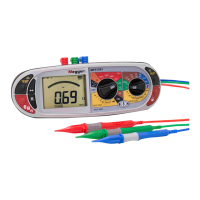
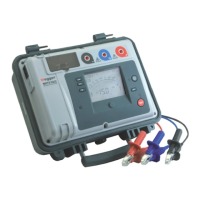
Fig 23: Earth resistance measurement
9.1 General
The MFT-X1 can be used to measure the resistance of earth electrodes using the following methods:
two-pole
The default test voltage is 50 V, but this can be changed to 25 V by pressing Hot key 1 at the beginning of the test
for making measurements in, for example, areas where local conditions require a lower test voltage, such as in the
presence of livestock.
The test procedure described in this user guide are suitable for use on simple earthing systems of the type typically
found in domestic and small commercial installations and those associated with electric vehicle (EV) charging points.
For guidance on making earth resistance measurements in complex installations, such as those that have many
electrodes or use earth mats, contact the Megger technical support service.
9.1.1 Earth testing inhibit
Testing is inhibited if the instrument detects an external voltage greater than 25 V, or if the test-leads are incorrectly
connected, Refer to 15.7.1 Live voltage limit on page 83.
www.megger.com MFT-X1
37
Earth resistance measurement



 To Next Page