PERIODIC MAINTENANCE 2-21
CYLINDER COMPRESSION
Cylinder compression:
Standard:
550 – 850 kPa (5.5 – 8.5 kg/cm
2
, 78 – 120 psi.): With decompression system (DF9.9/15)
820 – 1 230 kPa (8.2 – 12.3 kg/cm
2
, 116 – 175 psi.):
Without decompression system (DF9.9E/R, DF15E/R)
Max. difference between any other cylinders:
100 kPa (1.0 kg/cm
2
, 14 psi.)
NOTE:
Figures shown are guidelines only, not absolute service limits.
Low compression pressure can indicate one or more of the following:
• Excessively worn cylinder wall
• Worn piston or piston rings
• Stuck piston rings
• Poor seating of valves
• Ruptured or otherwise damaged cylinder head gasket
TEST PROCEDURE
1. Start engine and allow to warm up, then shut engine off.
2. Remove the STBD / PORT engine side lower cover.
3. Remove all spark plugs.
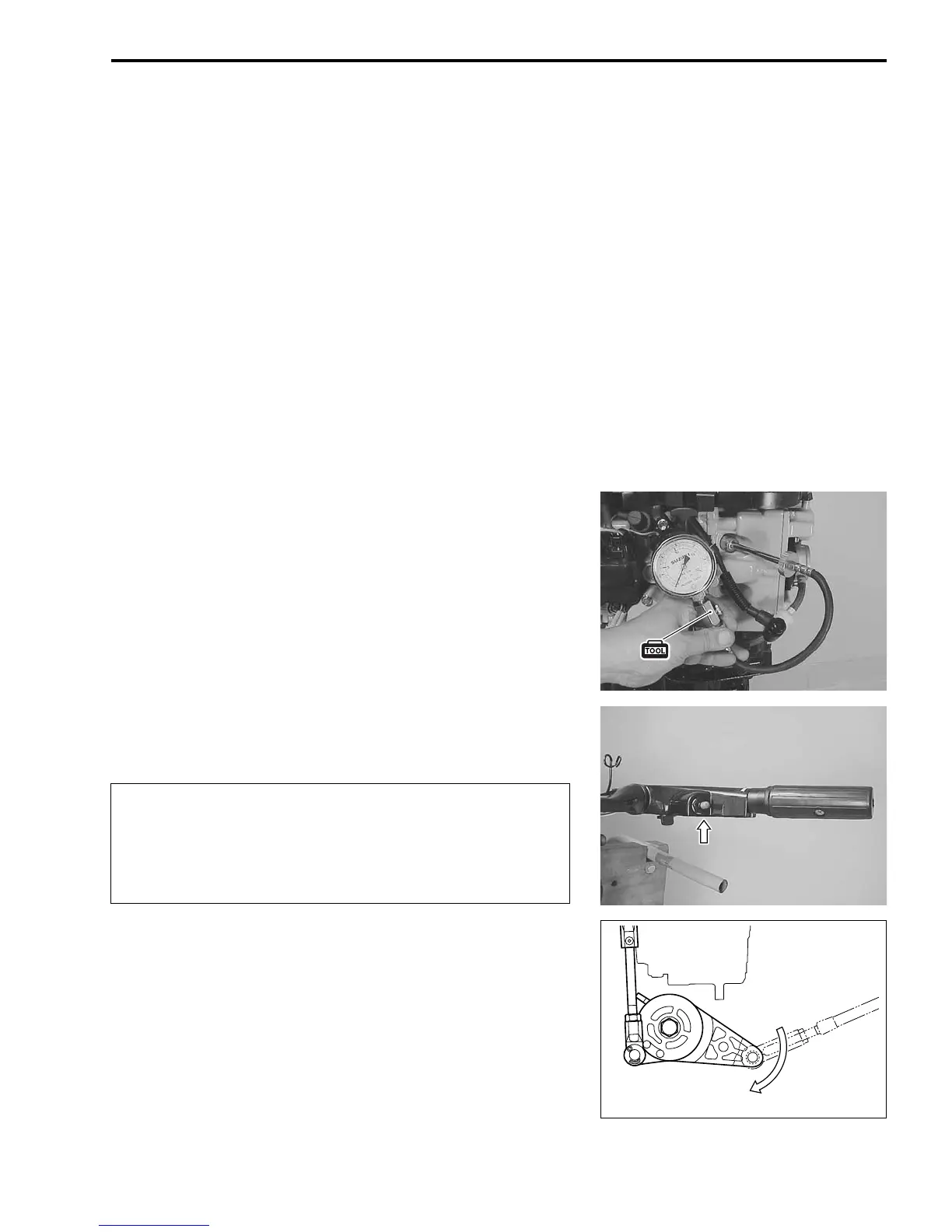
4. Install the compression gauge into the plug hole.
09915-64512: Compression gauge
5. Disconnect the safety lanyard from the emergency stop
switch.
6. Disconnect the remote control throttle cable from the throttle
lever. (R model)
7. • Move and hold the throttle lever in the full-open position.
(R model)
• Move and hold the throttle control grip in the full-open
position. (Tiller handle model.)
8. While cranking the engine with the starter motor or recoil
starter, note the maximum compression pressure reading on
the gauge for each cylinder.
9. Reinstall parts removed earlier. (spark plug, side lower
cover, etc.)
Disconnect the safety lanyard from the emergency
stop switch prior to cranking the engine.
This will prevent any residual fuel discharged from the
cylinders from being ignited by a spark discharged
from the spark plug cap.



 To Next Page