Page 111
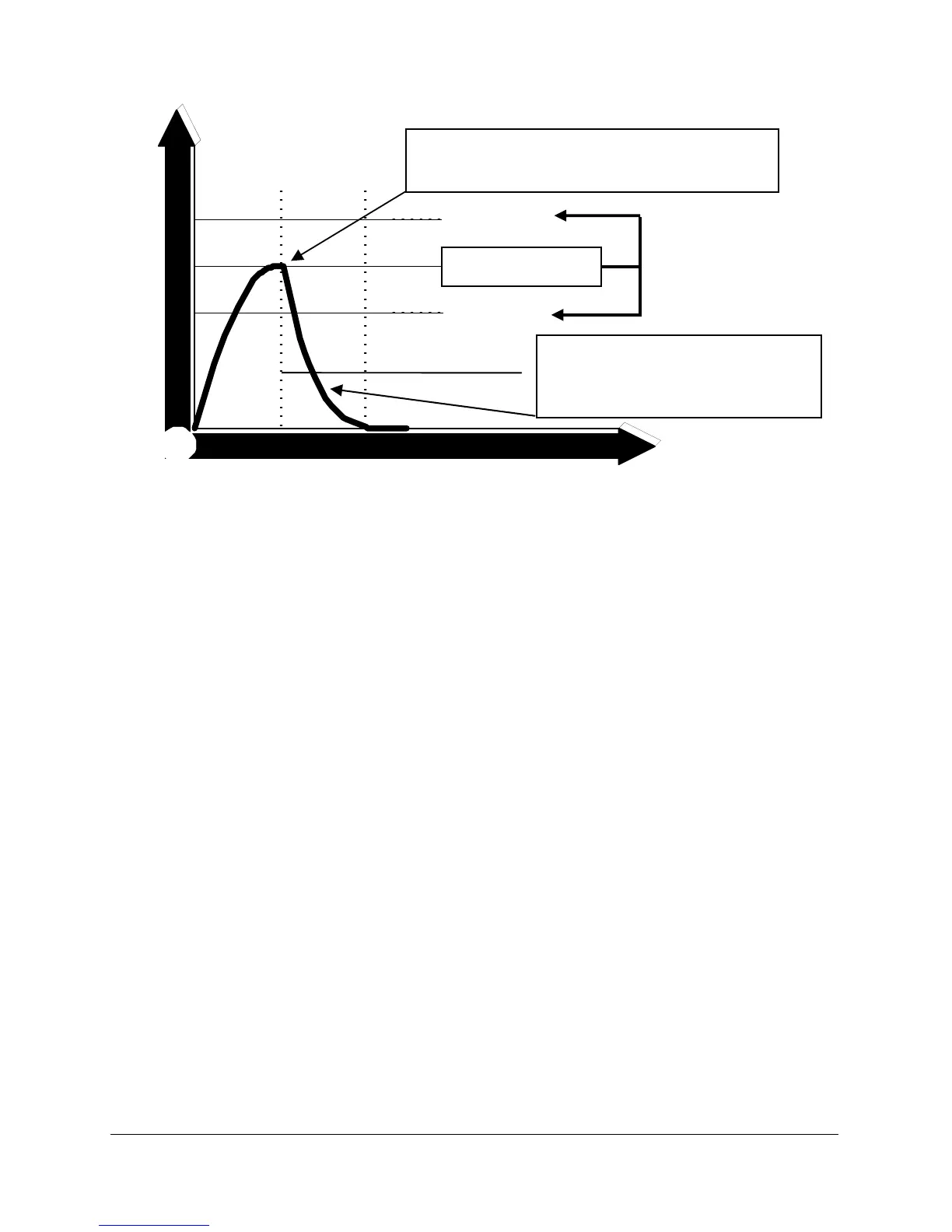
FIGURE 51
The figure above shows a typical occlusion test in which no coupling
valve is used. In this example, the product has a large enough passage to
allow rapid pressure loss.
The product is pressurized during fill time, and the pressure is not able to
rise above the pressure error limit. The test part’s flow path is open to
atmosphere throughout the test.
Test pressure is set while flowing
When setting the test pressure a known good part is used rather than
simply blocking the test port. By flowing through a part the pressure can
be set at the level expected when the flow path is open.
Fill Time Occlusion Test Pass
The significant flow through product keeps the test pressure from rising
and thus is not blocked.
Fill Time Occlusion Test Fail
If the flow path were to be blocked, the test pressure will rise indicating
that the flow path is blocked. The test will fail in the fill time because the
pressure is above the pressure error limit.
est Pressure
(- P ERR)
(+ P ERR)
Pass - Pressure is within P ERR limits at the
end of the fill time, a “quick” occlusion test.
O



 To Next Page