Electronic Regulator and Burst Testing
Ramp Start
Ramp Start is the pressure at which the test will start. Instead of waiting
for the pressure to ramp up from zero, the pressure will begin ramping at
the Ramp Start value. See the illustration on the following page.
Ramp Rate
Ramp Rate is the increase in pressure over time (psig/second). The
electronic regulator controls the ramping pressure. To set the ramp rate,
enter a rate between 0.1 and 20 psig per second. See the illustration on the
following page.
If 10 psig is entered, pressure increases 10 psig every second until the end
of the test time. If set to zero, Sprint LC goes directly to the set ramp start
pressure and remains there.
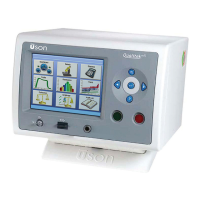
In Burst testing, pressure increases until a pressure drop is measured,
indicating the part has opened (burst), or until time runs out.
Manual Ramp Option
Your tester may also have the option to control the ramp rate manually
with a needle valve. If so, there will be a micrometer style handle on the
back of Sprint LC to adjust the needle valve. The manual ramp is typically
used on products with very small opening or burst pressures. When this
option is available, the ramp can be controlled with the ramp rate setting
alone, the needle valve alone, or a combination of the two.
¾ When set to OFF, the ramp rate is controlled only by the
ramp rate setting.
¾ When set to On with the ramp rate set at zero, the ramp rate
is controlled by the needle valve only.
¾ When set to ON with the ramp rate set to a value, the ramp
rate is controlled by both the ramp rate setting and the
needle valve.
Appendix 3



 To Next Page