CHAPTER 8 - CFW-09 OPTIONS AND ACCESSORIES
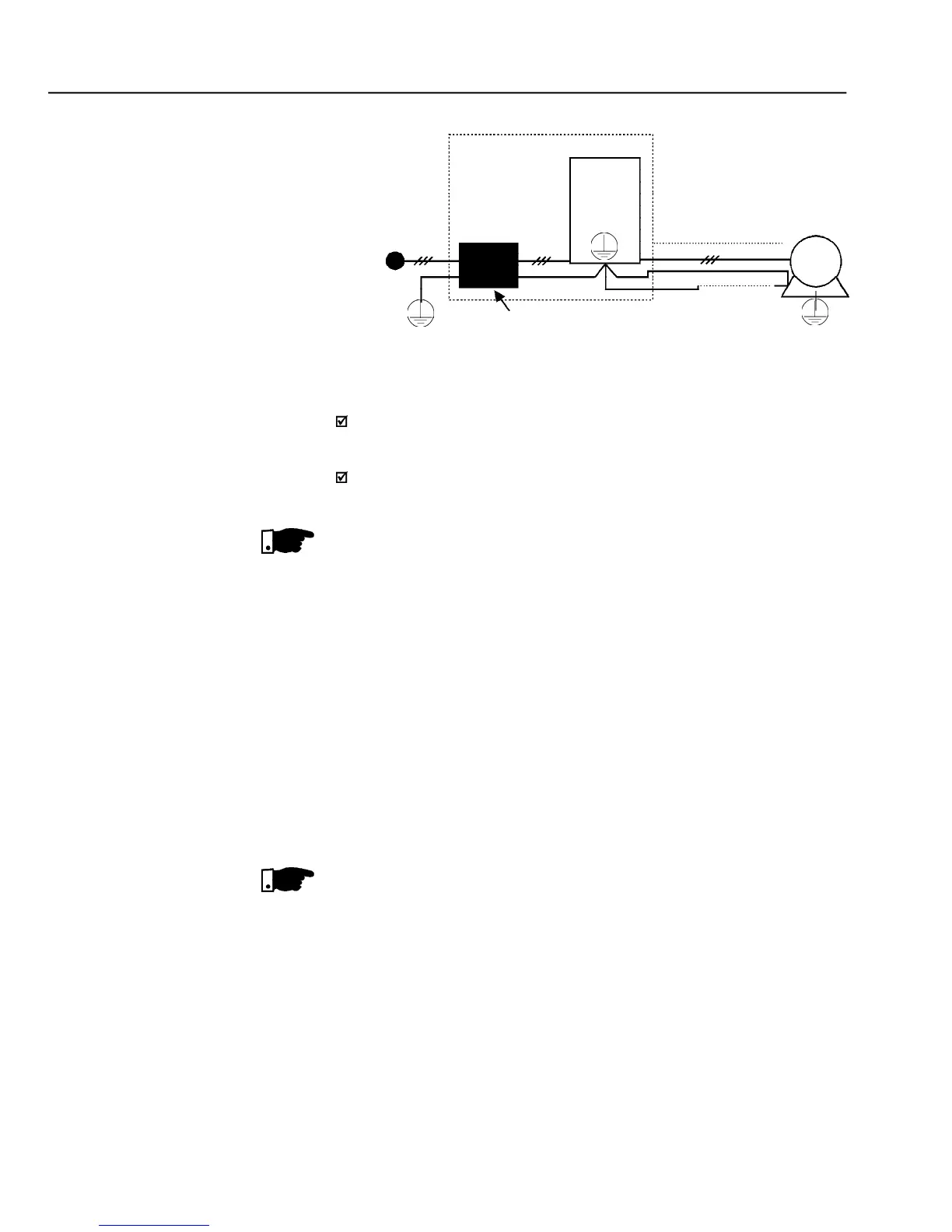
Instructions forthe RFI filterinstallation:
Install the inverter and the filter on a metallic grounded plate as near
to each other as possible and ensure a good electrical contact between
the grounded plate and the inverter and filter frames;
If the cable between inverter and filter is longer than 30 cm (12 in), use
shieldedcableandgroundeachshieldendonthegroundedmountingplate.
Installations that must meet the European standards, refer to item 3.3.
Theamountof braking torque that canbe generated whena motor is controlled
by an inverter, without dynamic braking or anyother braking schemes, varies
from 10 % to 35 % of the motor rated torque.
During the deceleration process, the kinetic energyof the load is regenerated
intothe inverter’s DC Link. This energy loads up the capacitors increasing the
DC Link voltage. When this energy is not fully dissipated, it may generate a
DC Link overvoltage trip (E01).
To obtain higher brakingtorque, theuse of Dynamic Braking, where the excess
regenerated energy is dissipated in an external resistor, is recommended.
The Dynamic Braking is usedin cases whereshort braking times arerequired
or where high inertia loads are driven.
For Vector Control Modes the “Optimal Braking” feature can be used and in
many cases eliminate the need for Dynamic Braking. Refer to chapter 6,
If dynamic braking will be used, set
For a precise sizing of the dynamic braking resistor, application data, such
as: deceleration time, loadinertia and braking duty cyclemust be considered.
The RMS current capacity of the inverter’s dynamic braking transistor must
also be taken into account, as well as its maximum peak current, which
defines the minimum resistance value(ohms) of the braking resistor. Refer to
The DC Link voltage level at which dynamic braking is activated is defined by
8.10.1 DB Resistor Sizing


 To Next Page