Tyres, Wheels, Ballasting
165
6
TYRE INFLATION SPECIFICATIONS
For maximum tractor performance, always adjust
the tyre pressure within the minimum/maximum
range, to conform with the actual load on the
tyres. Under normal conditions use the minimum
pressure rating for general drawbar work. Use
the higher pressure rating, up to the maximum,
for heavy three point hitch mounted equipment.
479
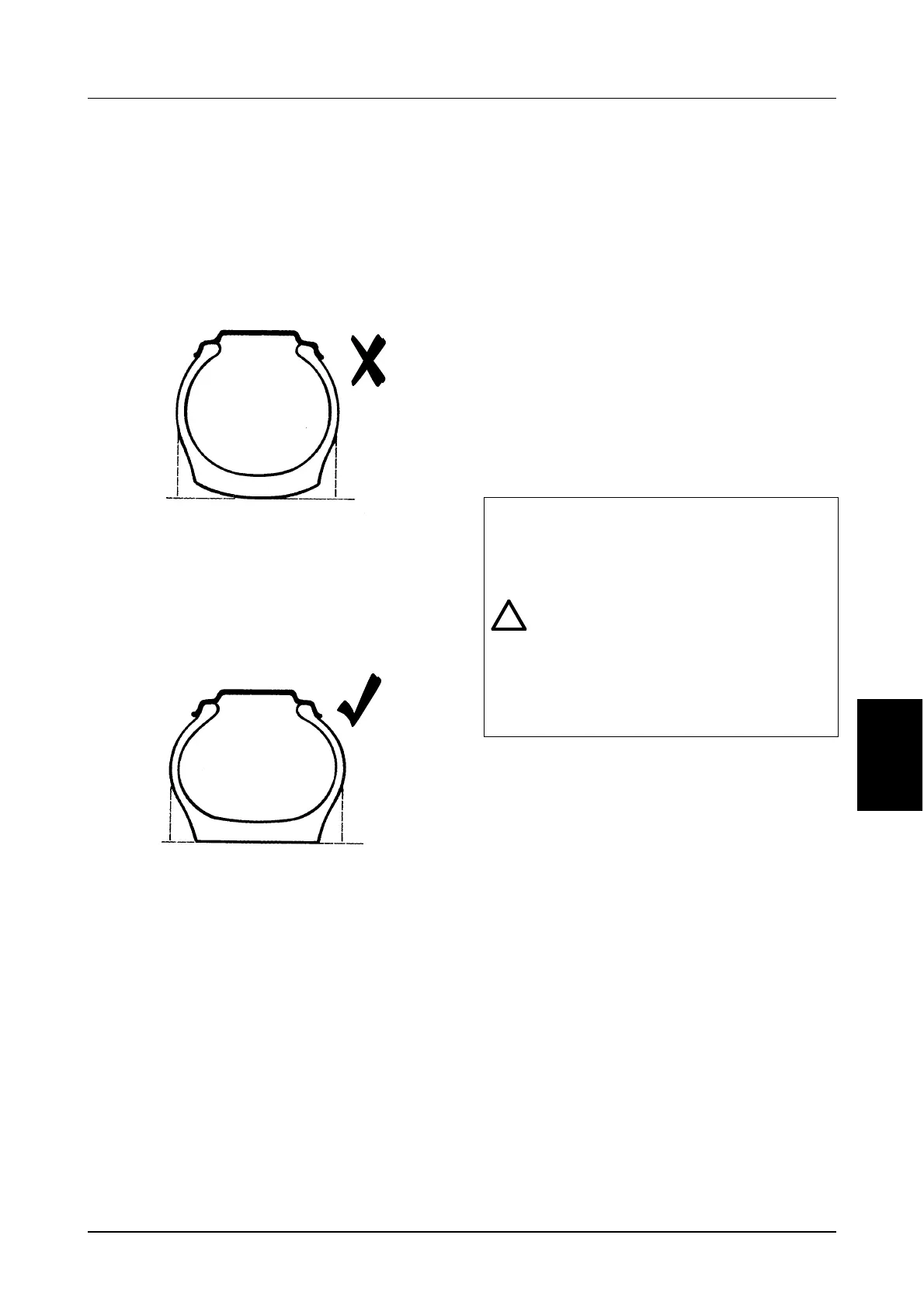
Example ‘A’ shows the cross section of a tyre
inflated for maximum load but with a minimum
load on the tyre. The tyre tread is not making full
contact with the ground which will give poor
performance.
479
Example ‘B’ shows the cross section of a tyre
with the inflated pressure correctly adjusted to
the load on the tyre. The tyre tread is making full
contact with the ground which will give maximum
performance.
Tyre pressure can also be adjusted as required to
satisfy the following requirements.
A. Severe Service. Tyre pressure can be
increased 28 kPa, 0.27 bar, (4 psi) more than
the maximum pressure shown in the charts,
for tyres used in severe service. Severe
service includes the furrow tyre in regular
ploughing operations, and in hillside
operations.
B. Tyres With Liquid Ballast. Inflate the tyres
14 kPa, 0.14 bar, (2 psi) more than the
normal operating pressure required for your
operation. This will compensate for aeration
that occurs when the tyres are in motion.
See Tyre and Wheel Service on page 169 for
instructions on safe tyre inflation procedure,
recommended tyre maintenance and tyre/rim
repair.
IMPORTANT: During transportation, by rail or
road, tractor tyres are inflated to higher than
normal operating pressures. Before using your
tractor check the air pressure in the tyres to
make sure that the air pressures are correct.
EXAMPLE “A”
MAXIMUM
INFLATION
PRESSURE
MINIMUM
LOAD
EXAMPLE “B”
INFLATION
PRESSURE
ADJUSTED TO
TRACTOR
WEIGHT
WARNING: A tyre can explode during
inflation and cause serious injury or death.
Never increase air pressure beyond 241
kPa, 2.4 bar to seat the bead on the rim.
Replace a tyre if it has a defect. Replace a
wheel rim which has cracks, wear or
severe rust. Make sure that all the air is
removed from a tyre before removing the
tyre from the rim. Never use force on an
inflated or partially inflated tyre, make
sure the tyre is correctly seated before
inflating.



 To Next Page