Tyres, Wheels, Ballasting
168
Air Pressure Check
Check the tyre inflation pressure every 50 hours
of operation or once per week.
NOTE: For best tyre life check tyre pressures as
regular intervals. Too low a pressure causes early
tyre wall failure. Too high a pressure causes higher
tread wear or damage.
Check the condition of the tyres and wheels for
wear or damage. Keep the tyres inflated to the
recommended pressures.
NOTE: Cross ply tyres can have the pressure
reduced to increase traction in field work. For
speeds below 16 km/h (10 mph), loads can be
increased by 20%.
NOTE: Never use radial ply tyres below 1.2 bar
(17 psi). It is not necessary to reduce the
pressure in radial tyres to get better traction in
the field.
IMPORTANT: Before leaving the factory the tyre
pressures are increased. Check and adjust the
pressures before operating the tractor.
For tyres equipped with liquid ballast, check the
air pressure as follows:
STEP 1
Use an air-water gauge. The valve must be at the
bottom of the tyre to get an accurate reading.
STEP 2
Use a standard air gauge as follows:
A. The valve must be at the top of the tyre.
B. Measure the wheel diameter.
C. Add 3.5 kPa, 0.04 bar (1/2 psi) for each
305 mm (12 inches) of rim diameter to the
standard gauge reading.
Tyre Inflation Procedure
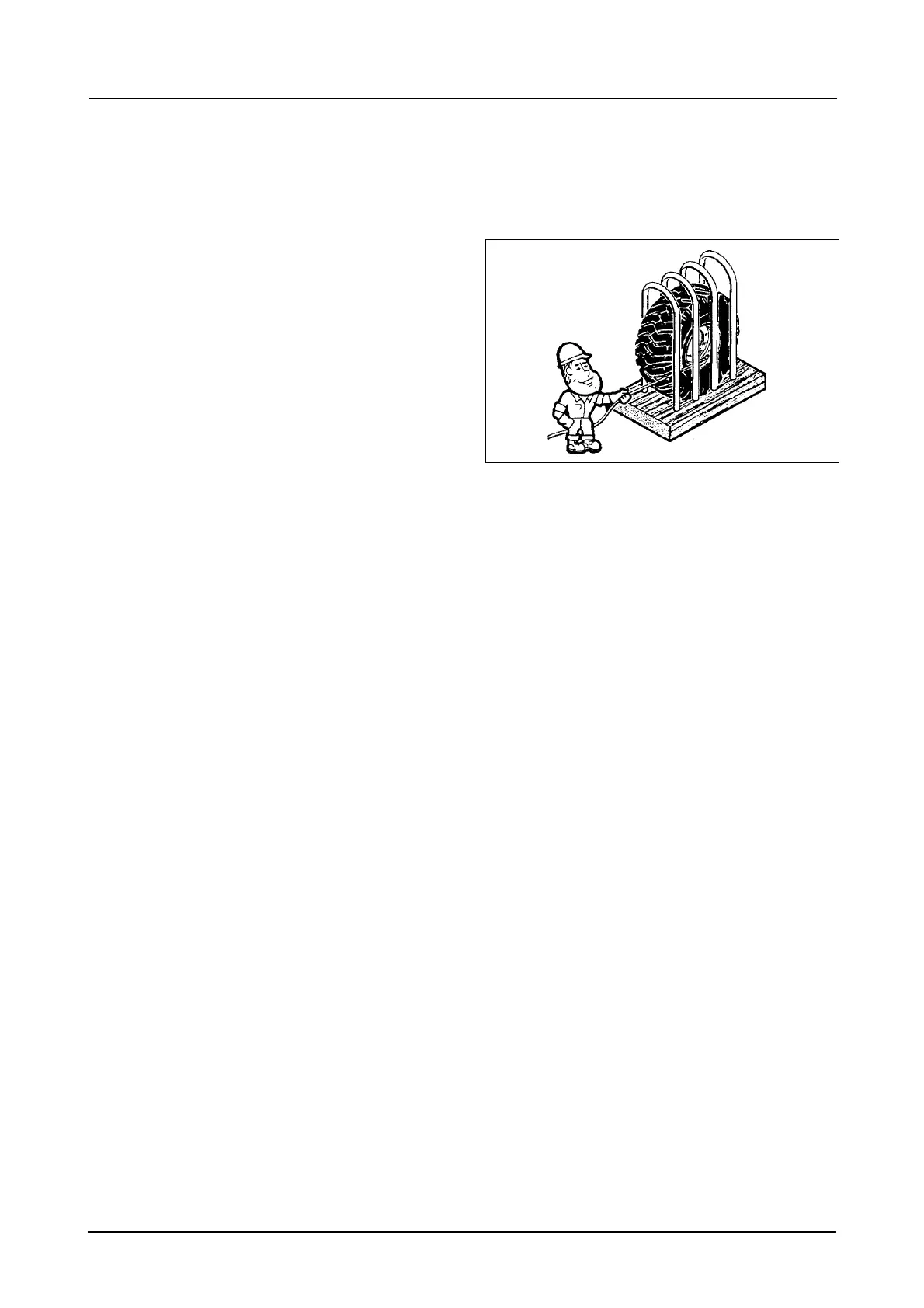
DO NOT inflate a tyre that has had a complete
loss of air. If the tyre has lost all air pressure,
have a qualified tyre mechanic service the tyre.
DS97D088
IMPORTANT: If the tyre wheel assembly has
been removed from the tractor always use a
restraining device (tyre inflation cage) when
inflating a tyre.
To ADD air to a partly inflated tyre, use the
following procedure:
STEP 1
Use a SAFETY TYPE air hose with a remote
shutoff valve and a self-locking air chuck.
STEP 2
Stand behind the tread of the tyre and make sure
all persons are away from the side of the tyre
before you start to add air.
STEP 3
Inflate the tyre to the recommended air pressure.
DO NOT INFLATE THE TYRE MORE THAN THE
RECOMMENDED PRESSURE.



 To Next Page