Tyres, Wheels, Ballasting
186
Front end weights, rear wheel weights and liquid
ballast in the tyres can be used to ballast your
tractor. Inadequate traction and excessive wheel
slip can waste up to thirty percent of tractor
horsepower.
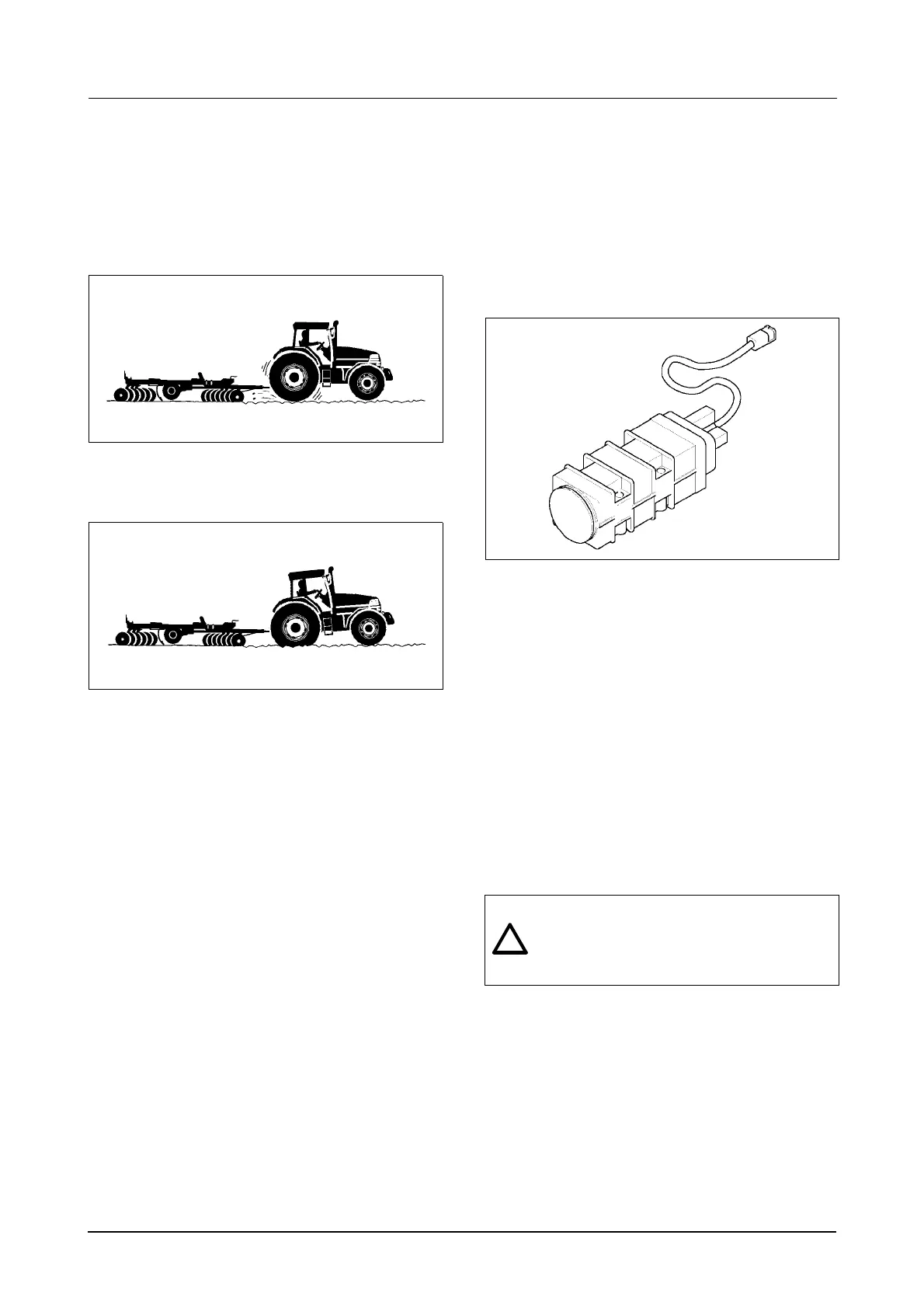
IDEAL WHEEL SLIP 12 -16%
DI96J517
Do not try to reduce wheel slippage to zero. Stay
within the 12-16% wheel slip.
DI96J518
If you add weight to the tractor to reduce wheel
slip to less than 12%, the added weight will
consume more engine power due to the
increased rolling resistance caused by the tyres
sinking into the soil.
Add ballast weight only as necessary to maintain
the correct tractor weight distribution and the
recommended amount of wheel slip.
Wasted energy, increased fuel consumption,
decreased tyre life and loss of productivity are all
principle ingredients that can increase operating
cost.
Determine the amount of wheel slip as follows:
A. With True Ground Speed Sensor
B. Without True Ground Speed Sensor
A. True Ground Speed Sensor
(If Equipped)
DP98J225
TRUE GROUND SPEED SENSOR
The sensor will accurately determine the true
ground speed of the tractor.
Precise application of chemicals and planting
inputs can be achieved with the Ground Speed
Sensor. This will reduce your input costs for
planting, fertilizing and chemical application for
weed and pest control.
You can also use the Ground Speed Sensor to
determine the actual percentage of rear wheel
slip under all operating conditions. This will allow
you to maintain the recommended amount of
wheel slip for maximum productivity and
operating efficiency.
NOTE: To provide accurate ground speed and
wheel slip, the correct tyre size radius must be
programmed into the instrument cluster.
IMPORTANT: Keep the face of the sensor clean.
Scrape mud off with a plastic scraper. DO NOT use
a metal scraper. Wash the face of the sensor with
soap and water or steam clean. DO NOT
disconnect the harness while cleaning.
WARNING: Do not look directly into the
face of the sensor. Micro-wave signals
emitted by the sensor can cause eye
damage.



 To Next Page