www.mdcusa.com
Ph: 1-833-632-8721
©Copyri ght
• Improve fuel economy.
• Increase the life of your tires.
This booklet presents a comprehensive overview of tire safety, including information on the following topics:
• Basic tire maintenance
• Uniform Tire Quality Grading System
• Fundamental characteristics of tires
• Tire safety tips.
Use this information to make tire safety a regular part of your vehicle maintenance routine. Recognize that the time you spend
is minimal compared with the inconvenience and safety consequences of a flat tire or other tire failure.
Checking & Maintaining Proper Tire Pressure
Properly maintained tires improve the steering, stopping, traction, and load-carrying capability of your vehicle. Underinflated
tires and overloaded vehicles are a major cause of tire failure. Therefore, as mentioned above, to avoid flat tires and other types
of tire failure, you should maintain proper tire pressure, observe tire and vehicle load limits, avoid road hazards, and regularly
inspect your tires.
Your Vehicles Recommended Pressure and Load Limit
Tire information placards and vehicle certification labels contain information on tires and load limits. These labels indicate the
vehicle manufacturer’s information including:
• Recommended tire size
• Recommended tire inflation pressure
• Vehicle capacity weight (VCW–the maximum occupant and cargo weight a vehicle is designed to carry)
• Front and rear gross axle weight ratings (GAWR– the maximum weight the axle systems are designed to carry).
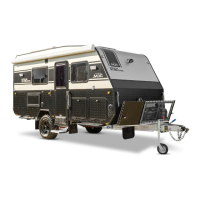
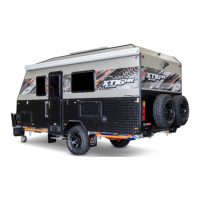
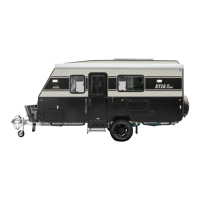
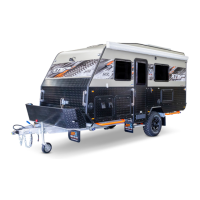
Both placards and certification labels are permanently attached to the trailer near the left front.
Understanding Tire Pressure and Load Limits
Tire inflation pressure is the level of air in the tire that provides it with load-carrying capacity and affects the overall performance
of the vehicle. The tire inflation pressure is a number that indicates the amount of air pressure– measured in pounds per square
inch (psi)–a tire requires to be properly inflated. (You will also find this number on the vehicle information placard expressed in
kilopascals (kPa), which is the metric measure used internationally.) Manufacturers of passenger vehicles and light trucks
determine this number based on the vehicle’s design load limit, that is, the greatest amount of weight a vehicle can safely carry
and the vehicle’s tire size. The proper tire pressure for your vehicle is referred to as the “recommended cold inflation pressure.”
(As you will read below, it is difficult to obtain the recommended tire pressure if your tires are not cold.) Because tires are
designed to be used on more than one type of vehicle, tire manufacturers list the “maximum permissible inflation pressure” on
the tire sidewall. This number is the greatest amount of air pressure that should ever be put in the tire under normal driving
conditions.
Checking Tire Pressure
It is important to check your vehicle’s tire pressure at least once a month for the following reasons:
• Most tires may naturally lose air over time.
• Tires can lose air suddenly if you drive over a pothole or other object or if you strike the curb when parking.
• With radial tires, it is usually not possible to determine underinflation by visual inspection.
For convenience, purchase a tire pressure gauge to keep in your vehicle. Gauges can be purchased at tire dealerships, auto supply
stores, and other retail outlets.
The recommended tire inflation pressure that vehicle manufacturers provide reflects the proper psi when a tire is cold. The term
cold does not relate to the outside temperature. Rather, a cold tire is one that has not been driven on for at least three hours.
When you drive, your tires get warmer, causing the air pressure within them to increase. Therefore, to get an accurate tire
pressure reading, you must measure tire pressure when the tires are cold or compensate for the extra pressure in warm tires.
Steps for Maintaining Proper Tire Pressure
• Step 1: Locate the recommended tire pressure on the vehicle’s tire information placard, certification label, or in the owner’s
manual.
• Step 2: Record the tire pressure of all tires.




 To Next Page