www.mdcusa.com
Ph: 1-833-632-8721
©Copyri ght
• Always replace with a breaker of the same amperage rating to maintain proper circuit protection.
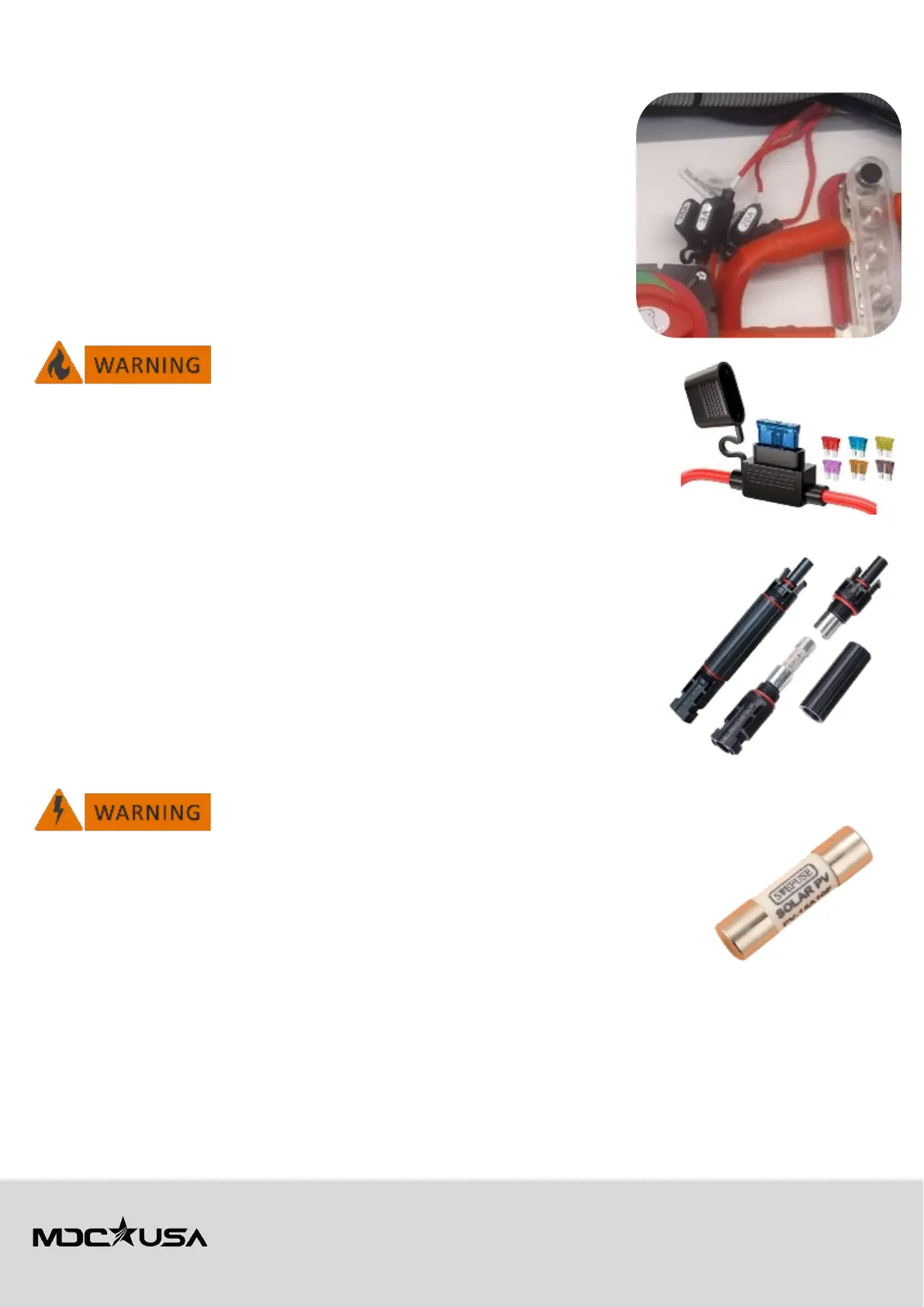
Single-use Blade Fuses (1A-30A)
• Located within in-line fuse holders in the primary battery bank circuit breaker
compartment.
• Used for constant power circuits, including:
1. Stereo memory
2. Emergency Breakaway system
3. Trail-Assure Electronic Stability System
• Replacing a Blade Fuse:
1. Disconnect power before servicing.
2. Open the in-line fuse holder and replace the fuse with one of the same
amperage rating.
3. Ensure the fuse is securely seated before restoring power.
A blown fuse may be hot—allow time to cool before handling.
• Inspect the fuse holder for signs of melting, discoloration, or loose connections,
which may indicate
excessive heat buildup or a more serious issue in the circuit.
• If the replacement fuse blows immediately, do not continue replacing fuses—
diagnose and correct the underlying fault before proceeding.
PV (Solar) Single-use Ceramic Fuses (10-15A)
• Located underneath the solar panels, housed in MC4 fuse connectors specifically
designed for
PV system protection.
• Each solar panel has its own dedicated fuse to prevent overcurrent damage.
• Replacing a Solar Fuse:
1. Isolate the solar array before servicing. Disconnect from the charge controller or
cover panels to prevent current flow.
2. Push in the tabs on either side of the MC4 fuse connector and pull the connector
apart.
3. Unscrew the fuse cover to access the fuse.
4. Replace with a ceramic fuse of the same rating.
5. Reassemble and secure the connector before reconnecting power.
• PV fuses may still carry residual voltage, even when disconnected from the system.
Always verify with a multimeter before handling.
• Use insulated gloves and tools when working on live or recently disconnected PV circuits.
• Do not replace fuses in wet conditions—moisture can increase the risk of electric shock
or
connector damage.













 To Next Page