www.mdcusa.com
Ph: 1-833-632-8721
©Copyri ght
1. Solar Panels Do Not Always Produce Their Rated Wattage
The rated power of a solar panel (e.g., 200W, 400W) is based on Standard Test Conditions (STC):
• Irradiance: 1000W/m² (full sun)
• Panel temperature: 77°F (25°C)
• Optimal tilt and sun angle
In real-world conditions, factors such as cloud cover, dust, shading, and temperature variations often reduce actual output.
Since the solar panels in this system are configured in parallel, shading on one panel affects only that panel’s output rather than
the entire system. However, keeping panels clean and minimizing obstructions remains essential for maximum efficiency.
2. Heat Reduces Efficiency
As solar panels heat up, their efficiency decreases. The Voltage at Maximum Power (Vmp) drops as temperature rises:
• A panel rated for 18V at 77°F may only output 16V at 104°F.
• Conversely, cold temperatures improve efficiency, increasing Vmp.
MPPT charge controllers compensate by dynamically adjusting voltage to extract the highest available power.
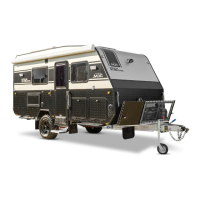
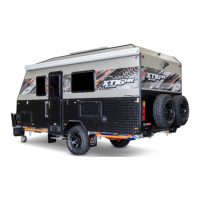
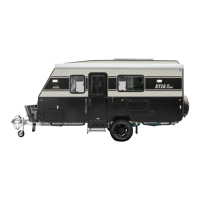
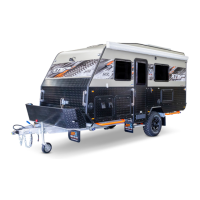
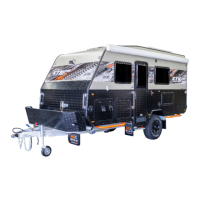
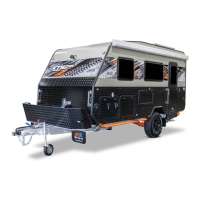
3. Angle & Tilt Impact on Fixed Roof-Mounted Solar Panels
The angle and tilt of solar panels significantly impact power output. Ideally, panels should be tilted at an angle equal to the latitude
of the location for maximum year-round efficiency. However, as the solar panels on this travel trailer are roof-mounted and fixed,
they cannot be adjusted for seasonal sun angles. This results in:
• Suboptimal winter performance: During winter months, the sun is lower in the sky, reducing the amount of direct sunlight
the panels receive. Fixed horizontal panels will not capture as much solar energy as panels tilted at a steeper angle.
• Good summer performance: In the summer, the sun is higher in the sky, which benefits horizontal panels. However,
efficiency can still be affected by
dirt buildup, dust, and heat.
• Lower peak efficiency compared to adjustable panels: Because the tilt is fixed, the panels will not always be at the optimal
angle for maximum power generation.
Best Practices to Offset Fixed Panel Limitations:
•
Parking orientation matters
– When possible,
position the travel trailer so that the roof panels
face the midday sun
for maximum exposure.
•
Avoid shaded areas
– Even partial shade on one panel can reduce overall power output.
•
Keep panels clean
– Fixed panels accumulate more dust and debris, which can reduce
efficiency. Regular cleaning improves performance.
•
Supplement with portable solar panels
– If additional solar input is needed, a portable solar
panel can be positioned at an optimal tilt to supplement roof-mounted panels. See
Auxiliary
Solar Panel Inputs
for more information on using portable solar panels with your Off-grid
Extreme edition trailer.
4. Partial Shading Still Affects Performance
Even small obstructions—like antennas, tree branches, or dirt—can significantly reduce power output. In a parallel system,
shading on one panel does not impact the rest of the array, but the affected panel will produce
reduced power. The MPPT
controller helps mitigate shading effects, but minimizing shade is still critical for maximum system efficiency.
5. Seasonal & Geographic Variability
The amount of solar energy available fluctuates based on location, season, and weather:
• Winter months yield less power due to shorter daylight hours and lower sun angles.
• Rainy or overcast days can reduce efficiency by 50-90%.
• Higher latitudes receive less direct sunlight, affecting total daily output.
Summary
Solar power is an effective energy source for off-grid travel, but real-world factors like temperature, shading, fixed panel angles,
and seasonal variations impact its performance. While the parallel configuration ensures partial shading affects only individual
panels, the
fixed roof mounting means panels cannot be adjusted for optimal sun exposure. To maximize efficiency, positioning
the trailer strategically, keeping panels clean, and supplementing with portable solar panels when needed can help offset these
limitations. Understanding these factors allows for better energy planning and more reliable power use in off-grid conditions.



 To Next Page