1. About EtherNet/IP
TM
1.1 Overview
EtherNet/IP
TM
is a communication protocol that uses the same network technology that can be found in commercial and
domestic operations worldwide, but has added benefits/features toward manufacturing applications. It is a CIP (common
industrial protocol) Network that follows the Open Systems Interconnection (OSI) model.
The ODVA (Open Device Net Vendor Association) is an independent organization that governs the EtherNet/IP
TM
specification and oversees conformance testing for products.
EtherNet/IP
TM
uses industrial M12 IP67-rated connectors. The protocol can transfer data at two interface speeds of 10
Mbps and 100 Mbps. Maximum network cabling distance is limited to 100m segments at 20º C.
More information about EtherNet/IP
TM
and ODVA can be obtained from the ODVA web site www.odva.org
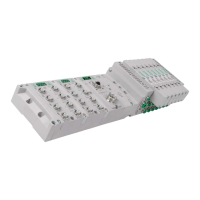
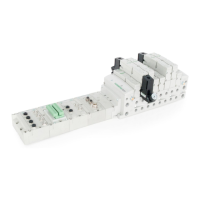
Device level ring or DLR network technology for industrial applications takes advantage of embedded switch
functionality within the associated EtherNet/IP
TM
communication modules. DLR technology adds device-level network
resilience to optimize machine operation. When a DLR network detects a break in the ring, it provides alternate routing
of the data to help recover the network at extremely fast rates. Enhanced diagnostics built into DLR-enabled products
identify the point of failure, helping to speed maintenance and reduce mean time to repair. The DLR module is works
equally well in both Linear and Ring configurations.
1.2 G3 EtherNet/IP
TM
Features
1.3 G3 EtherNet/IP
TM
Performance Data
ACD, ARP, DHCP, HTTP, TCP/IP, UDP


 To Next Page