Because RFL™ and Hubbell® have a policy of continuous product improvement, we reserve the right to change designs and specifications without notice.
DACS / ILS NETWORK.
a. Terminal.
DACS-Timed.
A DACS/ILS-based network typically derives its timing from a DACS module (by convention, usually at
the head/tail node). The DACS unit may utilize either internal or external timing and the terminal will be set for
loop timing.
In the event of network failure, the terminal Common Module connected to the DACS will not
experience any loss of sync because the DACS reconditions (reframes) the T1 signal. The Common Module will
therefore not switch into fallback timing.
For consistency, fallback timing parameter should be left at a known value. The factory default setting is
INT
ernal.
Common Module - Timed
In some network configurations, the timing originates in a terminal connected to a DACS or an ILS. This
terminal operates in external or internal primary timing mode. For this configuration, the fallback timing should
be set for internal to prepare for the possibility of losing the external timing source.
b. Drop-And-Insert.
As it is the case with the loop-timed terminal, the drop-and-insert derives its timing from a DACS or ILS
module to which it is connected. In a similar manner, in the event of network failure the DACS or the ILS
reframes and reroutes the T1 signal. The drop-and-insert Common Module will not experience any loss of sync
and therefore will not switch into fallback timing.
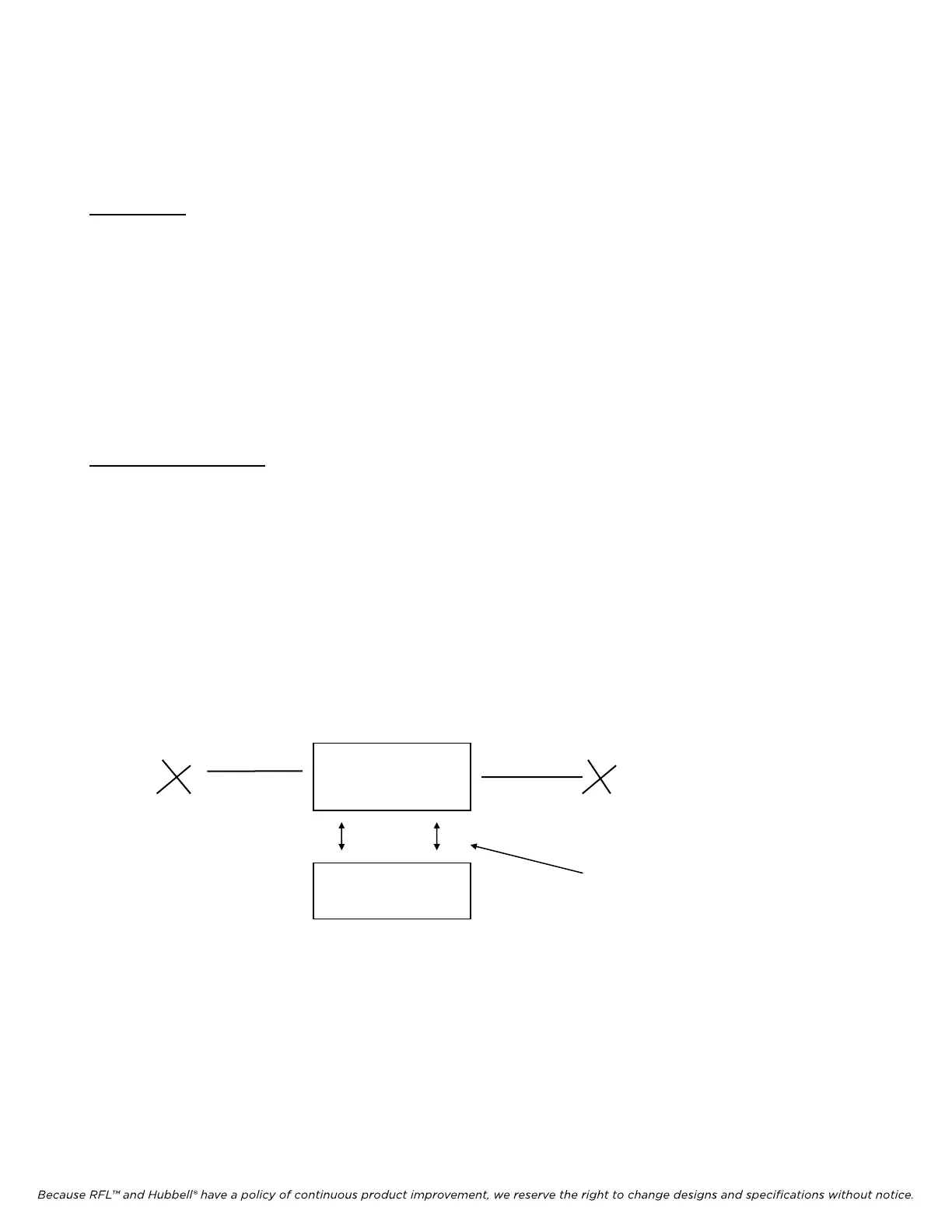
break break
DACS or ILS
this T1 link is still
drop-and-insert properly timed
For consistency, fallback timing parameter should be left at a known value. The factory default setting is
INT
ernal.
APNOTE09 page 2 of 3 rdw 5/22/2006 8:28:09 AM


 To Next Page