Date Code 20001006 Trip and Target Logic 5-23
SEL-351 Instruction Manual
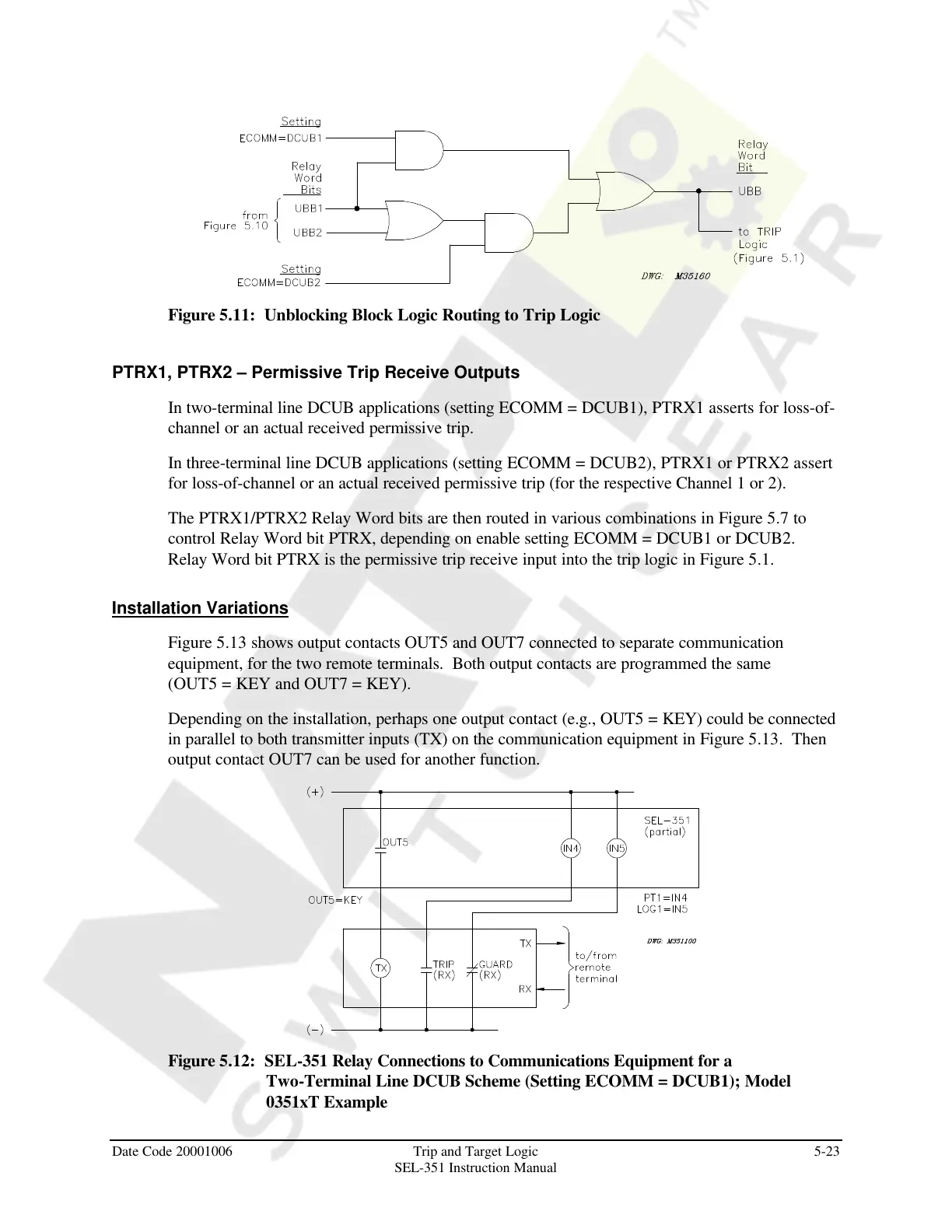
Figure 5.11: Unblocking Block Logic Routing to Trip Logic
PTRX1, PTRX2 – Permissive Trip Receive Outputs
In two-terminal line DCUB applications (setting ECOMM = DCUB1), PTRX1 asserts for loss-of-
channel or an actual received permissive trip.
In three-terminal line DCUB applications (setting ECOMM = DCUB2), PTRX1 or PTRX2 assert
for loss-of-channel or an actual received permissive trip (for the respective Channel 1 or 2).
The PTRX1/PTRX2 Relay Word bits are then routed in various combinations in Figure 5.7 to
control Relay Word bit PTRX, depending on enable setting ECOMM = DCUB1 or DCUB2.
Relay Word bit PTRX is the permissive trip receive input into the trip logic in Figure 5.1.
Installation Variations
Figure 5.13 shows output contacts OUT5 and OUT7 connected to separate communication
equipment, for the two remote terminals. Both output contacts are programmed the same
(OUT5 = KEY and OUT7 = KEY).
Depending on the installation, perhaps one output contact (e.g., OUT5 = KEY) could be connected
in parallel to both transmitter inputs (TX) on the communication equipment in Figure 5.13. Then
output contact OUT7 can be used for another function.
Figure 5.12: SEL-351 Relay Connections to Communications Equipment for a
Two-Terminal Line DCUB Scheme (Setting ECOMM = DCUB1); Model
0351xT Example
Courtesy of NationalSwitchgear.com


 To Next Page