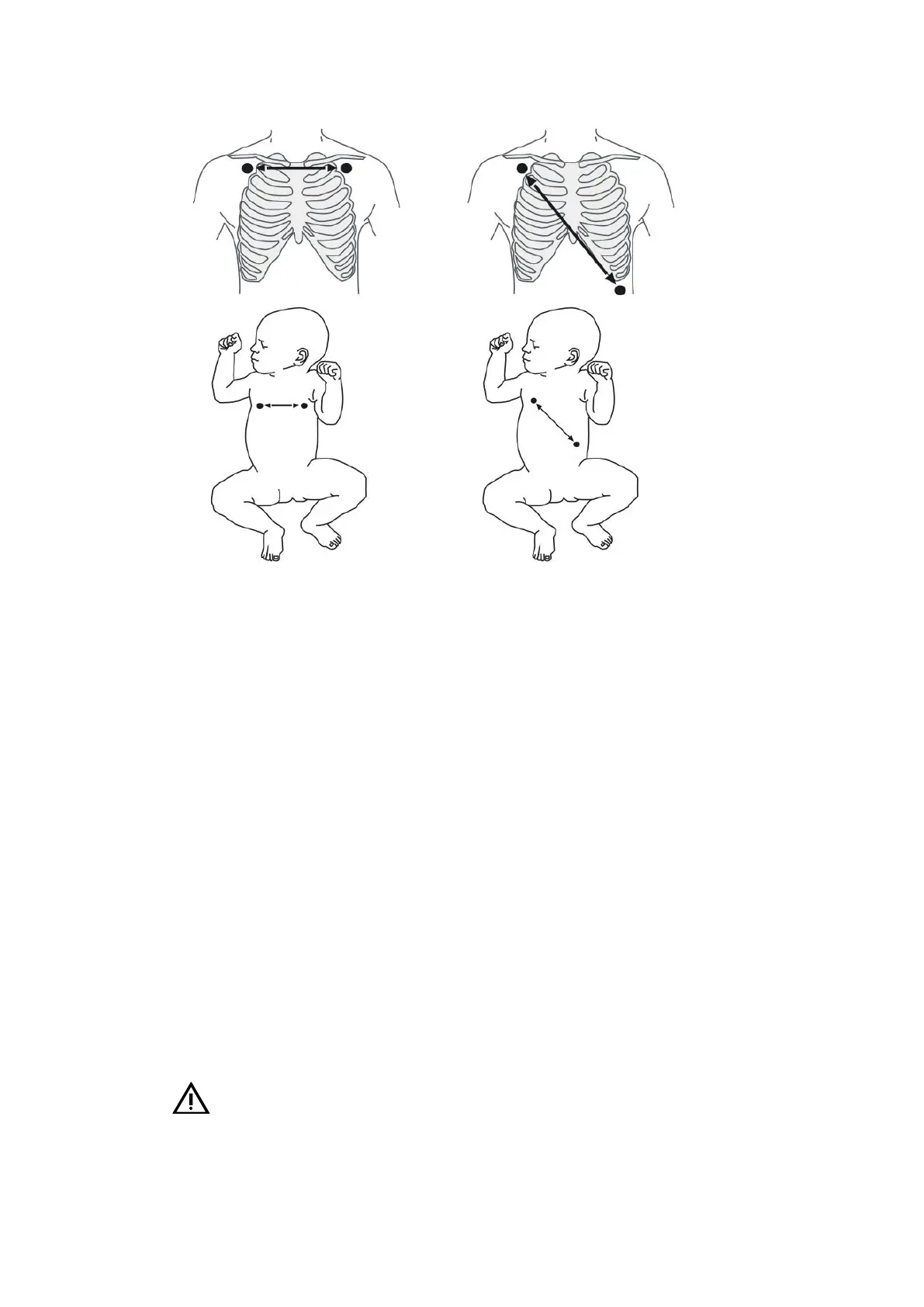
12- 3-lead electrode placement
•
Cardiac Activity Superposition
The effect of cardiac activity on respiratory waveforms is called cardiac activity superposition.
This occurs when the respiratory electrode picks up impedance changes caused by rhythmic
blood flow. Proper placement of breathing electrodes reduces this impact. It should be avoided
that the hepatic region and the ventricles are on the line of the respiratory electrodes to avoid
artifacts generated by cardiac or pulsatile blood flow, which is particularly important in neonates.
•
Abdominal Respiration
In some patients, chest movement is limited, and they breathe mainly through the abdomen.
At this point, you may need to place the left leg electrode in the position of strongest expansion
of the left abdomen to obtain the best respiratory waveform.
•
Thoracic Expansion
In clinical practice, for some patients (especially neonates), lateral expansion of their thorax
may result in negative intrathoracic pressure, in which case it is best to place two respiratory
electrodes in the right mid-axillary line and in the area with the strongest respiratory motion on
the left side of the thorax to obtain the best respiratory waves.
Caution
Respiratory monitoring does not apply to patients with high activity levels, as this may result
in an ERROR alarm.


 To Next Page