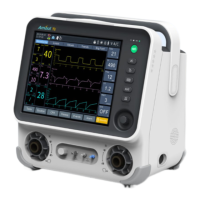
2) As shown in the figure, the upper and lower alarm limits can be set for relevant life
parameters. When the parameter value is lower than the lower limit or higher than the upper
limit, the system will give an alarm.
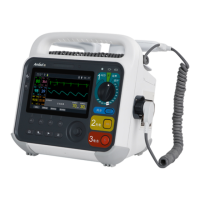
3) Once set up, exit the settings screen, and the Defibrillator Monitor will automatically
update to the latest settings.
Warnings:
Before starting monitoring, check whether the alarm limit settings are appropriate for
the patient.
Setting the alarm limit to a border value may cause the alarm system to be ineffective.
For example, high oxygen levels can cause preterm infants to be susceptible to developing
retrolental fibroplasia. If the SpO
2
upper alarm limit is still set to 100 %, the upper alarm will not
be triggered.


 To Next Page