CHAPTER 4 – Installation
Chap. 4
- 7/20 -
• Before hoisting the load completely, always check that hoisting is aligned with the barycenter of
the load being hoisted; if necessary, adjust the position of the hoisting equipment or redistribute
the loads.
• During horizontal movements, avoid pitching as much as possible, especially during movement
start-up or stop.
• Changes in direction must take place after a full stop from load standstill.
• As far as possible, the hoisted load must be kept away from obstacles and as closet o the ground
as possible.
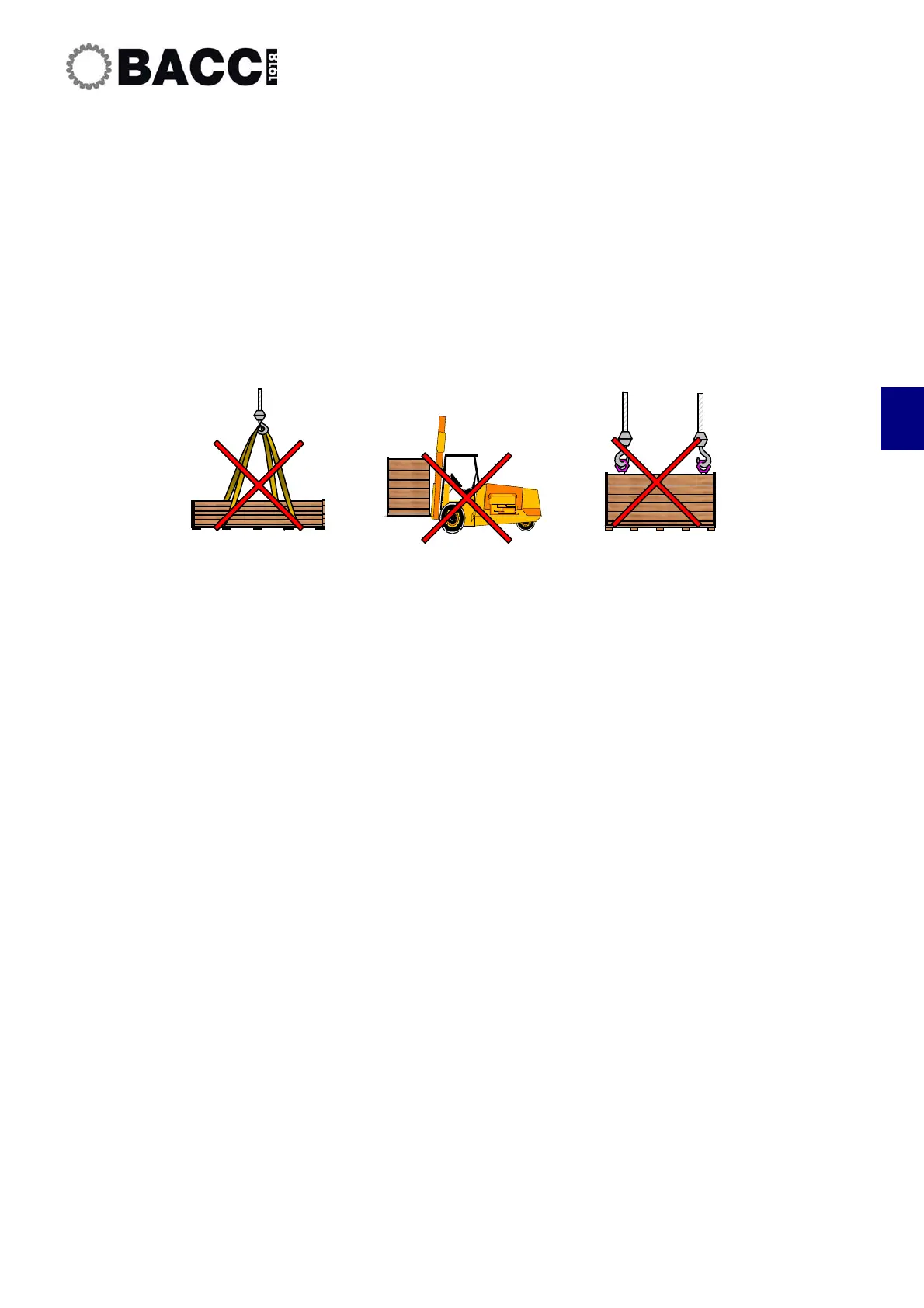
• If the case bears the symbols shown below, crossed out, that type of hoisting for the load in
question is expressly prohibited.
• To rest the machine onto the platform of a truck or on the ground temporarily, the resting surface
must first be equipped with wood strips, all of equal height, positioned so as to provide a stable
resting surface and avoid damage to machine parts (where possible, rest the machine on its
side).
• The machine and or the equipment and components must be lowered to the ground slowly and
carefully, to avoid damage.
• Inspect the load hoisting equipment (hooks, harness, chains, eyebolts, anchor bolts) thoroughly
before use.
• If defects are found, replace the accessories with new ones, making sure that the replaced
hoisting equipment is put out of use definitively. Possible defects include:
o Absence or illegibility of labels bearing the load capacity;
o Presence of cuts, holes or rips on synthetic straps;
o Twisted or crushed points on ropes or metal cables;
o Signs of corrosion on metal parts;
o Abrasions and signs of wear due to excess friction on components.
• Cuts are the main cause of breaking of synthetic straps. Cuts are generally produced when the
straps rub against sharp edges on the load being handled.
• To ensure the integrity of straps, and therefore hoisting safety, we suggest inserting a soft
material along the edges of the load where it comes into contact with hoisting straps.


 To Next Page