SERVICE & MAINTENANCE Cont.
20
GASOLINE CONTAINING ALCOHOL
We DO NOT recommend the use of ALCOHOL bearing fuels in any of our products. The use of these fuels may
create a potential safety hazard.
FUEL LEVEL
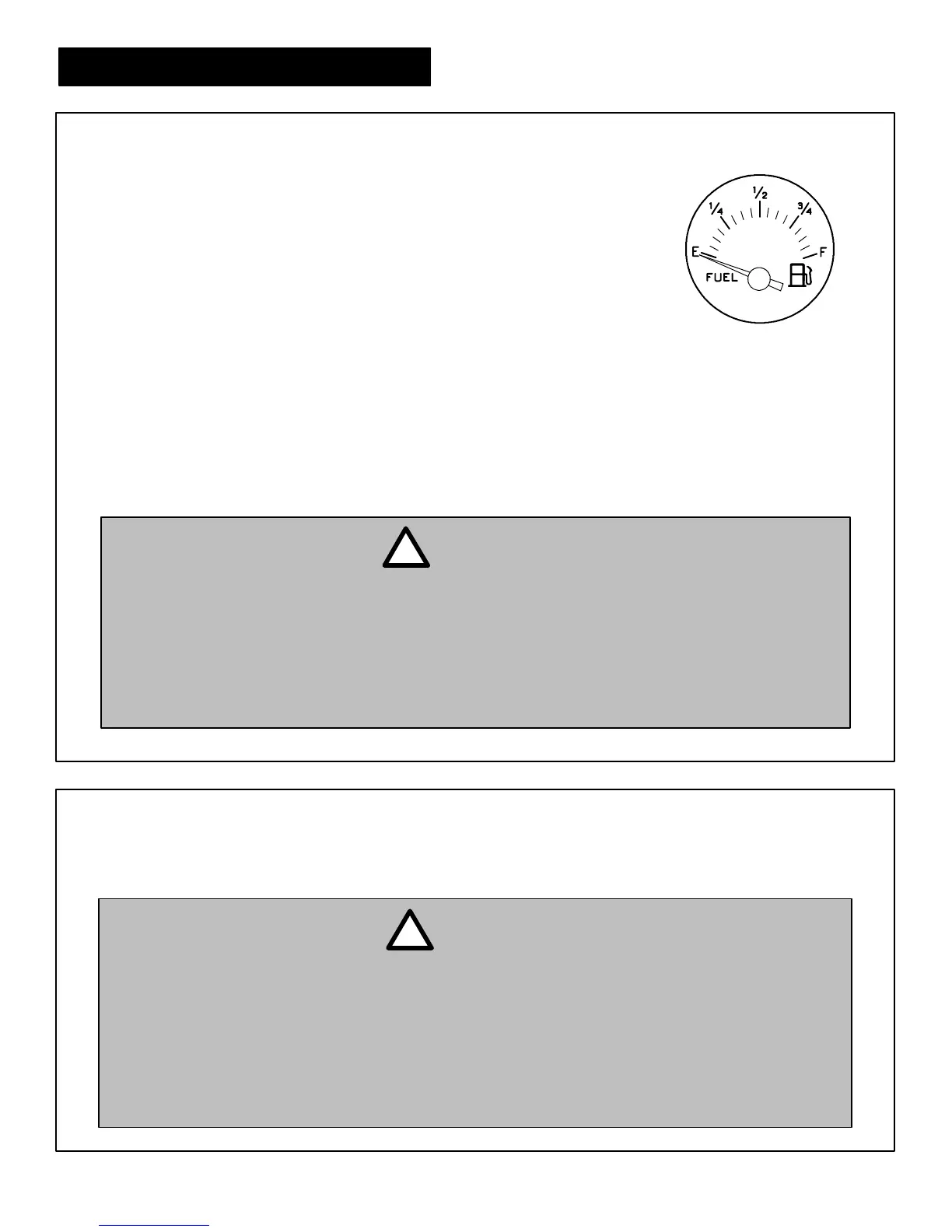
1. Check fuel level in fuel tank. T urn the ignition switch to the ON position,
fuel level will be determined by how far the fuel gauge needle rises. The
illustration below shows the various levels for reading the fuel gauge.
Fuel Tank Volume
2. Fuel tank capacity is 6.5 gal. (24.5 L). Fill if necessary using the
following fuel recommendations:
• Remove fuel cap slowly. Fuel may be under pressure. Spray may cause serious injury.
• Engine fuels are extremely flammable and highly explosive under certain conditions.
• NEVER remove the fuel tank cap or attempt to refuel the unit while the engine is running.
• NEVER refuel indoors. NEVER smoke while refueling.
• ALWAYS wipe up spilled fuel immediately.
• NEVER operate the unit without an approved cap on the fuel tank filler opening.
WARNING
!
• Gasoline Engines - Unleaded gasoline with an 87 or higher
Octane reading.
• Gasoline containing ALCOHOL can cause deterioration of some non--metallic materials in the
fuel system.
• Fuel hoses must be inspected frequently and replaced if excessive stiffness, deterioration or fuel
leakage is found.
• Gasoline containing ALCOHOL will attract and hold moisture inside fuel tanks. Moisture may
cause corrosion of metallic parts within the fuel system.
• Fuel leakage from a fuel system can occur while the system is in use, in transit, or in storage. Such
leakage can contribute to an explosion or fire, causing serious bodily injury or death.
WARNING
!
The fuel tank is located on the right side of the vehicle in front of the rear tire.
• Diesel Engines - Diesel Fuel No. 2-D (ASTM D975) Do Not use
Aviation Fuel JP4
For vehicles using diesel fuel, Use #1 diesel fuel (ASTM No. 1D) when temperature is 20E F (-7E C) or below:
use #2 diesel fuel (ASTM No. 2D) when temperature is above 20E F (-7E C).
If No. 1D is not available, a winterized blend of No. 1D and No. 2D may be available. This blended fuel is
usually called No. 2D and may be used in colder climates.
Never use No. 2D at temperatures below 20E F (-7E C) unless you are sure it has been winterized. Cold
temperatures may cause it to thicken which will keep your vehicle from running.



 To Next Page