SERVICE & MAINTENANCE Cont.
21
Figure 25
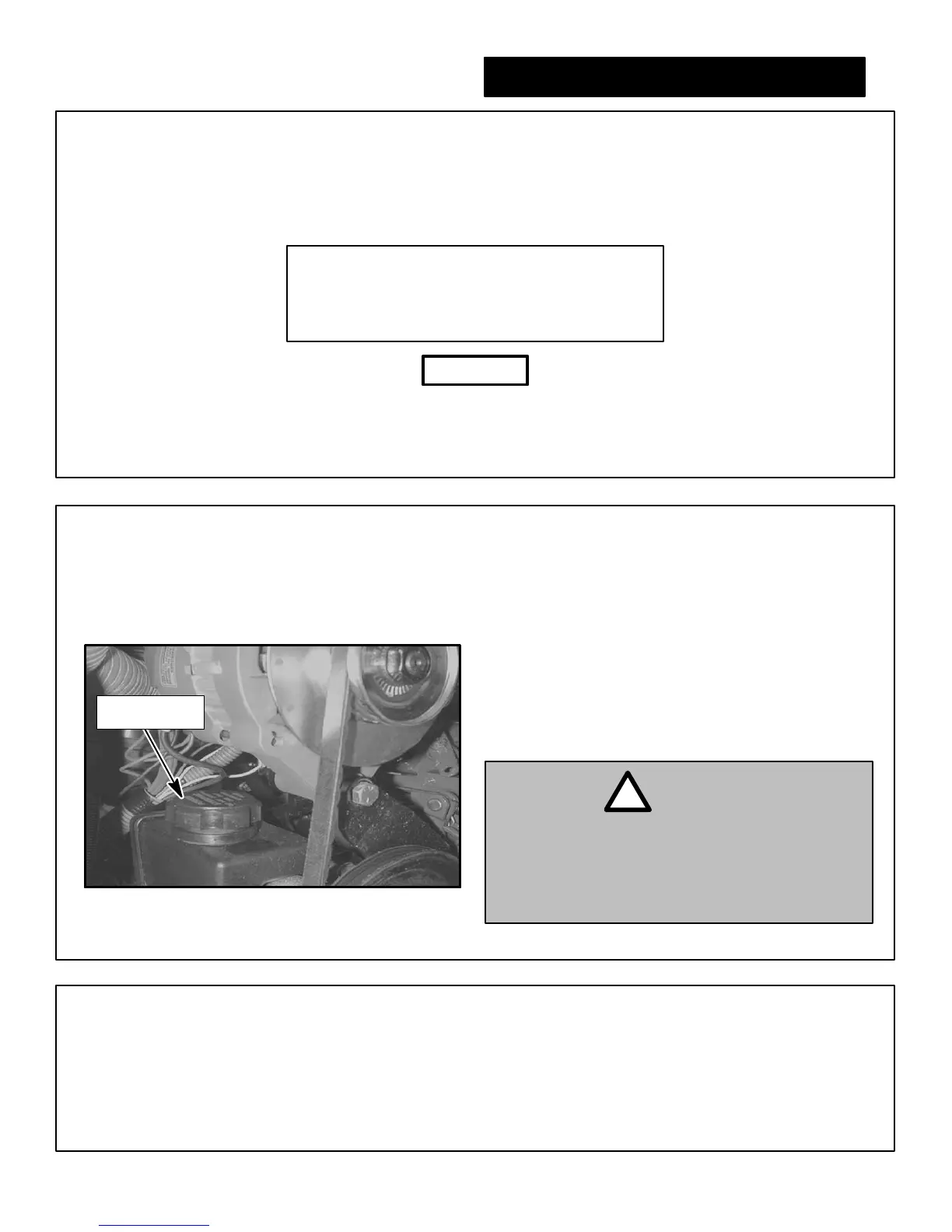
Power Steering Reservoir
1. Check all tires for proper inflation. Keep tires inflated to the specifications corresponding to that particular tire size.
20-8.00 X 10 (4 PLY) 20 PSI (138 KPA)............
20-10.00 X 10 20 PSI (138 KPA)..................
24-13.00 X 12 15 PSI (110 KPA)..................
TIRE SIZE TIRE PRESSURE
TIRE PRESSURE
NOTICE
• Improper inflation will shorten the life of your tires considerably. Fill tires with care. Use
a pressure gauge before connecting an air hose to a partly inflated tire. Due to the low
air volume needed, over-inflation may be reached in a matter of two or three
seconds.
POWER STEERING
The level in the reservoir should be checked after the first 35 hours and then again after another 35 hours, after
that the level should be checked every 100 hours. Use GM power steering fluid to maintain the correct fluid level.
WARNING
!
• Before servicing or doing any maintenance
work around the engine area, make sure the
engine has had time to cool. Serious burns
can result if the engine and surrounding area
is hot.
Power Steering
Reservoir
Remove the power steering reservoir cap. When check-
ing the fluid level for the first time at the beginning of the
day, the fluid level should be at the “cold” mark on the dip-
stick. When checking the fluid level after the engine has
been running and the fluid is warm, the level should read
between the “cold” and “hot” marks.
The power steering reservoir is located on the right side of the engine, below and to the right of the alternator.
STARTING THE ENGINE (Gasoline Engines)
Manual Transmission
1. Make sure the parking brake is applied (the parking brake should have been applied when the vehicle was last
parked).
Air pressure needed is determined by the payload carried. Adjust pressure as required. Lower pressure will help
avoid leaving tire marks in soft turf. Higher pressures may be required for heavy loads. NEVER exceed the maxi-
mum pressure indicated on the tire.
2. T urn the ignition key to the ON position and observe the warning lights and gages (some of the warning lights
will remain on until the engine has started and is running).



 To Next Page