Operation
100
Connecting an Implement/Trailer to the Tractor
Before connecting any trailed equipment to the tractor, read and understand the following:
Make sure local regulations are followed when
towing implements/trailers. All drawbars, hitches
and hitch clevises have their own individual speed
restrictions for operation on public roads. Also, the
regulations in certain countries require brakes to be
fitted on any equipment that is to be towed on
public roads.
Before travelling on public roads, make sure you
comply will ALL legal requirements.
When towing equipment that is not equipped with
brakes observe the following:
● Do not tow equipment that weighs more than
twice the tractor weight.
● Do not exceed 16 km/h (10 mph) if the towed
equipment weighs more than the tractor
weight.
● Do not exceed 32 km/h (20 mph) if the towed
equipment weighs less than the tractor weight.
Connect pull behind implements to the drawbar
only.
Use the hardened steel hitch pin supplied to
connect the implement to the drawbar. Make sure
the pin is held securely in place with a lock pin.
IMPORTANT: Only use a 50 mm inner diameter
towing eye, See page 110 for more
information.
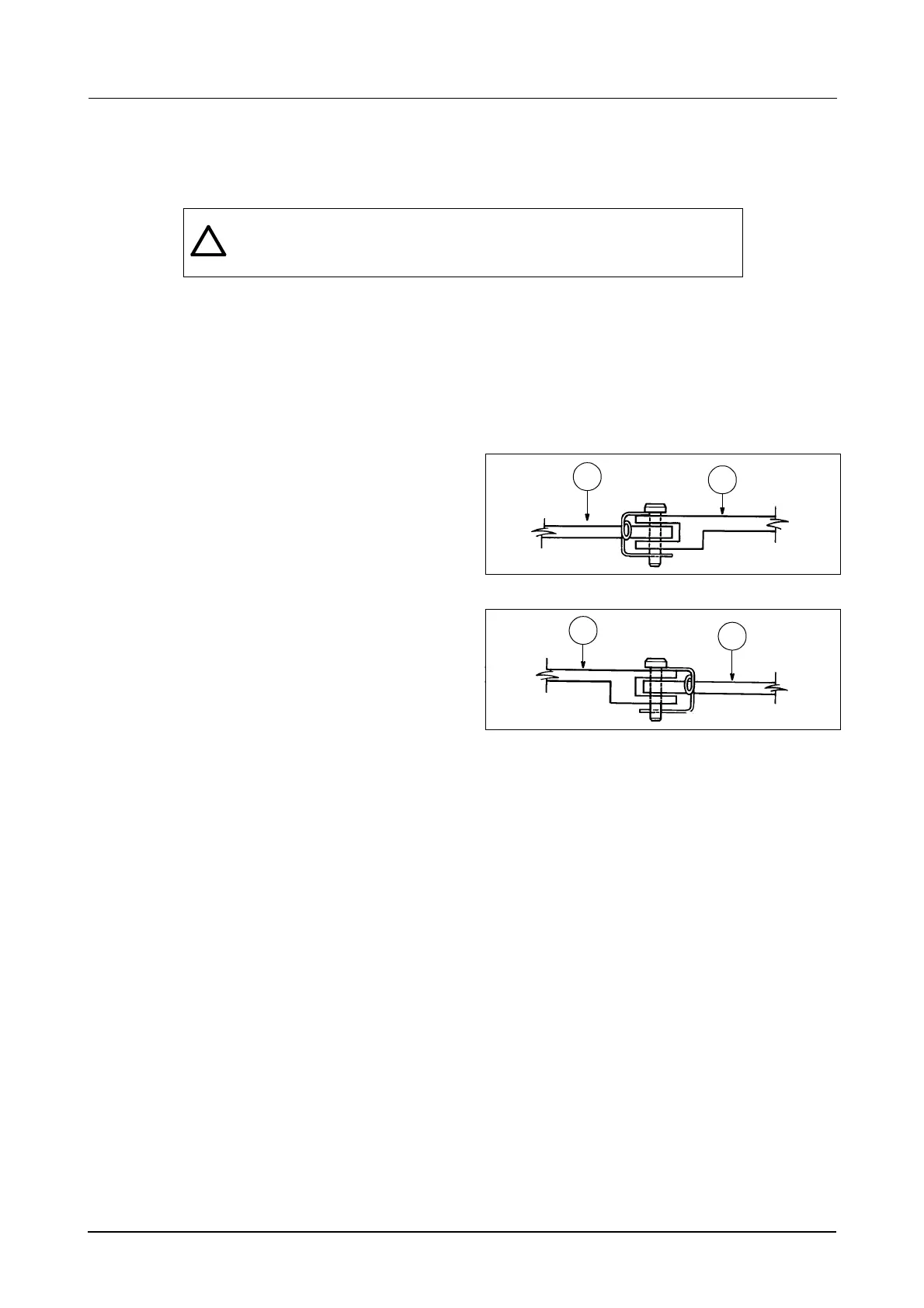
If both the tractor and the implement are equipped
with a drawbar clevis, remove the clevis from the
tractor OR implement. DO NOT PUT A LONG
HITCH PIN THROUGH BOTH THE IMPLEMENT
CLEVIS AND THE DRAWBAR CLEVIS.
See examples A and B below for correct methods
of using a clevis type hitch.
EXAMPLE A
EXAMPLE B
PM023
Adjust the drawbar so that the centre line of the
pulling force of the tractor will be aligned with the
centre line of the implement.
When working with the drawbar, raise the lower
links as high as possible to prevent interference
between the lower links and the implement.
When working with PTO equipment, use the
following positions in the drawbar:
● 540 rpm (6 spline) PTO shaft - Position A.
● 1000 rpm (21 spline) PTO shaft - Position B.
NOTE: For non-PTO work, the drawbar can be set
in any of the three fore/aft positions, depending on
maximum vertical load required, See page 99 for
more information.
IMPORTANT: The clevis (if equipped) must be
removed from the drawbar or mounted under the
drawbar (See example B), to prevent possible
interference between the clevis and the implement
driveline.
WARNING: Rear upset can result if pulling from wrong location on tractor.
Hitch only to the drawbar. Use 3 point hitch only with the implements
designed for its use, not as a drawbar.
1.TRACTOR DRAWBAR
2. IMPLEMENT DRAWBAR
1
2
1
2



 To Next Page