11-1
11 Remote control
11.1 Abbreviations used
The following abbreviations are used to represent the command structure:
The following numerical formats are used to define and read some
commands:
11.2 Making the connection from EFA to PC
1. Connect the opto-electrical adapter to a serial interface of the PC.
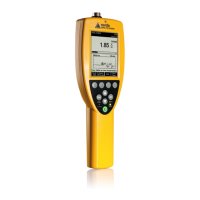
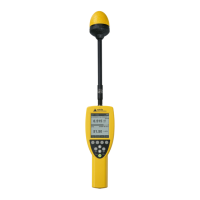
2. Connect the opto-electrical adapter via a fiber optic cable to the jack
“REMOTE” in the head of the EFA or to the jack “EFA-300” in the E-Field
Unit. Make sure the fiber optic cable is not kinked or bent.
3. Set the switch in the opto-electrical adapter to the position “DTE” (data
terminal equipment).
Matching the parameters between the PC and EFA
✓ The connection between the EFA and PC has been established.
The following parameters for the PC and EFA must match:
• Baud rate: 9600
• Parity: None
• Data bits: 8
• Stop bits: 1
• Handshake: XON/XOFF
Note: The baud rate can be increased temporarily during remote
operation.
<ws> Space (CHR$32) or SP
<CR> Carriage return (CHR$13) or ˆM or \r
<LF> Line feed (CHR$10) or ˆJ or \n
[…] Optional entry
<SCI> Scientific notation, e.g. 1.234567E-2
<SCI4D> Same as scientific notation but with the mantissa limited to four
significant places, e.g. 1.234E-2
<FP4D> Floating decimal format with four significant digits in range 0.001
to 99999


 To Next Page