Word clock scenarios for digital audio (AES3 and Dante™)
150
Defining the master and slave
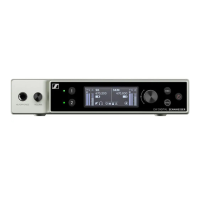
The EM 6000 word clock input, the EM 6000 internal word clock, the word
clock of the Audinate Brooklyn II Dante™ interface, or the Dante™ network
can be defined as the master.
To define the internal word clock of the EM 6000 as the master:
▷ In the Wordclock menu in the EM 6000 System menu item, choose the
option Internal 48 kHz or Internal 96 kHz (see “Wordclock” under
“System menu item”).
▷ In the Audinate Dante Controller software, activate the options En-
able Sync to External and Preferred Master.
To define the BNC word clock input of the EM 6000 as the master:
▷ In the Wordclock menu in the EM 6000 System menu item, choose the
option External BNC (see “Wordclock” under “System menu item”).
▷ In the Audinate Dante Controller software, activate the options En-
able Sync to External and Preferred Master.
To define the Dante™ interface of the EM 6000 as the master:
▷ In the Wordclock menu in the EM 6000 System menu item, choose the
option External Dante (see “Wordclock” under “System menu item”).
▷ In the Audinate Dante Controller software, deactivate the option En-
able Sync to External.
▷ In the Audinate Dante Controller software, activate the option Pre-
ferred Master.
To define the Dante™ interface of the EM 6000 as the slave:
▷ In the Wordclock menu in the EM 6000 System menu item,
choose the
opti
on External Dante (see “Wordclock” under “System menu item”).
▷ In the Audinate Dante Controller software, deactivate the options En-
able Sync to External and Preferred Master.






 To Next Page