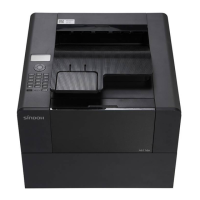
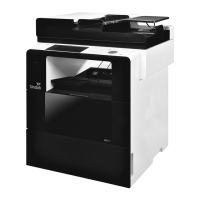
2-5
Learn about the printer
2
Understanding the status of the indicator light
Indicator light Printer status
Off The printer is off.
Blue The printer is on or ready.
Blinking blue The printer is processing data.
Blinking red The printer requires user intervention.
PAmber The printer is in Sleep mode.
Selecting paper
Paper guidelines
Use the appropriate paper to prevent jams and help ensure trouble-free printing.
-
Always use new, undamaged paper.
-
Before loading paper, know the recommended printable side of the paper. This information is usually indicated on
the paper package.
-
Do not use paper that has been cut or trimmed by hand.
-
Do not mix paper sizes, types, or weights in the same tray; mixing results in jams.
-
Do not use coated papers unless they are specifically designed for electrophotographic printing.
Paper characteristics
The following paper characteristics affect print quality and reliability. Consider these factors before printing on them.
Weight
The trays can feed paper weights from 60 to 176 g/m
2
(16 to 47 lb) grain long paper. Paper lighter than 60 g/m
2
(16 lb) may not be stiff enough to feed properly, and may cause jams.
Curl
Curl is the tendency for paper to curl at its edges. Excessive curl can cause paper feeding problems. Curl can occur
after the paper passes through the printer, where it is exposed to high temperatures. Storing paper unwrapped in hot,
humid, cold, or dry conditions can contribute to paper curling before printing and can cause feeding problems.
Smoothness
Paper smoothness directly affects print quality. If paper is too rough, toner cannot fuse to it properly. If paper is too
smooth, it can cause paper feeding or print quality issues. We recommend the use of paper with 50 Sheffield points.
Moisture content
The amount of moisture in paper affects both print quality and the printer ability to feed the paper correctly. Leave
paper in its original wrapper until you use it. Exposure of paper to moisture changes can degrade its performance.
Store paper in its original wrapper in the same environment as the printer for 24 to 48 hours before printing.
Extend the time several days if the storage or transportation environment is very different from the printer
environment. Thick paper may also require a longer conditioning period.
Grain direction
Grain refers to the alignment of the paper fibers in a sheet of paper. Grain is either grain long, running the length of
the paper, or grain short, running the width of the paper.
For 60–176 g/m
2
(16–47-lb) paper, grain long paper is recommended.


 To Next Page