Foreword:
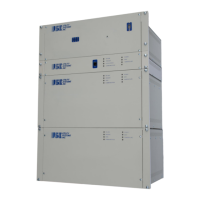
This manual covers the Series 9000 Disturbance Monitoring Equipment (DME). The Series 9000 provides the user with
significantly advanced capabilities in both hardware and software.
Series 9000 hardware features and benefits:
• Modular design provides greater reliability as each module operates independently.
• System design provides for unrestricted expandability.
• Units are interconnected via Ethernet (copper or fiber). Ethernet has been proven to be reliable, flexible, and easily
distributed among distant locations.
• Each module is powered directly from the station battery. This feature eliminates the need to distribute lower
voltages to other units.
• Each M9000 module contains IRIG-B circuitry to synchronize and time stamp data sampling. This feature
eliminates the need to distribute TTL timing signals among units.
• IRIG-B input format is automatically detected. This feature accommodates modulated, un-modulated, and 1PPS
inputs without the need for jumpers or connector pin programming.
• Each M9000 contains a dedicated processor. This feature provides distributed processing power throughout the
system eliminating the bottle-neck of a single CPU.
• Each M9000 contains an embedded operating system. This feature provides reliable operation and a customized
environment specific to the DME system requirements.
• The system has a fan-less design. Innovative component selection and thermal management techniques have
eliminated the need for conventional forced-air cooling. Eliminating moving parts improves reliability.
Series 9000 software features and benefits:
DME System:
• DME system software launches and runs as a daemon for highly reliable operation. Each Module starts
automatically at boot time and runs as a background process rather than being under the direct control of an
interactive user.
• XML-based configuration file provides easy import/export of data files in other formats.
• Any calculated value can be exported to a Continuous Recording data file. This feature can be used to provide
trend data for unique values.
• Fault data can be immediately pushed to the master-station via Ethernet. This feature makes fault data available
for near real-time analysis.
• All calculated values (e.g. Continuous, Analog Trigger, PMU, etc.) are derived from full transient sampled data
providing optimum resolution.
• M9kScope
©
feature provides real-time online viewing of waveforms and values, and calibration verification.
• Software summation of alarm outputs. This feature allows flexible alarm configurations.
• Logging of health monitoring values such as power supply voltages, temperatures, and calibration coefficients.
This feature permits review of health data history.
Master-Station:
• Web-based Master-Station provides access from any network location. This feature allows the user interface to be
served from a central location eliminating the need for version control by end users.
• User-based authentication. This feature provides logon access and privileges based on user name and password
credentials.
• Encrypted communication (SSL, HTTPS, etc.). This feature provides a high level of security to data being
transported.
• Master-Station maintains persistent communication with all Model 9000 systems simultaneously via Ethernet. This
feature eliminates data retrieval delays.
• Real-time health monitoring of entire DME fleet. This feature generates and sends an immediate alert message if
any alarm or communication error is detected at any module.
• Comprehensive analysis of all recorded data.


 To Next Page