3-5
Techniques of Sterilization Operator Manual 387366-389
3.4 Sterilization
Techniques and
Recommendations for
Liquids
Important: Read this section before using the sterilizer to
sterilize liquids.
Recommended minimum exposure time for a 1 liter liquid flask
is 45 minutes at 121°C (250°F). Volumes greater or less than
1 liter must be determined.
The minimum exposure (sterilization) assumes the use of vented
bottles or Erlenmeyer flasks and includes the time required to bring
the solution up to the sterilization temperature plus the time required
to achieve sterilization. Variables that might effect this time include
flask/bottle material and viscosity of the liquid to be processed.
NOTE: Use load probes and F
o
option to optimize cycle times.
The use of borosilicate glass is required because it is a superior
glass capable of resisting thermal shock. If glass less thermally
resistant is used, a greater potential for bursting exists.
Vented closures are required because, by design, they release
internal pressure build-up by automatically venting the containers,
whereas pressure in unvented containers remains until the contents
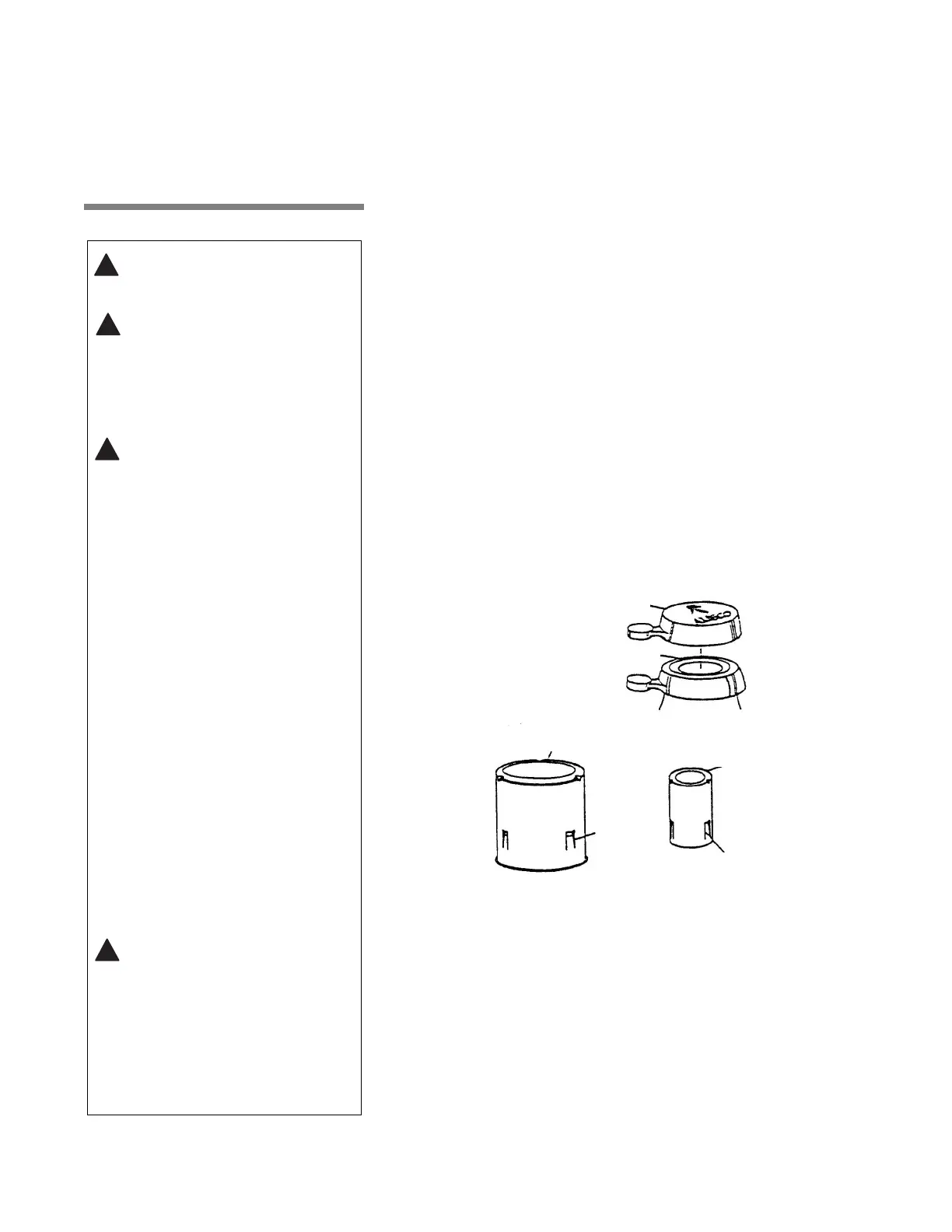
have cooled. Examples of vented closures are shown in F
IGURE 3-1.
When loading the sterilizer, place small bottles in a separate basket
to minimize sliding.
Always use side rails on the loading car to prevent containers or
baskets from falling off.
Figure 3-1. Vented Closures
Before Sterilization
After Sterilization
Morton Closure
Tab
Tab
Morton Closure
Morton Closure
WARNING – EXPLOSION HAZARD:
This sterilizer is not designed to
process flammable compounds.
WARNING – PERSONAL INJURY
HAZARD: Avoid personal injury
from bursting bottles. Liquid
sterilization cycle must only be
used for liquids in borosilicate
(Pyrex) flasks with vented
closures.
WARNING – BURN HAZARD:
• Steam may be released from the
chamber when door is opened.
Step back from the sterilizer each
time the door is opened to
minimize contact with steam
vapor.
• When sterilizing liquids, to prevent
personal injury or property
damage resulting from bursting
bottles and hot fluid, you must
observe the following procedures:
• Use LIQUID cycle only; no
other cycle is safe for
processing liquids.
• Use only vented closures; do
not use screw caps or rubber
stoppers with crimped seal.
• Use only Type 1 borosilicate
glass bottles; do not use
ordinary glass bottles or any
container not designed for
sterilization.
• Do not allow hot bottles to be
jolted; this can cause hot-bottle
explosions. Do not move
bottles if any boiling or
bubbling is present.
CAUTION – POSSIBLE
EQUIPMENT DAMAGE:
Sterilization of chloride-
containing solutions (e.g., saline)
can cause chamber corrosion and
is not recommended by the
manufacturer. If, however,
chloride-containing solutions
must be processed, clean the
chamber after each use.



 To Next Page