Chapter 2: Product description
EST3X Technical Reference Manual 21
The four types of queues and event messages are listed below, by priority.
• Alarm (highest priority): Alarm event messages are used to identify the source
of an active alarm within the system. They signal fire alarms or other life-
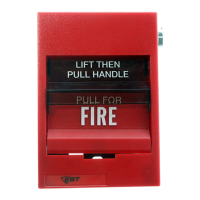
threatening emergencies (e.g., active smoke detectors, pull stations,
waterflow alarm switches).
• Supervisory: Supervisory event messages are used to identify changes to a
supervisory state with the system. They can signal off-normal conditions with
guard’s tours, sprinkler and extinguishing systems, and other equipment
related property safety (e.g., a closed gate valve).
Note: In the US Local and Proprietary marketplace, security events are
stored in the Supervisory Queue. For all marketplace settings other than the
US security events are stored in the Monitor Queue.
• Trouble: Trouble event messages are used to identify faults with the alarm
system. They can signal missing detectors, disabled points, and ground
faults.
• Monitor (lowest priority): Monitor event messages are used to signal the
operation of ancillary equipment (e.g., a fan feedback switch).
Note: For all marketplace settings other than the US security events are
stored in the Monitor Queue. In the US Local and Proprietary marketplace,
security events are stored in the Supervisory Queue.
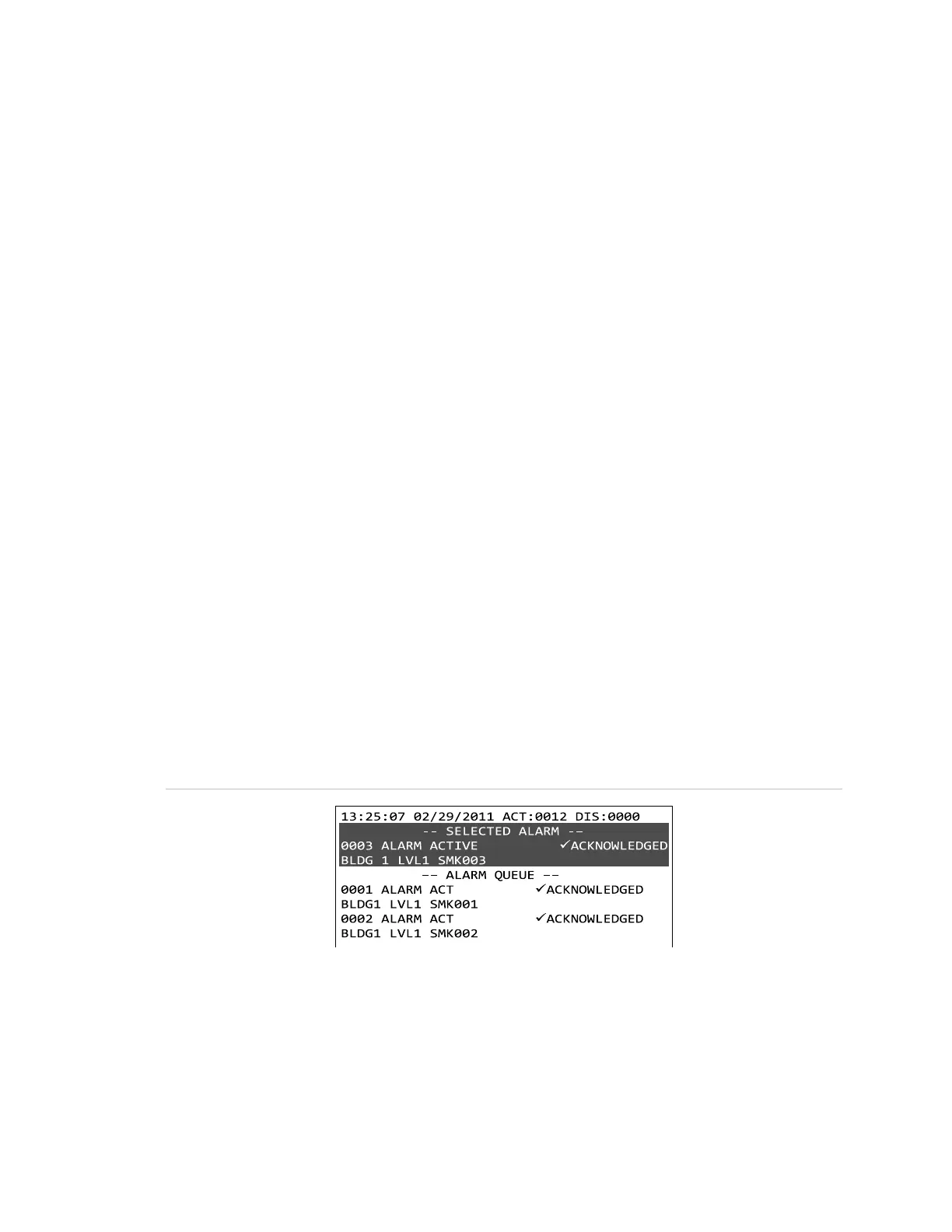
An event message consists of two lines of text, as shown in Figure 6. The first
line displays the event number and the event name. The second line displays the
message text, which is either the address of the point that activated the event or,
if programmed, a location description.
Figure 6: Event message


 To Next Page