Multimeter Tests
Copper and G.fast/VDSL2/ADSL2+ Multi-play Test Set 131
Resistive Balance
Resistive Balance
The Resistive Balance test measures and compares the resistance of each
leg. This test requires you to short Tip and Ring (T-R/A-B) to ground/earth at
the far end (T-R-G/A-B-E short) before proceeding with the test. EXFO's
TS-125 FED (Far End Device) can automatically set the far end condition.
Snapshot
The Resistive Balance test is valuable in understanding the presence of
resistive faults on one side versus the other (series resistance). A 5 %
difference in the ohms value between T/A and R/B is common (95 %
balance), but for higher speed DSL such as VDSL2, imbalance is more
critical and should be 2-3 % when possible (97-98 % balance). There will
be low-ohm values when measuring resistance with a short at the far end.
For example, on 24 AWG cable at 21 °C (70 °F), you will see 520
Ω for a 3 m
(10 ft) cable. If both Tip and Ring have 520 ohms, the pair is balanced
perfectly, but there will normally be some small difference and a much
larger value on one side; for example, 800
Ω indicates a significant series
fault on that side.
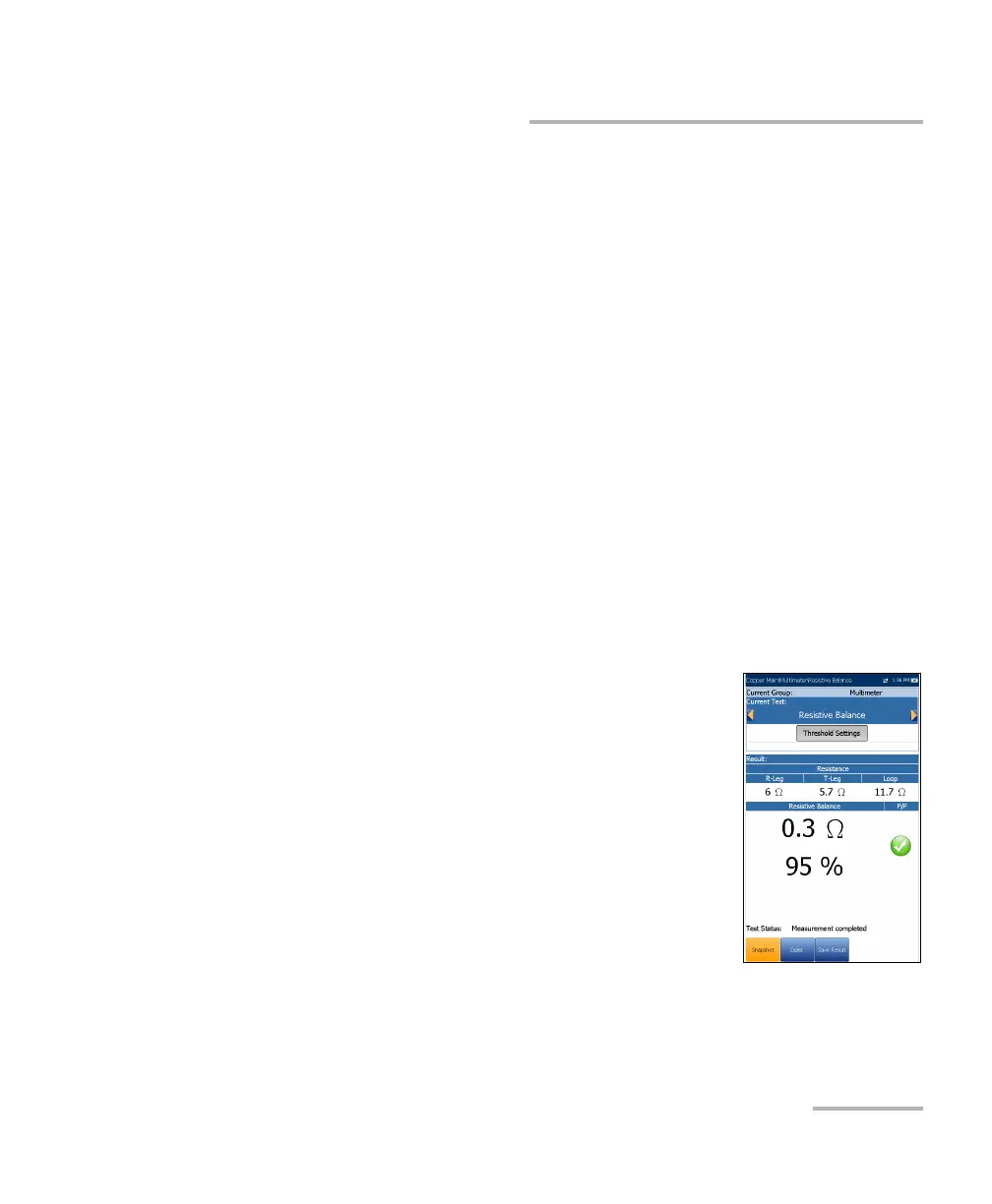
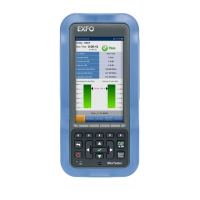
The resistive balance Snapshot shows results for
R/B-Leg, T/A-Leg, Loop resistance, and the pass/fail
status for Resistive Balance in
Ω and %. Parameters
are as follows:
Current Group is the current test group name, for
example Multimeter.
Current Test displays the test being measured.
When FED is Enabled, the FED icon and numeric
state are displayed beside the Current Test.
Here you can switch to another test from the given
list. However, this action will terminate the
ongoing measurement test.



 To Next Page