Controls for Creating Effective Images on Film or Digitally 305
Figure 16-9 Depth-of-fi eld and area coverage. To cover the same size area, the wide-angle lens
(b) must be used from a closer distance than the standard lens (a) or the telephoto (c), where
you must move farther away. In this situation, all three lenses have the same depth-of-fi eld
(6 feet) at the same aperture.
Medium-Format Depth-of-Field
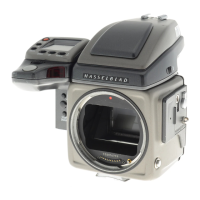
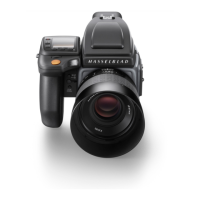
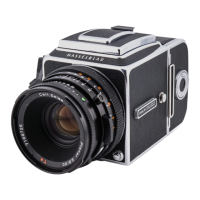
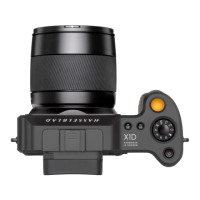
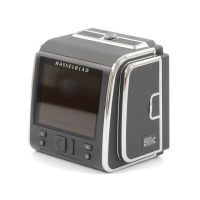
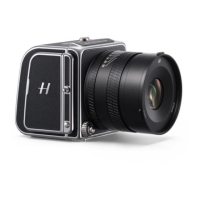
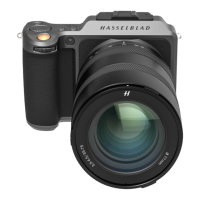
If you work in the medium-format with fi lm or with the large sensors in Hasselblad digital
backs or digital cameras be aware that the depth-of-fi eld is shallower than on the 35 mm fi lm
format or a digital camera with the smaller full frame or the even smaller APS size sensor. This
difference is based on the longer focal length of the lens that is necessary to cover the same
area on the larger formats. This means a different magnifi cation for the same area of coverage
and, as mentioned before, magnifi cation determines the depth of fi eld. For example, covering
an area 49 mm wide with the large 36.7 49 mm sensor means a 1 (life-size) magnifi cation,
whereas it is only 0.7 on 35 mm fi lm or a full frame sensor and 0.5 on smaller APS size
sensor. A higher magnifi cation always has less depth-of-fi eld at the same aperture.
Depth-of-Field Scales and Charts
The fi gures on depth-of-fi eld scales and charts are calculated based on the acceptable blur
known as the “circle of confusion.” They are not related to the lens design or the type or qual-
ity of a lens. However, a critically sharp lens may appear to have less depth-of-fi eld than one of
lower quality, which may bring you to the conclusion that your sharp lens does not produce
enough depth-of-fi eld. If that should be the case, it is only because the falloff in sharpness
becomes more visible on the critically sharp type, not because of the lens design.
You must realize, however, that the depth-of-fi eld is a range of acceptable, not critical,
sharpness (see Figure 16-10). Subjects toward the end of the depth-of-fi eld range are not as
sharp as those at the focused distance. This is obvious on a large print or when you evaluate
negatives or transparencies under an 8 or 10 magnifying glass, the type I recommend for



 To Next Page