28 THE HASSELBLAD MANUAL
qualities and characteristics that you or your client expects. Follow these suggestions whether
you work digitally or with fi lm. To me this is still the basic and most important part of photog-
raphy regardless of whether you create the images on fi lm or digitally.
HELPFUL COMPUTER MANIPULATIONS
While it is helpful trying to produce a perfect image in the camera, it must be mentioned
that the computer offers many possibilities for improving images in ways that are diffi cult,
impractical, or impossible to do in the camera. This may involve nothing more than eliminat-
ing distracting elements within the subject or scene or in background areas (Figure 3-4).
Digital imaging has also opened possibilities for producing images with photographic
qualities that are impossible to produce in the camera on fi lm or digitally. The two most valu-
able ideas involve creating images with a wider range of sharpness and with more details in
shadow and/or highlight areas. The contrast range, the amount of details that are recorded
in shaded and lighted areas, is limited in fi lm and digital photography. In the computer you
can combine two identical images: with one exposed for details in the shaded areas and the
other exposed for highlight details. Combining the two can produce an image with details in
shaded and lighted areas that is impossible to cover in the original image.
The maximum range of sharpness in a camera-recorded image is determined by the lens
and the lens settings with the maximum range obtained with the shortest focal length lens set to
the smallest aperture. In the computer you can combine two or three identical images but one
focused for the shorter and the other for the longer distances with a third set for the medium
range. The fi nal images can have a sharpness range far beyond what is possible in camera-
recorded images without tilt control. Double and multiple exposures for the purpose of creating
different and perhaps better works of art is another great possibility offered by the computer.
Producing architecturals with straight and parallel verticals is diffi cult or impossible with-
out special camera equipment that allows shifting the lens or image plane but can be done
relatively easily in the computer. Other helpful possibilities for improving the technical qual-
ity of images in the computer are discussed further in the text.
HASSELBLAD DIGITAL CAMERAS AND CAMERA BACKS
Digital Camera Backs
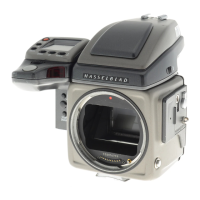
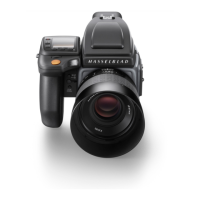
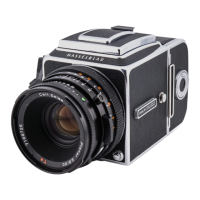
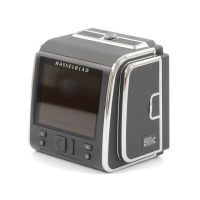
The Hasselblad H1 and H2 cameras and all the different Hasselblad V system camera models
can be changed from fi lm to digital by attaching a digital back in place of a fi lm magazine. This
includes the camera models used for special applications like the FlexBody and the ArcBody.
You can produce just about any type of digital image in any fi eld of photography right in the
camera and eliminate time-consuming image manipulations afterwards.
In addition to the Hasselblad digital backs described in the manual, a number of other
companies also manufacture digital backs with different sensor sizes and resolutions that can
also be used for digital imaging with the different Hasselblad camera models. This list includes
digital backs made by Imacon before and for some time after the merger with Hasselblad.
Most are known under the trade name Ixpress.



 To Next Page