1
Introduction
INTRODUCTION
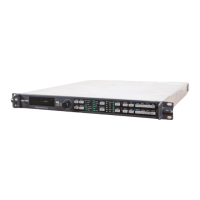
The Digital Processing Systems DPS-475™ and DPS-575™ Multi-Function
Analog/Digital AV Synchronizers are equally suited for analog, digital or hybrid
facilities, and represent the ideal choice for broadcasters making the transition to
digital television (DTV). Available in video-only and audio/video configurations,
these synchronizers provide an ideal bridge from analog video signals, such as
satellite and microwave feeds, to digital production facilities. The DPS-475 is an
NTSC-only model while the DPS-575 is an auto-sensing dual-standard (PAL/NTSC)
device.
The DPS-475 and DPS-575 offer unparalleled I/O flexibility. Four input and five
output formats are provided standard:
Serial Component Digital Video (SDI) input and output
Component Analog Video (Betacam) input and output
S-Video (S-VHS / Hi8) input and output
Composite Video input and output
RGB-S output
DV (IEEE-1394) I/O with transport control is available as an option. A built-in auto-
sense TBC circuit provides seamless mode switching between direct color and
heterodyne sources such as camcorders and VTRs.
The versatile DPS 12-bit comb filter offers three processing modes: Simple,
Adaptive-2D and Adaptive-3D. 3D combing utilizes a proprietary DPS algorithm to
combine information from previous frames to eliminate residual subcarrier artifacts,
such as cross luminance and cross chrominance. 3D combing can also be applied to
non-composite sources, to clean up component video that was previously decoded
from a composite source using lower-quality combing in other equipment. Combining
the high-quality comb filter with DPS’ proprietary advanced 12-bit analog encoding
provides maximum signal transparency and optimum transcoding.
The DPS-475 and DPS-575 also feature adjustable temporal and spatial digital noise
reduction, as well as variable 2D filtering with separate horizontal and vertical
bandwidth controls. Applying digital bandwidth filtering and noise reduction prior to
MPEG encoding can improve overall MPEG performance through entropy reduction.
DPS' exclusive DigiDuplex mode provides bi-directional connectivity between analog
tape machines and digital audio/video routing systems. DigiDuplex saves space and
money by enabling digital to analog transcoding with simultaneous analog to digital
frame synchronization - all in one compact box. In DigiDuplex mode, the unit's SDI
video input is routed directly to the analog video outputs, which feed the inputs of an
analog device. The analog output of the device can be simultaneously connected to
the synchronizer's analog inputs, where it is processed and sent to the SDI video
outputs. Conversion between digital and analog audio is handled in a similar fashion.
With the addition of the four-channel audio synchronizer module, the DPS-475 and
DPS-575 can provide dual stereo audio and video synchronization in a single rack-
unit-high package. The internal audio synchronizer option supports analog, AES/EBU



 To Next Page