Run a Self-Test
A self-test can help troubleshoot library issues and confirm proper installation.
Before placing a newly installed or reconfigured library into production, you should run
a full self-test.
1. Before running a self-test, verify the following:
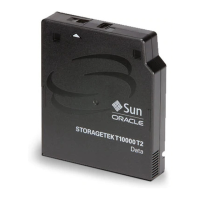
• There is at least one diagnostic tape ("DG" label) in the mailslot or reserved
system slot. The diagnostic tape should be compatible with at least one
unoccupied drive.
• The mailslot is closed and all magazines are securely latched.
• At least one of the four slots in the standard mailslot is empty.
• At least one slot in the library is empty.
2. From the remote interface, select Library in the left menu.
3. From the Library drop-down
, select Run Self Test.
4. Select a test type:
• Basic Self Test — a quick (6 move) test used to verify basic library function to
test robot access to the corner locations of the library.
• Full Self Test — a thorough test that moves a tape to every slot and to every
unoccupied drive compatible with the chosen diagnostic tape. A full test can
take significant time depending on the number of modules in the library, so
plan accordingly.
5. Optionally, select Set the Library back Online to automatically bring the library
online after the test (the library goes offline to perform the self test)
6. Click OK to start the test.
Note:
If the test fails, click Degraded to open a health table identifying a failed
or degraded component. See Use the Health Table to Diagnose the
Issue more information.
7. If you did not check the Set the Library back Online checkbox, remember to
bring the library back online manually, once you are ready. See Place the Library
Online or Offline.
Chapter 9
Run a Self-Test
9-15




 To Next Page