SLT12 User Manual
135
"Name": the name of the board is entered.
"Grade": from the road centerline outward, the slope of the slab is positive for uphill and negative for downhill.
The slope value is the ratio of the elevation difference between the two endpoints of the slab and the width of the
slab and provides two types of slope ratio input: percentage and proportional.
"Wide": the width of the current board.
"curb": Click to enter the elevation difference of the roadside curb.
[left-right Identity]: Check the box to indicate that the left and right slopes are the same, and the right slope data
will be overwritten as symmetrical data with the left slope (Note: the original right slope data will be lost and
can't be recovered), check the box to add, and the same left and right cross-sectional slabs will be created
synchronously.
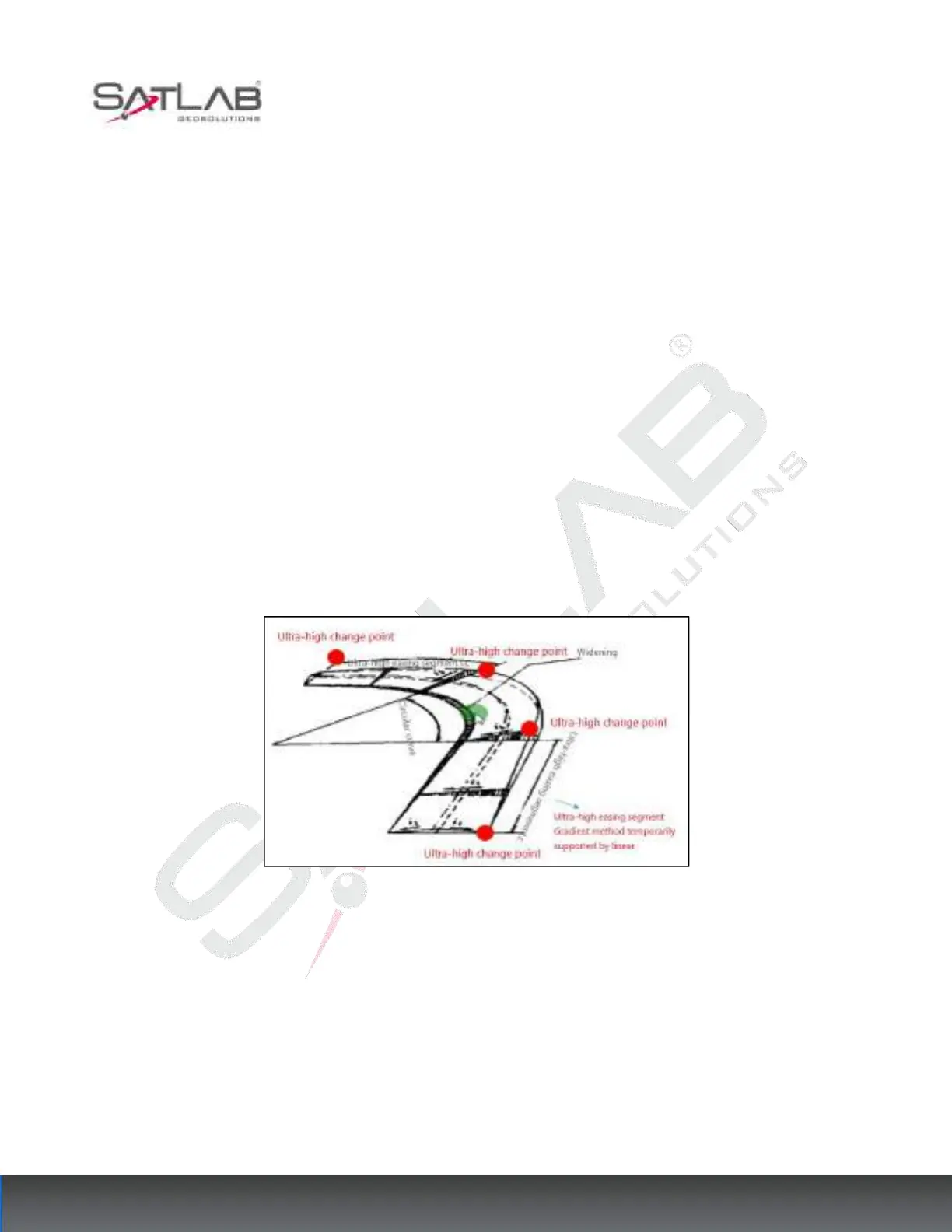
Superelevation
To reduce the centrifugal force generated by the vehicle driving on the curved road, the road is made into a
one-way cross slope in the form of high outside and low inside called super high.
Figure 11- 21
In the [SuperEle] section, you can enter the super high change point information according to the design
drawing.
Select the cross-sectional slab that corresponds to the role of superelevation, and use the motorway
superelevation as an example to explain here.


 To Next Page