Need help?
Do you have a question about the Simphoenix V800 Series and is the answer not in the manual?
Verifying the frequency inverter and its accessories for damage and completeness after unpacking.
Checking the frequency inverter unit and included parts for damage during transit and completeness.
Information on the nameplate including model, rated parameters, serial number, and barcode.
Essential precautions for installation, wiring, operation, and maintenance to ensure safe product use.
Specific guidelines and warnings related to the safe installation of the frequency inverter.
Critical safety instructions and precautions to be followed during the wiring process.
Safety guidelines to be observed during the operation of the frequency inverter.
Safety precautions to be taken during maintenance and device replacement procedures.
Information on operational aspects, including motor compatibility and environmental considerations.
Understanding the behavior and considerations when driving general motors with the frequency inverter.
Knowledge required for driving special motors like high-speed or synchronous motors.
Recommended environmental conditions for installing and operating the frequency inverter.
Guidelines for connecting peripheral equipment to the frequency inverter.
Proper procedures for transporting and storing the frequency inverter to prevent damage.
Warnings and procedures related to the disposal of the frequency inverter.
Additional important cautions and recommendations for product usage.
Precautions and procedures to follow in case of damage to the inverter.
Explanation of the V800 series inverter model naming convention and structure.
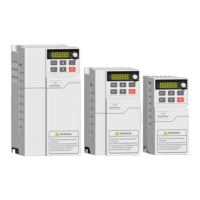
Visual identification and description of the different categories of product appearance.
A table detailing various models and their specifications, including rated capacity and motor power.
Comprehensive technical specifications covering input/output, voltage, frequency, and digital/analog interfaces.
General guidelines for vertically installing the frequency inverter for optimal ventilation and heat dissipation.
Requirements for selecting a suitable mounting surface that can withstand temperature rises.
Recommended spacing distances around the frequency inverter for proper installation.
Guidelines for parallel or vertical installation of multiple frequency inverters.
Information on the different types of operation panels, their models, and applicable inverters.
Procedures for safely removing and installing the plastic and sheet-metal terminal covers.
Step-by-step instructions for disassembling and installing the plastic cover plate.
Step-by-step instructions for disassembling and installing the sheet-metal cover plate.
Dimensions and mounting details for different types of operation panels.
Instructions for safely installing and removing expansion boards.
Procedures for installing and removing type I and type II function cards.
Detailed steps for installing the type I function card on the control panel.
Detailed steps for installing the type II function card on the control panel.
Installation dimensions for different types of frequency inverters based on model suitability.
Essential warnings and precautions regarding proper wiring practices to prevent damage and ensure safety.
Guidance on connecting various optional fittings such as reactors and filters to the frequency inverter.
Detailed information on wiring the control terminal, including terminal descriptions and cautions.
Wiring diagrams and terminal identification for standard control panels.
Explains the function and specifications of various control terminals.
Specific cautions to observe when wiring the control terminals.
Explanation of the configuration and function of DIP switches on the control panel.
Details on wiring the major loop terminals, including terminal functions and diagrams.
Description of the functions for each terminal symbol in the major loop.
Wiring diagrams illustrating the connection of major loop terminals and blocks.
A basic wiring diagram illustrating the essential connections for operating the frequency inverter.
Overview of the operation panel's primary functions for monitoring and parameter modification.
Detailed explanation of panel functions, including parameter copy and modification methods.
Description of special functions like parameter copy, read/backup, and panel locking/unlocking.
Step-by-step guides on how to query status parameters and check/modify parameters using the panel.
A guide to the basic operation process and initial settings for running the frequency inverter.
A sequential process outlining the steps for installing, wiring, inspecting, and initializing the frequency inverter.
Procedures for initial setup, including selecting control mode and frequency input channel.
Details on choosing between vector control (PG/non-PG) and V/F control modes.
Explanation of selecting frequency input channels and their combination methods.
Step-by-step guide for performing simple operations like SVC and VC mode startup.
Instructions for operating the inverter in SVC mode with a specific motor example.
Instructions for operating the inverter in VC mode, including parameter settings and wiring.
Explanation of symbols and variables used in the functional parameter table.
A comprehensive table listing all functional parameters, their codes, descriptions, and settings.
Parameters related to system management, including macro parameters and display settings.
Parameters for selecting running command sources and frequency set values.
Parameters for configuring frequency setting channels and their values.
Parameters for selecting the source of control commands and their action modes.
Parameters related to start/running permission, start/stop modes, and delay settings.
Parameters for defining acceleration and deceleration characteristics, including S curve settings.
Parameters for setting the carrier frequency and its associated characteristics like load linkage.
V/F parameters and overload protection settings specifically for Motor 1.
V/F parameters and overload protection settings specifically for Motor 2.
Parameters related to steady running, including current limiting and fault self-resetting.
Parameters for vector running control of Motor 1, including rated values and internal parameters.
Parameters for vector running control of Motor 2, including rated values and internal parameters.
Parameters for motor parameter measurement and pre-excitation in vector mode.
Parameters for configuring multifunctional input terminals, including filtering and effective levels.
Parameters for configuring multifunctional output terminals, including relay outputs and input variables.
Parameters for configuring pulse input signals, such as minimum/maximum frequency and pulse detection cycle.
Parameters for configuring pulse output signals, including type, frequency, and mapping variables.
Parameters for setting minimum/maximum values and filtering for analog inputs AI1, AI2, AI3.
Parameters for correcting the curve of analog input signals AI1, AI2, and AI3.
Parameters for configuring analog output signals AO1 and AO2, including scaling and filtering.
Parameters for detecting power failures on analog input signals and defining actions.
Parameters for configuring virtual analog input channels SAI1 and SAI2.
Parameters for setting hopping frequency to avoid mechanical resonance points.
Parameters for configuring built-in auxiliary timers, including basic functions and trigger settings.
Parameters for configuring built-in auxiliary counters, including operating modes and output signals.
Parameters for various auxiliary functions like priority selection, energy saving, and load balancing.
Parameters for configuring motor temperature sensors and alarm actions.
Parameters for setting multiple operating frequencies for multi-stage operation.
Parameters for configuring simple programmable multi-stage operation modes and stage settings.
Parameters for setting up swing frequency operation, including amplitude and time constants.
Parameters for configuring the Process PID control function with a 4ms control cycle.
Parameters for setting multiple stages for Process PID control, including preset values.
Parameters for enabling the Process PID sleep function, including frequency and deviation settings.
Parameters for setting revolution channels, speed limits, and feedback configurations.
Parameters for revolution closed-loop control, including PID settings and parameter switching.
Parameters for configuring various protection functions like over-speed and excessive deviation.
Parameters for torque control, including command sources and limits.
Parameters for the Compensation PID function with a 1ms running cycle.
Parameters for selecting and switching compensation PID controller parameters across different groups.
Parameters for configuring Modbus communication via an expansion card, including addresses and baud rates.
Parameters for mapping application and status parameters for bus access using continuous addresses.
Parameters for controlling communication linkage and synchronous operations between master and slave devices.
Parameters for configuring expansion multifunctional input terminals.
Parameters for configuring expansion multifunctional output terminals.
Parameters for servo control and scale positioning functions.
Parameters for configuring virtual input and output nodes and their polarity.
Parameters for configuring protection functions.
Parameters for adjusting and correcting analog input/output values.
Parameters for special functional configurations, typically requiring professional guidance.
Parameters for other configuration settings, such as fan control and panel options.
Records of past faults including fault code, description, and possible causes.
Status parameters of the inverter at the time of the last fault.
Basic status parameters of the inverter, such as output frequency and motor revolution.
Auxiliary status parameters providing additional operational information.
Status parameters related to Modbus fieldbus communication via expansion cards.
Status and variable values associated with the inverter's terminals.
Current values for built-in counters and timers.
Status parameters for spindle control and scale positioning functions.
Information about the inverter's hardware, software, and manufacturing details.
Parameters for system management, including macro parameters, display settings, and panel locking.
Parameters for selecting the control command source and frequency set value.
Parameters for configuring frequency setting channels, including keypad and analog inputs.
Parameters for selecting the source of control commands and their action modes.
Parameters for start/running permission, stop modes, and delay settings.
Parameters defining acceleration and deceleration characteristics, including S curve and unit settings.
Parameters for setting the carrier frequency and its related characteristics like load linkage.
V/F parameters and overload protection settings for Motor 1, including curve selections.
V/F parameters and overload protection settings for Motor 2.
Parameters for steady running conditions, including current limits and trip suppression.
Parameters for vector running control of Motor 1, including motor data and overload settings.
Parameters for performing motor parameter measurement and pre-excitation.
Parameters for configuring multifunctional input terminals, including multi-speed and PID settings.
Parameters for configuring multifunctional output terminals, including relay outputs and input variables.
Parameters for configuring pulse input signals, including frequency range and encoder settings.
Parameters for configuring pulse output signals, including type, frequency, and mapping.
Parameters for setting minimum/maximum values and filtering for analog input signals.
Parameters for correcting the curve of analog input signals AI1, AI2, AI3.
Parameters for configuring analog output signals AO1 and AO2, including scaling and filtering.
Parameters for detecting wire breaks on analog input signals and defining actions.
Parameters for setting hopping frequency to avoid mechanical resonance.
Parameters for configuring built-in auxiliary timers, including basic functions and trigger settings.
Explanation of the basic functions and operational diagrams of the auxiliary timer.
Settings for trigger and gate control functions of the auxiliary timer.
Settings for clock concatenation function of the auxiliary timer.
Settings for concatenation trigger function of the auxiliary timer.
Parameters for configuring built-in auxiliary counters, including operating modes and output signals.
Parameters for various auxiliary functions like priority selection, energy saving, and load balancing.
Parameters for configuring motor temperature sensors and warning/protection thresholds.
Parameters for setting multi-stage operation frequencies and modes.
Parameters for configuring simple programmable multi-stage operation modes and stage settings.
Parameters for swing frequency operation, including function selection and frequency settings.
Parameters for Process PID control, including function selection, analog input, and feedback settings.
Parameters for setting multiple stages for Process PID control, including preset values.
Parameters for enabling the Process PID sleep function, including frequency and deviation settings.
Parameters for setting revolution channels, speed limits, and feedback configurations.
Parameters for revolution closed-loop control, including PID settings and parameter switching.
Parameters for configuring protective functions like excessive revolution deviation and over speed.
Parameters for torque control, including command sources and limits.
Parameters for compensation PID control with a 1ms cycle, including input/output settings.
Parameters for selecting and switching compensation PID controller parameters across different groups.
Parameters for configuring Modbus communication via an expansion card, including addresses and baud rates.
Parameters for mapping application and status parameters for bus access using continuous addresses.
Parameters for controlling communication linkage and synchronous operations between master and slave devices.
Parameters for configuring expansion multifunctional input terminals.
Parameters related to servo control and scale positioning, including shift frequency and position lock gain.
Parameters for configuring virtual input and output nodes and their polarity.
Parameters for configuring protection functions.
Parameters for adjusting and correcting analog input/output values.
Parameters for special functional configurations, typically requiring professional guidance.
Parameters for other configuration settings, such as fan control and panel options.
Guidance on diagnosing and troubleshooting common warnings and alarms displayed by the frequency inverter.
A detailed table listing fault codes, their descriptions, possible causes, and recommended solutions.
A table outlining warnings, their shieldability, and corresponding solutions for troubleshooting.
Solutions for abnormal operations that do not trigger specific alarms.
Troubleshooting steps for when the motor fails to rotate, covering command channel and frequency settings.
Troubleshooting steps for when the motor rotates but fails to reach the set speed.
Solutions for incorrect motor rotation direction relative to the command signal.
Troubleshooting for speed variations and current fluctuations during constant speed operation.
Diagnosing and resolving abnormal motor sounds like roaring or unusual noise.
Solutions for acceleration/deceleration issues related to S curve, current limits, and torque.
Troubleshooting common failures related to frequency inverter parameter setting.
Steps to resolve issues where the operation panel fails to display anything.
Solutions for inability to change function codes, including parameter locking and connection issues.
How to access and interpret failure records and operational data for diagnosing issues.
Procedures for resetting warnings and alarms, including important safety precautions.
Guidelines for regular inspection and maintenance tasks to ensure optimal performance and longevity.
Procedures for inspecting and replacing components susceptible to wear or aging.
Information on filter capacitor maintenance, potential damage causes, and replacement criteria.
Maintenance guidelines for the cooling fan, including inspection and replacement.
Recommendations for storing the frequency inverter to preserve its condition during periods of non-use.
Details on warranty coverage, free maintenance, and paid maintenance services.
Information regarding CE marking and its significance for product marketability in the EEA.
Definition of EMC (Electromagnetic Compatibility) and its general requirements.
Compliance with relevant industry standards for EMC and LVD.
Specifics on meeting the EN61800-3: 2004 C2 EMC standard.
Specifics on meeting the EN 61800-2 LVD standard.
Guidance on selecting and installing external EMC accessories like filters and reactors.
Important installation notices and precautions for EMI input filters.
Information on DC reactors, their function, and performance specifications.
Information on AC input reactors, their purpose, and performance specifications.
Information on AC output reactors, their purpose, and performance specifications.
Requirements and recommendations for using shielded cables for EMC compliance.
Guidelines for proper cable routing and connection to minimize electromagnetic interference.
Requirements for leakage current response, including circuit breaker selection.
Common EMC interference issues and their solutions for wiring, grounding, and I/O signals.
Explanation of the brake unit's operating principle, model description, and resistance selection guide.
Details on the brake unit's model designation and configuration.
Guidance on selecting brake resistance based on motor characteristics and system requirements.
Visual depiction and labeling of the brake unit's components.
Table providing installation dimensions and screw requirements for the brake unit.
Wiring diagram illustrating the connection between a single brake unit and the inverter.
Critical precautions to observe during wiring of the brake unit and inverter.
Introduction to the I/O expansion card, detailing its functions and terminal specifications.
Introduction to the PG expansion card for encoder feedback, detailing its features and terminals.
Overview of the LCD operating panel, including its structure and key functions.
Visual depiction of the LCD operating panel's layout and components.
Description of the LED operation panel, its displays, and controls.
Explanation of the functions of the keys on the LCD operating panel.
 General
| Control Mode | V/F Control, Sensorless Vector Control |
|---|---|
| Frequency Range | 0~600Hz |
| Input Voltage | 380V ±15% |
| Output Voltage | 0~Rated Input Voltage |
| Overload Capacity | 150% for 60s |
| Braking | Built-in braking unit |
| Communication | Modbus-RTU |
| Protection Features | Overvoltage, Undervoltage, Overcurrent, Overload, Short Circuit |


 To Next Page