Tsunami Mode-Locked Ti:sapphire Laser
A-8
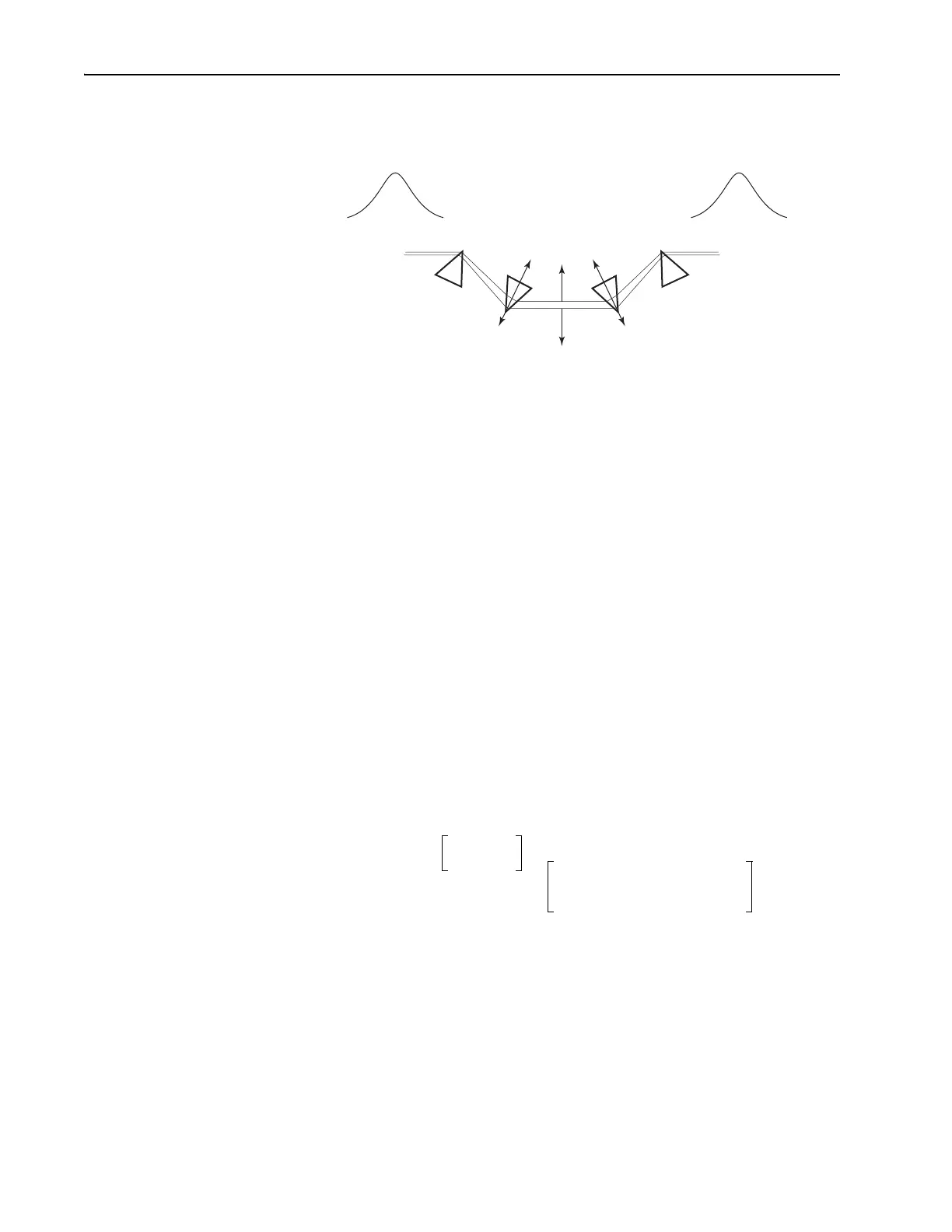
Figure A-6: The four prism sequence used for dispersion compensation
in the Tsunami laser. An input pulse with a positive chirp (red frequen-
cies at the leading edge of the pulse) experiences negative GVD (red
frequencies have longer group delay time) in the prism sequence. The
net effect is that the prism sequence compensates for the positive GVD
and produces a pulse which has no chirp.
In the picosecond configuration of the Tsunami laser, wavelength selection
and tuning are achieved by a birefringent filter, and dispersion compenstion
is accomplished with a Gires-Toumois interferometer (GTI). The GTI intro-
duces a larger net negative GVD than a prism pair, but it is linear over a
smaller wavelength region.
A GTI is a pair of parallel surfaces where the first surface is a partial reflec-
tor and the second has 100% reflectivity. The two qualities which charac-
terize these interferometers are the spacing between the surfaces (d), and
the reflectivity (r) of the first surface. The round-trip time through the GTI
may be expressed as:
[2]
For a short pulse, the group delay time is given by:
[3]
Figure A-7 shows Tg for a typical
GTI as a function of wavelength. The
GVD is proportional to the slope of this curve (actually, – dTg/d
λ
), and is
periodic with regions of both positive and negative
GVD.
When a
GTI is used in a tunable laser, the spacing between the surfaces of
the
GTI must be adjusted to obtain the appropriate dispersion at the lasing
wavelength. In the Tsunami laser, this is achieved by using a piezo-electric
transducer (PZT) between the GTI plates. By changing the applied voltage
to the PZT, the distance between the plates is varied (which varies the dis-
persion) and, for any given wavelength, the pulse width can be optimized.
Pr
4
Pr
2
Tuning
Slit
Pr
1
Pr
3
Positive
Chirp
Chirp
Free
RBB
R
t
0
2d
c
------=
Tg ω()
t
0
1 r+()
1 r–
---------------------
1
1
4r
1 r–()
2
------------------
θsin
2
ωt
0
2
-------
+
------------------------------------------------------------------
⋅=


 To Next Page