Laser Description
3-9
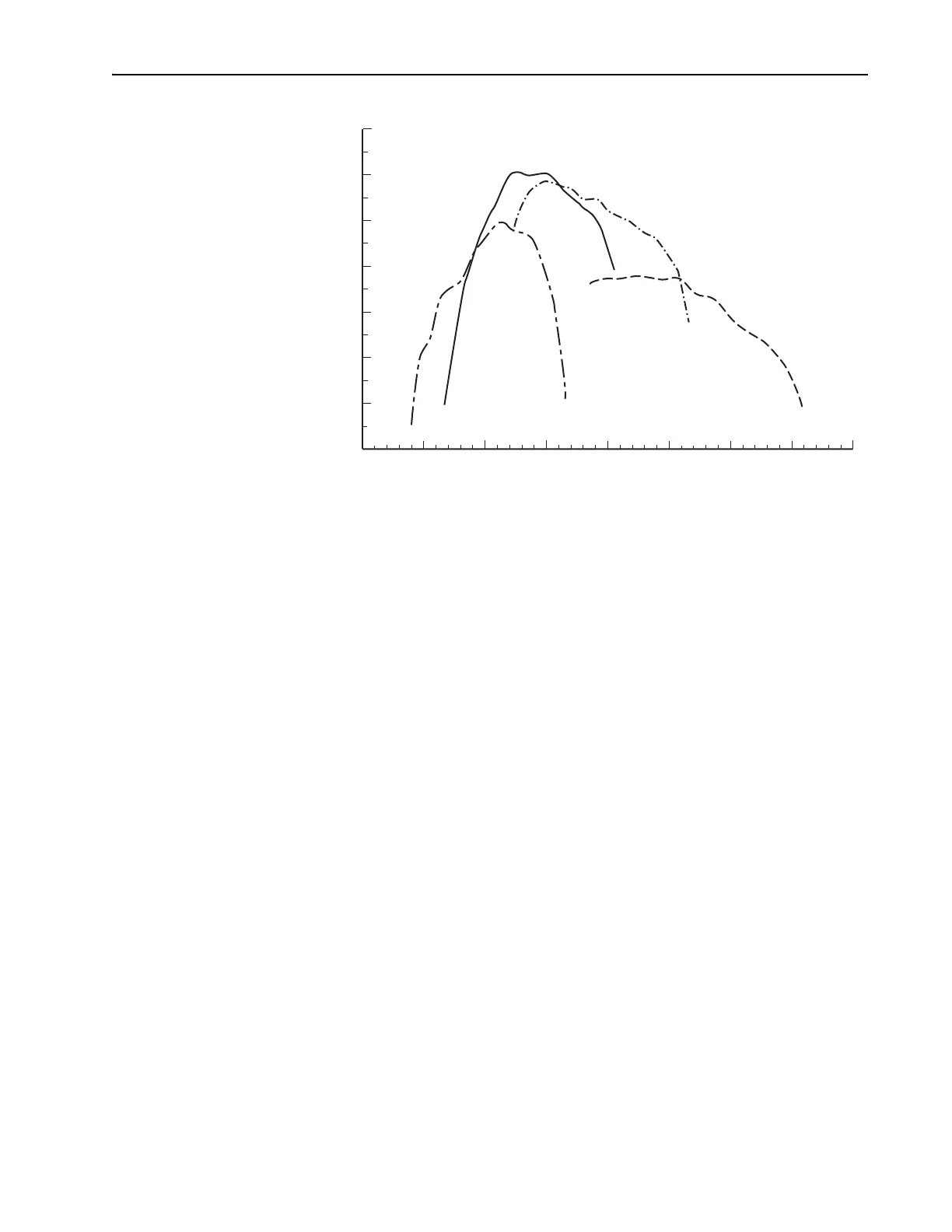
Figure 3-10: Tsunami picosecond tuning curves for the optics sets
shown when pumped by a 5 W Millennia Vs diode-pumped CW laser.
Wavelength Selection
The method used for wavelength tuning depends on whether the laser is
configured for fs or ps operation (Figure 3-3 and Figure 3-4).
fs systems. The fs Tsunami laser is wavelength tuned using a prism
sequence and a slit. This sequence provides a region in the cavity where the
wavelengths are spatially spread. A variable slit is located in this dispersed
beam. The output wavelength is tuned by changing the position of the hori-
zontal slit in the vertical plane. The width of the slit can also be changed so
that the bandwidth (and, hence, the temporal width) of the output pulse can
be varied. This simple, straight-forward method covers the entire Ti:sap-
phire range for ultrashort pulses.
ps systems. The ps Tsunami laser is wavelength tuned using a birefringent
filter (or “bi-fi”). The bi-fi consists of crystalline quartz plates placed
within the laser cavity at Brewster's angle. These plates are cut parallel to
their optical axes, and their birefringence causes the linear polarization of
the incident laser beam to become elliptical. A narrow range of wave-
lengths makes a complete 180° (or multiple thereof) polarization flip and
remains linearly polarized; all other wavelengths remain elliptically polar-
ized and suffer losses at each Brewster-angle surface within the cavity and,
thus, fail to reach lasing threshold. The free spectral range of the bi-fi is the
difference between adjacent eigenwavelengths—those wavelengths that
remain linearly polarized after traversing the filter. Rotating the filter about
an axis normal to the plates changes these eigenwavelengths and allows the
output wavelength to be tuned.
1.4
0.8
1.0
1.2
0.6
0.4
0.2
0.0
650
850800750700 950900
1050
1000
Output Power (W)
Wavelength (nm)
Blue
Standard
Long
Extra Long


 To Next Page