many 1-second integrations as many seconds the
Integration Period consists and stops the
measurement cycle.
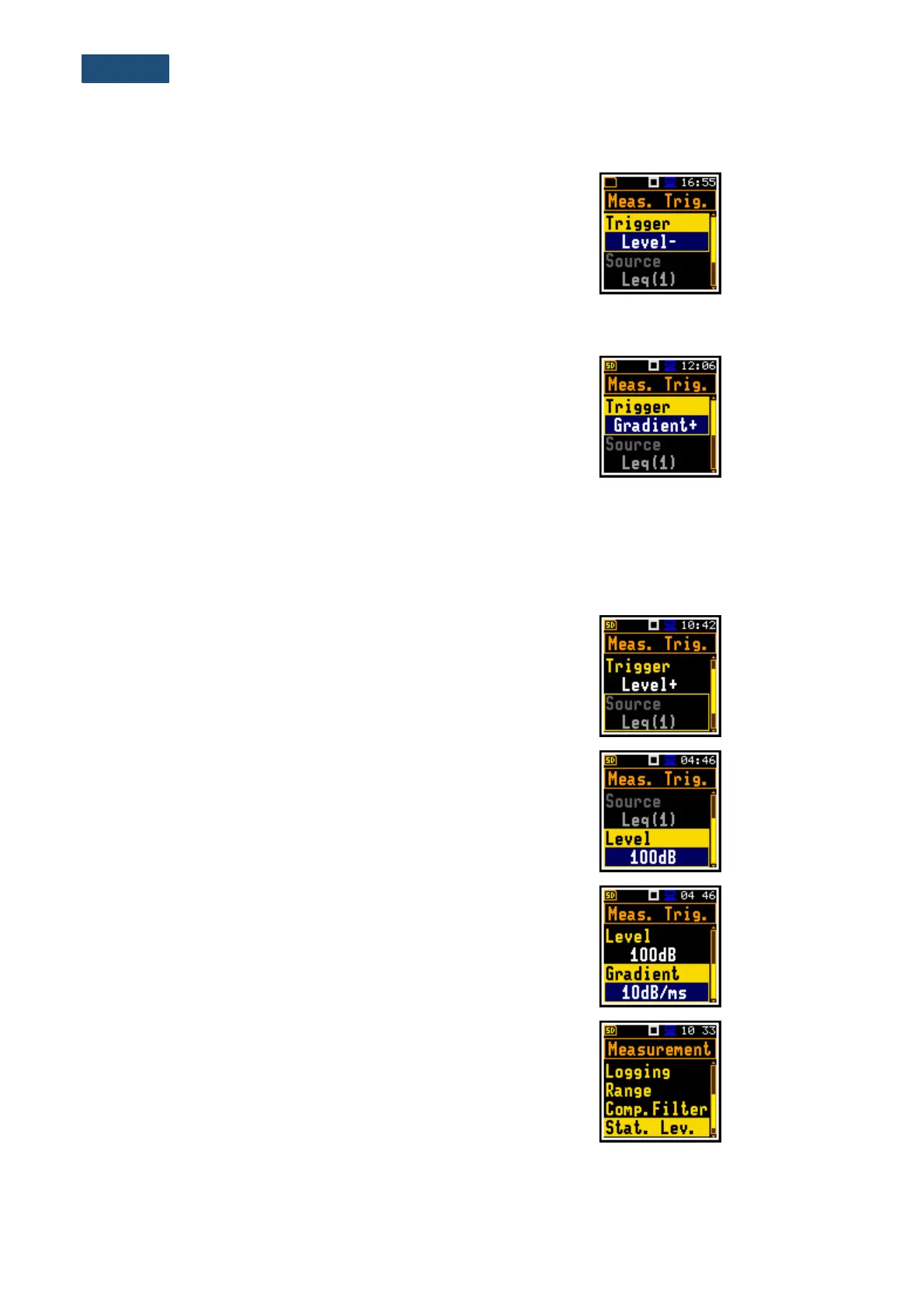
Type of trigger, that starts the 1-second
measurement/ integration under the condition:
value of the RMS result (Source) integrated during
0.5 ms is lower than the threshold value (Level). In
other cases, the instrument continues checking the
trigger condition every 0.5 ms. During one
measurement cycle the instrument performs as
many 1-second integrations as many seconds the
Integration Period consists and stops the
measurement cycle.
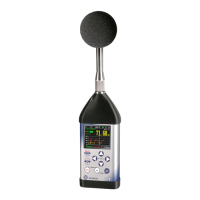
Type of trigger, that starts the 1-second
measurement/ integration under the condition:
value of the RMS result (Source) integrated during
0,5 ms is greater than the threshold level (Level)
and the gradient of this Source is greater than the
threshold level (Gradient). In other cases, the
instrument continues checking the trigger condition
every 0.5 ms. During one measurement cycle the
instrument performs as many 1-second integrations
as many seconds the Integration Period consists
and stops the measurement cycle.
This type of trigger has the same logic as Level +
trigger, but the trigger condition requires also
gradient level to be exceeded.
Result that is compared with the threshold level
(Level) for triggering – RMS measured in the first
profile: Leq(1).
Threshold level of the Source for the trigger
condition fulfilment.
Threshold level of the Source gradient for the trigger
condition fulfilment.
Certain boundary level (Lnn) surpassed by the
temporary noise level values in not more than nn%
of the observation period. In the Statistical Levels
window, the user can define ten statistical levels,
named from N1 to N10, to be calculated, displayed
and saved in the files together with the main results.


 To Next Page