3.
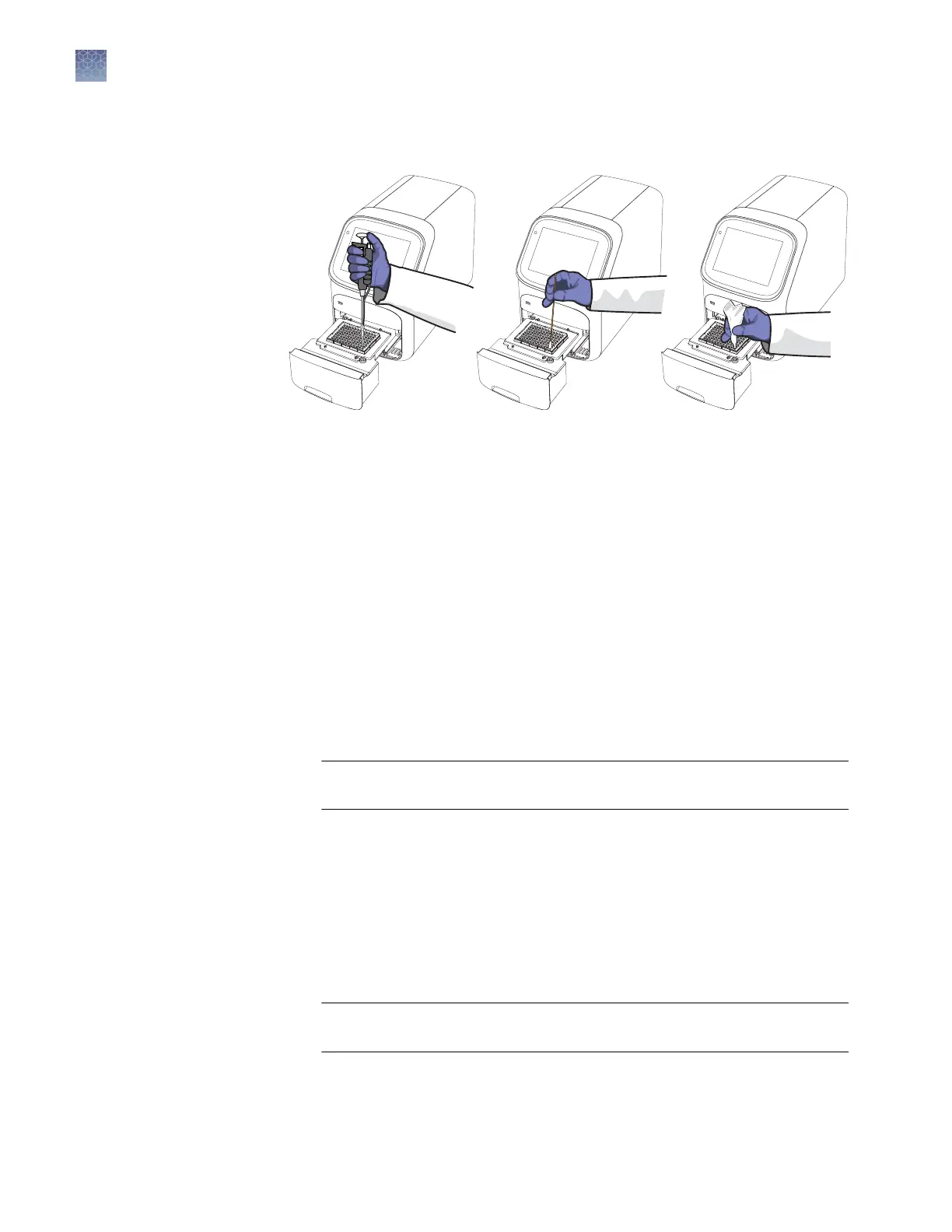
Rinse the contaminated wells with deionized water (see “Detailed procedures for
cleaning the sample block“ on page 73).
4.
Close the drawer and test the sample block for contamination.
a.
Push the instrument drawer back in to the instrument.
b.
Plug in, then power on the instrument.
c.
Perform a background calibration to conrm that you have eliminated the
contamination.
5.
If the contamination remains, clean the contaminated wells using a 95% ethanol
solution.
a.
Repeat step 2 – step 3.
b.
Clean the contaminated wells using a 95% ethanol solution (see “Detailed
procedures for cleaning the sample block“ on page 73).
c.
Repeat step 3 – step 4 to rinse the sample block with deionized water and to
conrm that you have eliminated the contamination.
IMPORTANT! Always use deionized water to rinse wells after cleaning with
bleach or ethanol solution.
6.
If the contamination remains, clean the contaminated wells using a 10% bleach
solution.
a.
Repeat step 2 – step 3.
b.
Clean the contaminated wells using a 10% bleach solution (see “Detailed
procedures for cleaning the sample block“ on page 73).
c.
Repeat step 3 – step 4 to rinse the sample block with deionized water and to
conrm that you have eliminated the contamination.
IMPORTANT!
Always use deionized water to rinse wells after cleaning with
bleach or ethanol solution.
7.
If the contamination continues to remain, contact Support.
Chapter 6
Maintain the instrument
Decontaminate the sample block
6
72
QuantStudio
™
1 Real-Time PCR System Installation, Use, and Maintenance Guide



 To Next Page