VLL Service Considerations
Page 192 7705 SAR OS Services Guide
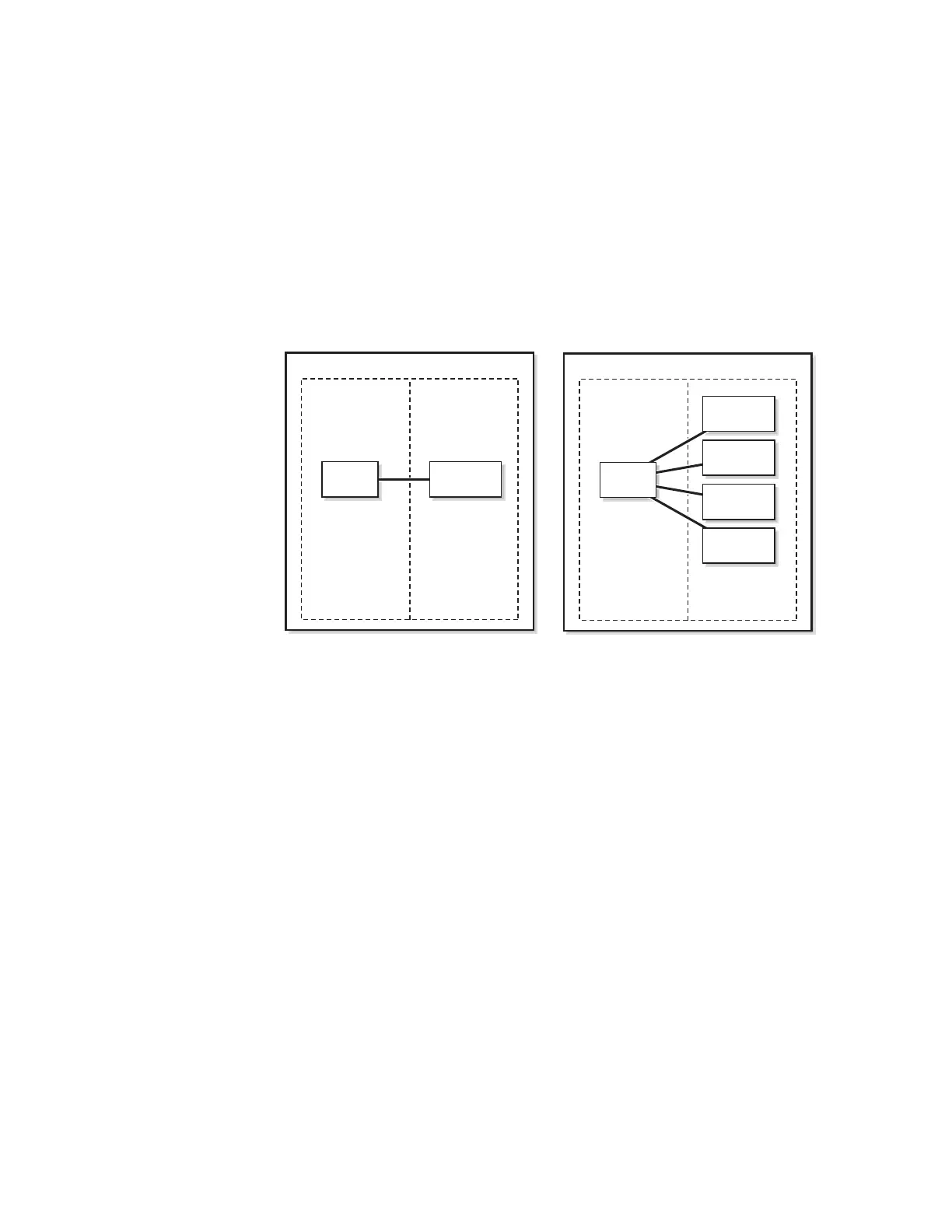
Explicit endpoints are user-configurable and apply when there are multiple spoke SDPs. As
shown in Figure 36b, explicit endpoints mean that there can be multiple spoke SDPs
associated with the endpoint. An endpoint created explicitly can have up to four spoke SDPs
associated with it. The explicit endpoint method is used for PW redundancy. Explicit
endpoints are user-configurable.
The 7705 SAR supports the following types of endpoint objects:
• SAP — there can be only one SAP per PW endpoint (Endpoint X in Figure 36a)
• Spoke SDP — from the perspective of a 7705 SAR, if there is only one SDP
endpoint, then it is a spoke SDP endpoint and it is implicitly defined. In other words,
there can be only one implicitly defined spoke SDP per PW endpoint (Endpoint Y in
Figure 36a).
• Primary spoke SDP — there can be only one explicitly defined primary spoke SDP
per PW endpoint (one of the spoke SDPs at Endpoint Z in Figure 36b). If a primary
spoke SDP is defined, then there can be up to three secondary spoke SDPs per
endpoint and the service can be revertive.
• Secondary spoke SDP — there can be up to four explicitly defined secondary spoke
SDPs per endpoint if no primary spoke SDP is defined; otherwise, there can be up to
three. Secondary spoke SDPs are assigned a precedence value that is used by the
7705 SAR OS to determine which secondary PW becomes active when the currently
active PW fails (see Selecting the Active Spoke SDP for PW Redundancy
Configuration).
Figure 36: Implicit and Explicit Endpoint Objects
20226
Implicit
Endpoint X
VLL
a) Implicit endpoints
Implicit
Endpoint Y
SAP
VLL
b) Explicit spoke SDP endpoints
Explicit
Endpoint Z
Spoke-SDP
Spoke-SDP
Spoke-SDP
Spoke-SDP
SAP Spoke-SDP






 To Next Page