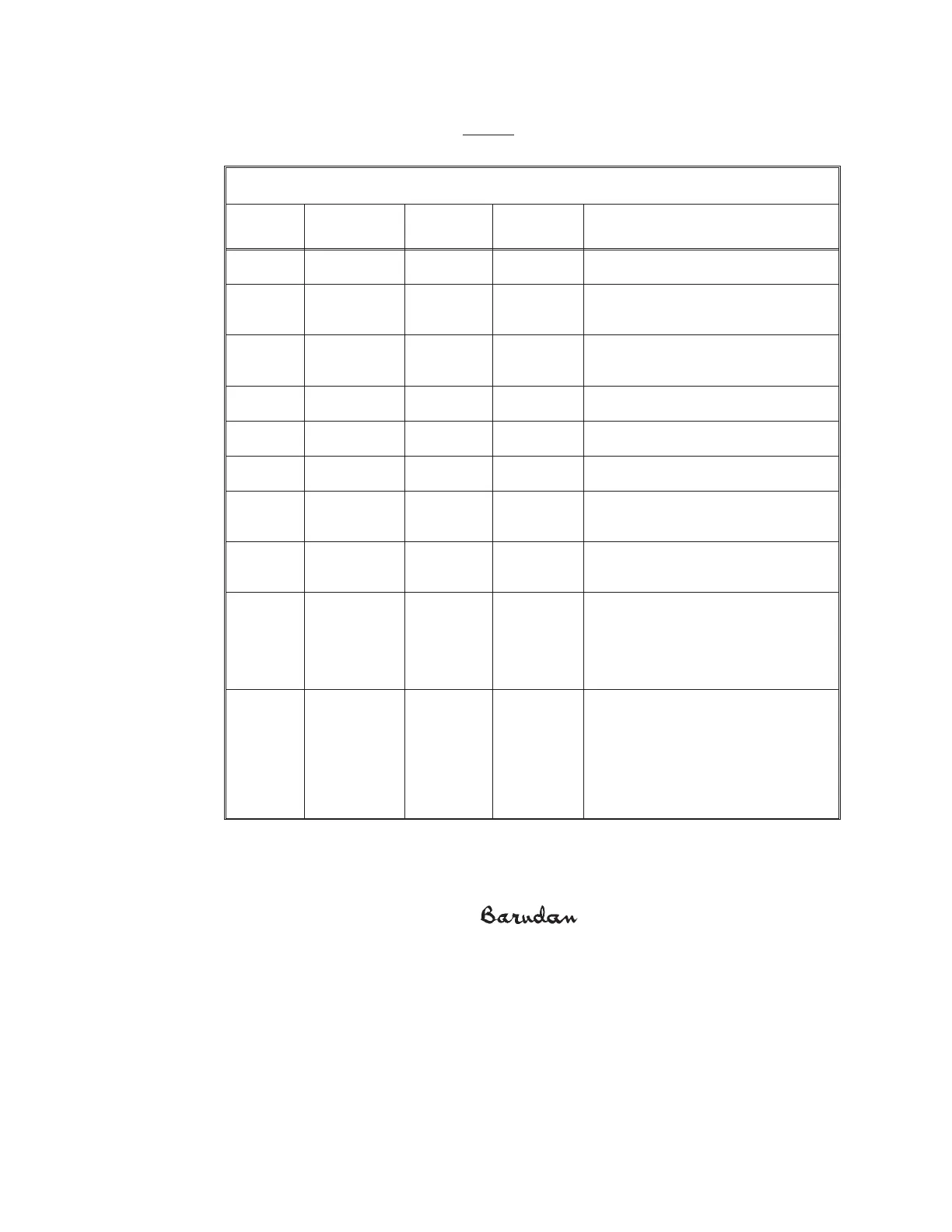
Needles/Backing Chart
The following chart was taken from Stitches magazine. Use it as a quick reference for the
material covered in this chapter.
NEEDLES/BACKING CHART
FABRIC
NEEDLE
SIZE/TYPE
BACKING TOPPING COMMENTS
Canvas 80/12SP or NP 1T No Hoop tightly to keep canvas from slipping
in hoop.
Coated/
Waterproof
Fabric
80/12 SP, BP,
Teflon
1T No Heavyweight fabrics may not require any
backing.
Corduroy 80/12SP or NP 1T Yes A higher stitch density, as well as topping,
may be necessary to prevent stitches from
sinking into the wale.
Cotton
Sheeting
70/10 to
80/12SP or NP
1T No High density or very detailed patterns may
require more backing.
Denim 80/12SP or NP 1T Optional Reduce speed if needle begins to heat up or
if thread breaks occur.
Dress Shirt
(Woven)
70/10 to
80/12BP
1T Optional Topping recommended for highly detailed
patterns or pique knits.
Golf Shirt
(Cotton/
Poly Knit)
70/10 to
80/12BP
1C Optional Topping recommended for highly detailed
patterns or pique knits.
Golf Shirt
(100% Cot-
ton)
70/10 to
80/12BP
2C or 3T Optional Topping recommended for highly detailed
patterns or pique knits.
Leather 70/10 to
80/12SP
1T No Reduce sewing speed. Use the smallest
needle possible for the weight of the
leather to avoid the formation of large
holes that could cause the embroidery to
tear out of the garment. Lightweight leath-
ers may require more backing.
Lingerie or
Silk
70/10 BP or NP 2T Yes Reduce sewing speed. Use a thinner thread
(#50 or #60) and decrease the needle size
to 60/8 for very fine fabrics. Because fab-
ric tears easily, increase column width on
letters, without increasing the letter size, to
avoid close needle penetrations. Use cau-
tion when removing excess tearaway and
topping.
1-30 X Series Mechanical Guide



 To Next Page