54733-10BA2L
2 – 172 02.2017
2 Installation Volume 2
Storing the shieldings The shielding with the radioactive source is delivered in a box in
compliance with the regulations concerning the transportation of
radioactive substances.
Risk of injury!
The weight of the source shielding may be up to several 100kg,
depending on the version.
Make sure that the mechanical stability of the mounting devices
matches the weight of the shielding and that the operating staff is
wearing hard hats and safety shoes whenever doing any work on
the shielding.
Take the shielding out of the box just prior to installation. Up to that
time, store the shielding with the radioactive source in a location
that is guarded against unauthorized access, see chapter 2.1.4 on
page 2-174.
Detector Damaged cable glands must be replaced immediately. Under no cir-
cumstances should the detector be operated with damaged cable
glands. If moisture has penetrated, you have to dry the terminal
compartment.
Detectors which are used in hazardous areas must not be put into
operation again following a mechanical shock or drop, as the explo-
sion protection is no longer guaranteed. If this happens, the detec-
tor must be examined by a person authorized by BERTHOLD
TECHNOLOGIES. If this is not possible, you have to replace the
entire detector or return it to the manufacturer for inspection.
Corrosion resistance The housing of the detector is made of stainless steel 1.4301 (304)
and is therefore well protected from corrosion. The protection pro-
vided by stainless steels consists of a passive oxide layer on the sur-
face, which is formed by oxidation with oxygen. However, if the sur-
face gets damaged by unalloyed steel and particles of the unalloyed
steel remain on the surface (ferrous contamination), then the sur-
face may corrode at this contact point. Make sure, therefore, that
neither during installation nor during operation other metal parts
made of non-alloyed steel come into contact with the housing sur-
face of the detector.
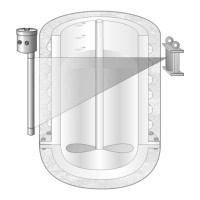
Mounting position Size and position of the measuring range to be covered are deter-
mined in the projection phase for the measuring site and defined by
drawings, sketches or details in writing. For assembly, these speci-
fications have to be observed closely, since deviations may cause
malfunctions of the measuring system.
Using the drawings of the shielding and taking into account the cir-
cumstances at the measuring site, carefully install the mounting
brackets and fixtures.


 To Next Page